You’ve booked the accommodation, found someone to feed the dog and remembered to put the bins out. Then you look at the hanging baskets and realise the whole back deck is going to need a babysitter too.
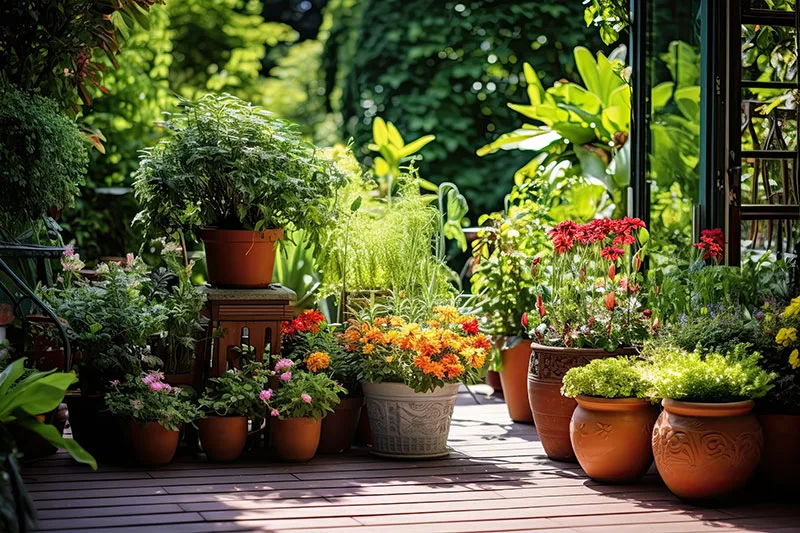
If you’re wondering how to water potted plants while you’re on holiday, start with the pots that dry out first. For a mild weekend, a thorough watering and a sheltered spot may be enough. For a week in an Australian Summer, give thirsty pots a tested water supply and arrange a backup if hot weather is forecast. Your tomatoes have no idea you’re on annual leave.
Holiday Watering At A Glance
| Time Away | Watering Plan | What To Check |
|---|---|---|
| 2–3 days in mild weather | Water before leaving and shelter the pots that dry fastest. | Small pots or hanging baskets that dried out within a day during your trial. |
| Around a week | Use a tested reservoir, wick or timed drippers. | How quickly the supply runs down and whether the mix stays evenly moist. |
| Around a fortnight or during a heatwave | Use a tested setup and arrange for someone to check it. | Thirsty vegies, baskets, timer function and reservoir refills. |
Get Your Pots Ready Before You Leave
Find The Pots That Dry Out First
Check your pots a few days before you go. Give them their usual morning water, then check the mix later that day and again the following morning. Push a finger a little below the surface or lift a small pot to feel its weight. A pot that’s already light and dry by breakfast has just volunteered for the priority list.
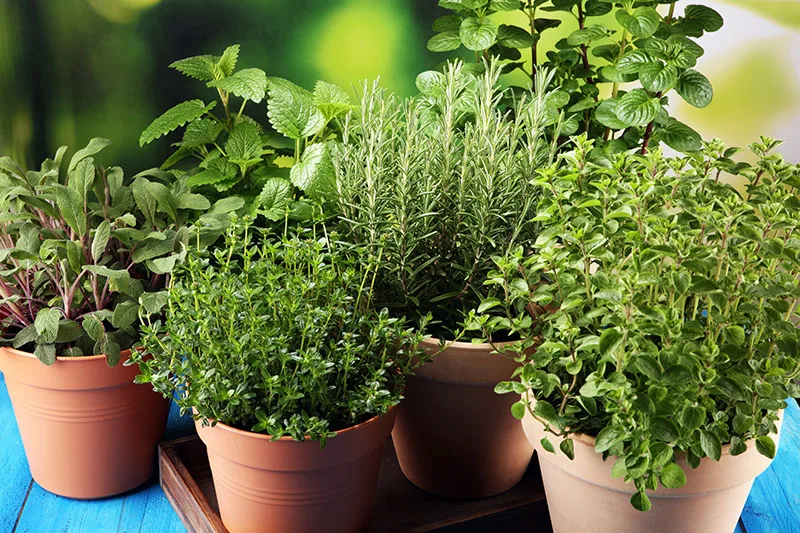
Start with hanging baskets, seedlings, small terracotta pots and actively growing vegies. Large containers generally hold more moisture, though a big plant in an undersized pot can still get thirsty quickly. Keep succulents and other plants that prefer a dry spell on their own watering schedule.
Give Them A Cooler Spot
Move portable pots out of harsh afternoon sun and drying wind. An east-facing spot with morning sun can work well for sun-loving vegies during a short hot spell. Bring hanging baskets down to a stable spot at ground level where they’re less exposed to wind.
Group pots with similar needs so you can water them together. If a pot is too heavy to shift, give it temporary afternoon shade using something you can secure against the wind. Our guide to heat stress in potted plants has more ideas for a patio that doubles as a pizza oven by three o’clock.
Water Slowly And Let The Pots Drain
On departure day, water each plant that’s due for a drink. Apply water slowly until it starts to drain from the base. If it rushes straight out while the centre of the mix still feels dry, pause for a few minutes and make another slow pass. A quick splash over the leaves does very little for a parched root ball.
Let ordinary pots drain freely and tip out water collected in saucers or decorative outer pots. If you want to slow evaporation from outdoor pots, use a light layer of mulch where it suits the plant and keep it clear of stems.
Choose A Watering Method For Your Trip
A Weekend Away
For two or three mild days, the pots that took longest to dry during your trial may be fine after a good watering and a move into shelter. Give any pot that dried out within a day a separate plan. With a hot or windy forecast, even two nights away can be long enough for a small basket to need help.
About A Week Away
Use a self-watering pot you already own, try a wick on a suitable indoor pot or set up timed drip irrigation outdoors. Watch the setup for a few days while you’re home. Check how moist the mix is each morning, how quickly the reservoir drops and whether the water is reaching the roots. If the reservoir is nearly empty after two days, you’ll know to arrange a refill.
A Fortnight Away Or A Heatwave
Pair a tested watering setup with someone who can check it. Show them the thirstiest plants, how to top up the reservoir or run the timer manually and where the watering can lives. A quick photo of the pots you want checked is easier to follow than a list of plant names, especially if your helper thinks everything on the patio is called ‘the fern’.
Set Up Self-Watering Pots, Wicks Or Drippers
Self-Watering Pots And Simple Wicks
A self-watering pot has a reservoir below the mix that supplies moisture through a wick or a section of mix designed to draw water up. It suits plants that like fairly even moisture. Check that the overflow is clear and that the mix is drawing up water before you leave. If you’ve just planted something into a reservoir pot, keep checking the upper mix. A small root ball may still need watering from above while it establishes.
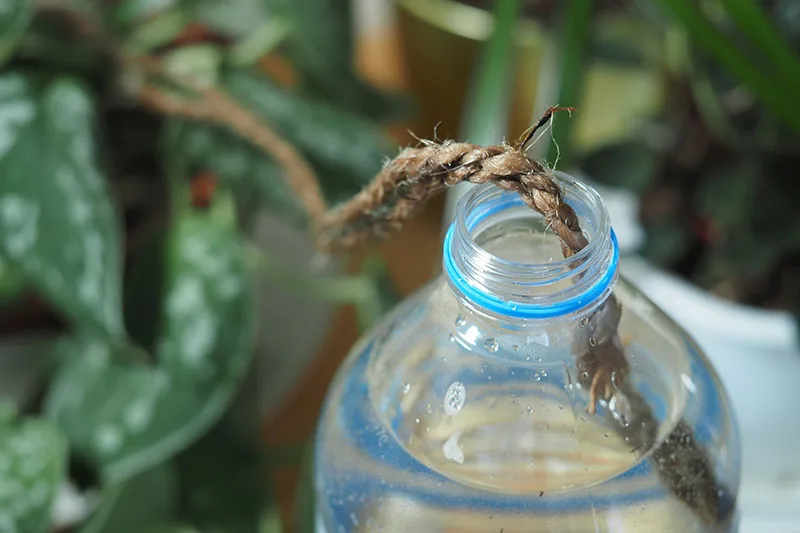
For a DIY wick, reuse a clean jar or bottle with a lid and a length of absorbent cord. Dampen the cord and the potting mix, tuck one end of the cord a few centimetres into the mix and feed the other through a small hole in the lid so it reaches the bottom of the jar. Set the jar beside the pot on a stable, water-resistant surface. Check the mix and the water level the following day and again before leaving. For a climbing houseplant, our Self-Watering Plant Climber combines a reusable support and a watering wick.
A Tap Timer And Drippers
For a row of outdoor pots, borrow or reuse a tap timer and run a drip line to each container you want to water. Secure the outlets so they can’t slip out of the pots. Run a full cycle and check every outlet, then feel the mix below the surface afterwards. If only one corner of a wide pot gets wet, move the outlet or add a second one. Check the timer batteries and look for leaks around the tap and connections.
Give Indoor Plants Their Own Watering Plan
Leave houseplants in bright, indirect light where it suits them and move pots back from hot window glass. Water plants that are due for it and let them drain before returning them to their decorative pots. A wick or damp capillary mat can help plants that like steady moisture. To trial a mat, sit nursery pots with drainage holes directly on it and check that moisture is reaching the mix.

Leave dry-loving houseplants on their usual schedule. There’s every chance your succulents will enjoy a quiet week without anyone hovering over them with a watering can.
Your Last Check Before You Lock Up
- Check the forecast and flag the thirstiest pots for your helper.
- Water the plants that need it and let ordinary pots drain.
- Refill reservoirs and check that their overflows are clear.
- Run the timer manually once and make sure it’s back on its programmed setting.
- Put the watering can where your helper can find it and send them a photo of the priority pots.
When you get home, check the mix before watering. Give dry pots a slow soak and let damp ones drain or dry as needed.
Frequently Asked Questions
Can I Use An Upside-Down Bottle To Water A Pot?
You can trial a clean reused bottle with a slow-release cap or spike. Watch how fast it empties and check the moisture below the surface, as the outlet can clog or let water out too quickly. If the bottle empties well before the pot needs another drink, use another method for that pot.
Can I Leave Potted Plants Sitting In Water?
Let ordinary pots drain. Leaving their bases submerged for the whole trip can keep the mix soggy and reduce the air available to the roots. A purpose-built self-watering pot has a reservoir and an overflow designed to manage the water level.
How Often Should Someone Water My Pots While I’m Away?
Use your trial as a guide. If your baskets dried out by the next morning, ask your helper to check them daily during similar weather. Give them permission to skip any pot that still feels moist below the surface.
Will Rain Water My Patio Pots?
Check where the rain actually lands. Pots under eaves, beneath a balcony or behind dense foliage can stay dry through a shower. If rain does reach the pots, ask your helper to check the mix before running the timer or watering again.