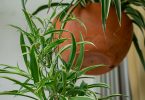
There are plants that demand perfect soil, regular feeding and constant reassurance. Then there is Lomandra.
Lomandra longifolia, commonly known as Spiny-Headed Mat Rush, is one of those wonderfully dependable Australian natives that seems to cope with whatever the garden throws at it. Sun, shade, poor soil, dry spells and difficult spots are all within its repertoire once established.
It is so widely used in Australian landscaping that Lomandra can sometimes be dismissed as a car park plant. That is doing it a serious disservice. Used thoughtfully, its fountain of strappy green foliage adds movement, texture and year-round structure to native gardens, mixed borders, coastal landscapes and difficult areas under trees.
The trick is choosing the right Lomandra for the job. The species itself can become quite substantial while many of the compact cultivars seen in gardens and public landscapes stay considerably smaller.
Table Of Contents
Why You’ll Love Lomandra
- Tough and adaptable once established
- Australian native with excellent wildlife value
- Grows in full sun through to considerable shade
- Tolerates a wide range of soils
- Good drought tolerance once established
- Excellent for mass planting, slopes and erosion control
- Useful beneath established trees
- Provides year-round texture and structure
- Available in compact cultivars for smaller gardens
- Generally requires very little maintenance
Botanical Name
Lomandra longifolia
Common Name
Spiny-Headed Mat Rush, Mat Rush
Lomandra Description
Despite its grass-like appearance, Lomandra is not actually a grass. Lomandra longifolia is a tufted perennial belonging to the Asparagaceae family and forms dense clumps of long strap-shaped leaves.
The species usually grows to around 50 cm to 1 metre high with a similar spread although plant size varies with growing conditions and genetics. Its glossy green leaves can reach around a metre long and have distinctive toothed tips.
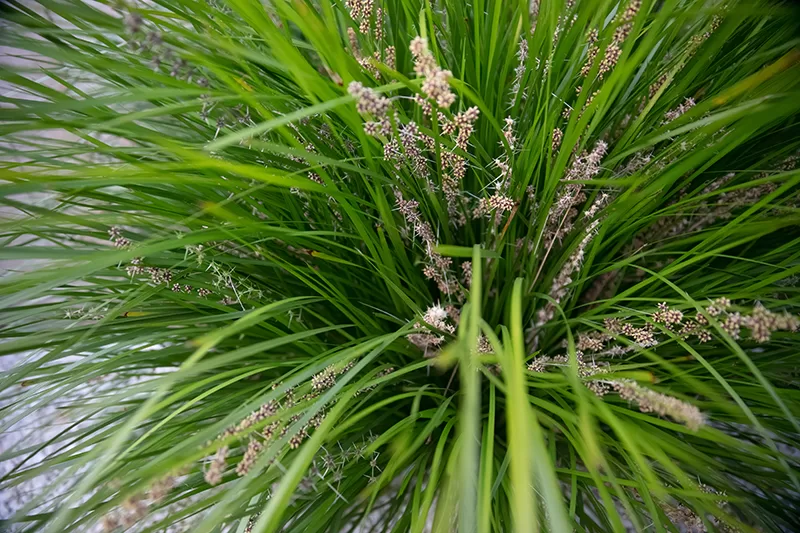
Cream to yellow flowers appear in dense clusters on branching flower spikes. They are not showy in the way a Grevillea or Kangaroo Paw might be but they have a charm of their own and can be strongly fragrant. The flower clusters of the species are protected by sharp bracts which explain the rather appropriate name Spiny-Headed Mat Rush.
Flowering occurs mainly through Spring although the season can extend into Summer depending on climate and the particular form being grown. Male and female flowers occur separately which is another interesting little Lomandra detail that is easily missed when you walk past one in a shopping centre car park.
Australian Native Distribution
Lomandra longifolia is native to eastern and south-eastern Australia with natural populations occurring in Queensland, New South Wales, Victoria, South Australia and Tasmania.
Its natural habitats are surprisingly varied. Lomandra can occur in forests, woodland, coastal areas, sandy soils, rocky locations and around waterways.
That diversity helps explain why it has become such a useful garden plant. This is not a species that evolved with one very narrow idea about where it would like to live.
Climate
Lomandra grows successfully across a broad range of Australian climates. It is particularly well suited to temperate and warm temperate areas although suitable forms can also be grown in cooler and warmer regions.
Established plants generally tolerate:
- Hot Summers
- Dry periods
- Moderate frost
- Coastal exposure depending on the cultivar
- Full sun
- Part shade
- Considerable shade beneath trees
Local conditions still matter. A cultivar bred for dry landscapes may resent permanently wet soil while another Lomandra species or form may be much happier beside a watercourse. This is one plant where checking the label is worth the ten seconds it takes.
Plant Cultivation & Care
One reason Lomandra has become so widely planted is that it usually asks very little once it has established.
Soil
Lomandra longifolia tolerates an impressive range of soil types including sandy, loamy and clay soils.
Good soil structure and drainage will produce the best garden results. The species occurs naturally in some periodically wet habitats and can handle temporary moisture however this should not be taken to mean that every Lomandra cultivar enjoys permanently soggy soil.
If you have very heavy clay, improve the soil before planting rather than creating a small hole full of beautiful potting mix surrounded by compacted clay. That can simply turn the planting hole into a very expensive bathtub.
Light
Few plants are quite as accommodating about light.
Lomandra can grow in:
- Full sun
- Part shade
- Dappled light
- Quite shady areas beneath established trees
Growth may be more open in heavy shade and flowering may be reduced. This ability to cope with dry shade makes Lomandra particularly useful beneath established trees where roots compete heavily for moisture.
YOU MAY ALSO LIKE: Top 12 Plants For Dry Shade In Australian Gardens
Watering
Water new plants regularly while their root systems establish.
Once established, Lomandra longifolia has good drought tolerance and usually survives on rainfall in suitable climates although occasional deep watering through prolonged dry periods will keep plants looking considerably better.
A drought-tolerant plant is not a plant that wants to be abandoned two days after planting. Even Lomandra needs a childhood.
Feeding
Lomandra is not a heavy feeder.
In reasonably healthy garden soil it may need very little supplementary fertiliser. Where growth is poor, apply a suitable slow-release native plant fertiliser according to label directions during the growing season. Avoid the temptation to feed heavily in an attempt to make it grow faster.
Mulching
Apply an organic mulch to help conserve soil moisture and suppress weeds. Recycled garden materials such as composted leaf litter or suitable chipped garden prunings are excellent options where available.
Keep mulch away from the centre of the crown to reduce the risk of excess moisture and rotting foliage.
Quick Reference Guide
| Botanical Name | Lomandra longifolia |
| Common Name | Spiny-Headed Mat Rush |
| Family | Asparagaceae |
| Plant Type | Evergreen clumping perennial |
| Height | Approximately 0.5–1 m depending on form |
| Width | Approximately 0.6–1 m depending on form |
| Flower Colour | Cream to yellow |
| Flowering Time | Mainly Spring and into Summer in some regions |
| Light | Full sun to shade |
| Soil | Sand, loam and clay with good drainage preferred |
| Water | Low once established |
| Drought Tolerance | Good once established |
| Frost Tolerance | Good for many forms |
| Wildlife Value | Butterflies, insects, small birds and lizards |
Plant Use
This is where Lomandra really earns its keep.
It works particularly well for:
- Native gardens
- Mixed Australian gardens
- Mass planting
- Borders and pathways
- Narrow garden beds
- Dry shade beneath trees
- Slopes and banks
- Erosion control
- Coastal gardens with a suitable cultivar
- New-build gardens with difficult soil
- Rain gardens where an appropriate form is selected
- Contemporary landscapes
- Large pots and containers
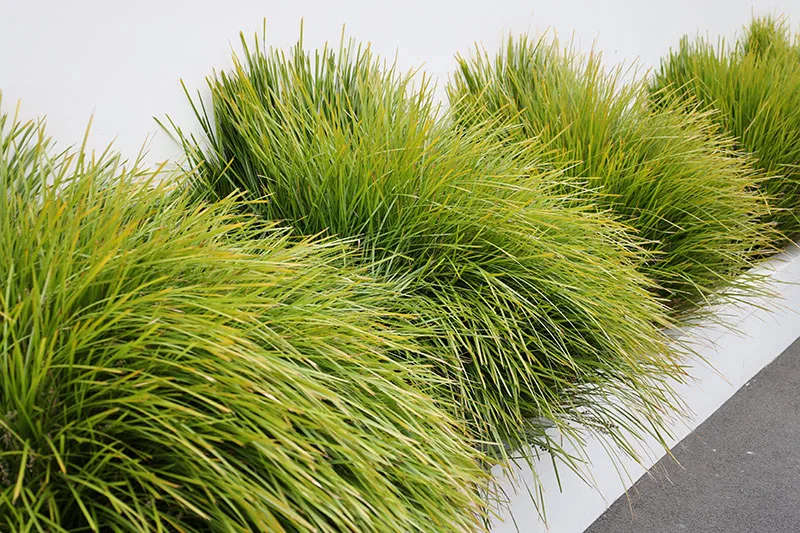
Repeated Lomandra plants can create a beautifully simple rhythm through a garden. They are particularly useful when surrounded by looser flowering shrubs and groundcovers because the strong fountain-shaped foliage provides structure without looking stiff.
Compact cultivars are also excellent beside paths although the full species deserves more room. The flower heads of Lomandra longifolia can be prickly so planting the species where people regularly brush against it is not ideal.
YOU MAY ALSO LIKE: Best Plants For Narrow Side Paths And Skinny Garden Beds
Wildlife Value
Lomandra is far more valuable to wildlife than its understated flowers might suggest.
Its scented flowers attract pollinating insects including beetles while Lomandra foliage is used as a food plant by the caterpillars of several Australian butterflies and moths.
Dense clumps also create low-level habitat where small birds, insects and lizards can find shelter. Flower and seed heads provide additional food and habitat within a more biodiverse garden.
This is one of the reasons I like Lomandra mixed among flowering natives rather than planted as endless identical rows. In a home garden it can become part of a much richer little ecosystem.
What To Plant With Lomandra
Lomandra is particularly easy to combine with other plants because its narrow foliage provides contrast without competing visually with flowers.
Some excellent companions include:
- Native Fuchsia (Correa reflexa) for flowers, bird habitat and partly shaded areas
- Coastal Rosemary (Westringia fruticosa) for a tough combination in sunny and exposed gardens
- Dianella (Dianella spp.) for additional strappy texture with blue or purple flowers and colourful berries
- Yellow Buttons (Chrysocephalum apiculatum) to soften sunny plantings with low silver-green foliage and yellow flowers
- Grevilleas for height, colour and nectar for birds and insects
- Native groundcovers such as Scaevola where a softer spreading layer is needed
For a natural-looking garden, avoid lining up every Lomandra like obedient soldiers unless that formal repetition is the effect you want. A mixture of heights and forms usually creates a more interesting landscape while retaining the strong structure Lomandra provides.
You can also mix Lomandra successfully with introduced ornamentals that enjoy similar conditions. There is no horticultural rule saying an Australian native has to spend its life surrounded exclusively by other Australians.
Pruning
Lomandra generally needs very little pruning.
Remove damaged, brown or dead leaves as they appear. Older plants can gradually accumulate dry foliage through the centre and may eventually benefit from a more substantial tidy-up.
If a clump becomes tired or untidy, many forms can be cut back quite hard and allowed to produce fresh foliage. Use clean sharp tools and leave some foliage above the crown rather than cutting directly into the growing point.
Wear gloves and eye protection when working with mature plants. The leaves and especially the flower bracts of the species can be surprisingly sharp.
Hard pruning should not automatically become an annual job. A healthy Lomandra that still looks good is perfectly entitled to be left alone.
Pests & Diseases
Lomandra longifolia is generally very resistant to pest problems.
The more common problems are associated with growing conditions rather than hungry insects.
Poor drainage and persistently wet soil can encourage root and crown problems in susceptible plants. Good soil preparation, appropriate plant selection and avoiding unnecessary overwatering are much better solutions than reaching for chemicals after the plant begins to decline.
Dead foliage packed tightly through an old clump can also trap moisture and restrict airflow so the occasional clean-out is worthwhile.
If a plant suddenly deteriorates while nearby Lomandras remain healthy, check the crown and roots as well as soil drainage before assuming it needs more water.
Propagation
The species can be propagated from seed or by dividing established clumps.
Growing Lomandra From Seed
Allow mature seed capsules to develop before collecting seed. Fresh seed can be sown into a moist propagation mix and kept consistently moist while germinating.
Seed propagation is useful for the species although seedlings will naturally show some variation.
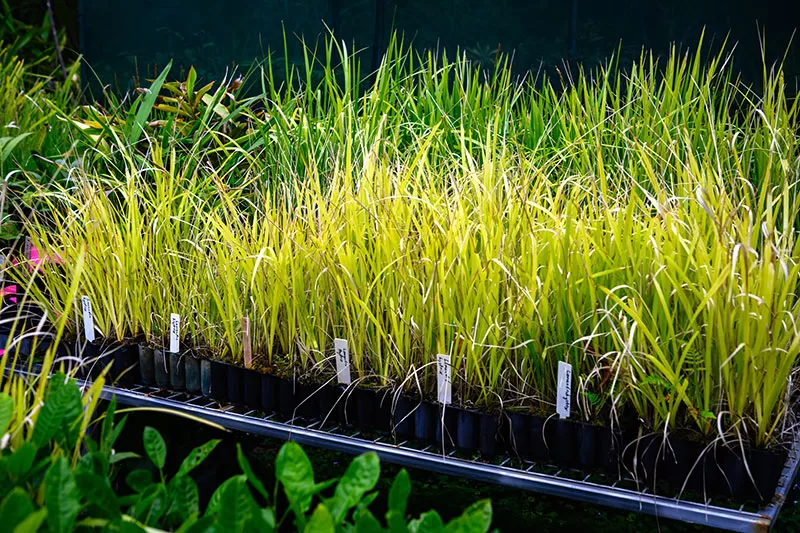
Dividing Lomandra
Established clumps can also be divided.
Lift the plant and divide the crown into smaller sections with healthy roots and foliage attached. Trimming some of the foliage before replanting can reduce water loss while the divisions establish.
Water the new divisions well after planting.
Named cultivars are a different matter. Seedlings will not necessarily reproduce the characteristics of the parent plant and some commercial cultivars are protected by Plant Breeder’s Rights. Check the plant label before propagating a named variety.
Popular Lomandra Varieties
This is where shopping for Lomandra becomes slightly more complicated than simply asking for “a Lomandra”. Many cultivated forms have been selected for smaller size, softer leaves, improved form or greater tolerance of particular growing conditions.
Popular Lomandra longifolia cultivars include:
Tanika
One of the best-known compact Lomandras. Tanika has fine soft foliage with an attractive weeping habit and generally reaches around 50 to 65 cm high and wide depending on the particular selection.
It works beautifully in mass plantings, borders and smaller gardens.
Nyalla
A larger cultivar with clean upright foliage that can reach around 80 to 90 cm. It is useful where you want a more substantial architectural plant and performs well in exposed landscapes.
Katrinus Deluxe
A compact to medium selection with soft arching foliage and prominent fragrant flowers. It suits mass planting and mixed garden beds.
The important thing is to remember that cultivars are not interchangeable. Size, moisture tolerance, leaf softness, flowering and climate performance can vary. Choose the cultivar for the position rather than choosing the prettiest label and hoping for the best.
Growing Lomandra In Pots
Lomandra can grow very successfully in containers and the smaller cultivars are particularly well suited to pots. Choose a broad stable container with plenty of drainage holes because established plants develop a substantial root system.
Use a quality potting mix suitable for Australian native plants and position the container in sun or part shade depending on the cultivar.
Potted plants will need watering more frequently than Lomandra growing in the ground. Allow excess water to drain freely and avoid leaving the container permanently sitting in a saucer of water.
Over time the plant may fill the pot with roots. At this stage it can be moved into a larger container or divided and replanted.
A group of Lomandras in recycled or long-lasting containers can be a particularly practical option for rental gardens where permanent landscaping is not possible.
Why Lomandra Earns Its Place In The Garden
Lomandra has become so familiar in Australian landscaping that it is easy to stop noticing it. That familiarity is actually a compliment.
Plants do not end up being planted beside roads, around buildings, beneath trees and across difficult landscapes for decades unless they are remarkably useful. Lomandra longifolia survives conditions that would send fussier ornamentals into an immediate decline.
In a home garden it deserves more imagination than a row beside the driveway. Pair it with flowering native shrubs, groundcovers and plants with contrasting foliage and suddenly that familiar green clump becomes part of a layered and wildlife-friendly garden.
It is tough, adaptable and useful without demanding much in return. Sometimes the plant that quietly gets on with the job is exactly the plant you need.
FAQs – Lomandra longifolia
Yes. Lomandra longifolia can grow in full sun through to quite shady conditions which makes it particularly useful beneath established trees. Very heavy shade may produce looser growth and fewer flowers.
The species can grow to around one metre high and wide although size varies with conditions. Compact cultivars such as Tanika are considerably smaller so always check the mature dimensions of the particular Lomandra you are buying.
Lomandra does not need to be cut back every year. Remove dead foliage as required and only give the plant a hard rejuvenation prune when an established clump becomes tired, congested or untidy.
Yes. Lomandra longifolia has good drought tolerance once established although young plants need regular watering while their root systems develop. Occasional deep watering during extended dry periods will also help established plants maintain better foliage.