Purple flowering plants have a wonderful way of standing out in the garden without looking too bright or brash. Deep violet flowers add drama while softer mauves and lilacs create a cooler and more relaxed feel. Purple also looks beautiful alongside white, yellow, pink and silver foliage.
Fortunately there are plenty of purple flowering plants that suit warm Australian gardens. Some are tough Australian natives that cope well with heat and dry spells while others are reliable ornamental favourites that have proven themselves in our conditions over many years.
The trick is choosing a plant that suits your particular garden. Sydney conditions are very different to inland Queensland. Even within a single suburb there can be enormous differences in soil, drainage, frost and Summer heat.
This collection of purple flowering plants for warm climates includes shrubs, groundcovers, perennials and climbers with choices for full sun, part shade, pots and those awkward corners where seemingly nothing wants to grow.
How To Choose Purple Flowering Plants For Warm Climates
Warm weather alone does not guarantee that a plant will thrive. Humidity, rainfall and drainage matter just as much.
Start by working out how many hours of direct sun the position actually receives. Then check whether the soil drains freely after heavy rain. Be honest about how much supplementary watering you are prepared to provide over Summer too. Finally check the mature height and width of the plant so the cute little thing you brought home from the nursery does not eat half the garden three years later.
Frost pockets and exposed windy corners also narrow the field considerably. Decide early whether you need a shrub, climber, perennial or groundcover because that single decision removes much of the guesswork.
Many Australian natives are naturally well adapted to heat and irregular rainfall. Established plants usually cope with very hot weather far better than newly planted specimens so give new plants regular water while their root systems develop.
16 Purple Flowering Plants For Australian Gardens
1. Native Hibiscus – Alyogyne huegelii
Native Hibiscus produces some of the most spectacular purple flowers of any Australian native shrub.
Large silky blooms in shades of mauve, violet and rich purple sit beautifully against deeply lobed green foliage. Individual flowers are relatively short lived although a healthy plant can produce hundreds of blooms across the flowering season. Depending on the cultivar and climate you can see flowers from Spring well into Autumn with the strongest display generally during the warmer months.
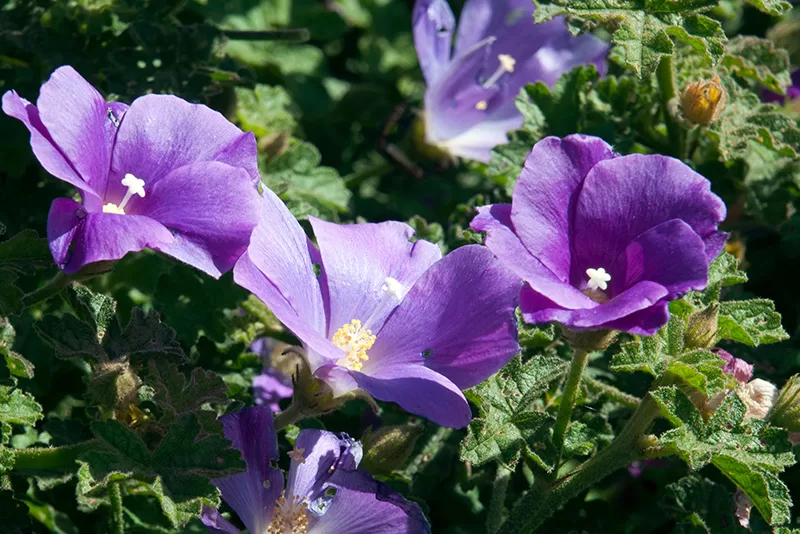
Alyogyne huegelii occurs naturally through the dry Summer regions of South Australia and south western Western Australia. Despite its western origins it can also grow successfully in temperate and subtropical gardens elsewhere in Australia when drainage is good.
The species commonly reaches around 2 to 2.5 metres high with a similar spread although cultivars give you more flexibility. ‘Karana’ generally remains closer to 1 to 1.5 metres while ‘West Coast Gem’ can reach around 2 metres or more and produces particularly rich purple flowers.
Native Hibiscus prefers full sun although some light shade is tolerated. Well drained soil is particularly important and established plants have good drought tolerance.
Regular pruning is worthwhile. Left entirely alone the shrub can become open and leggy with long branches that are vulnerable to strong wind. A good trim after the main flowering period encourages dense new growth and usually rewards you with even more flowers.
Use Native Hibiscus for informal screening, mixed shrub borders, coastal gardens or native gardens where you want something colourful without losing that distinctly Australian feel.
2. Tibouchina ‘Jules’ – Lasiandra/Glory Bush
For a compact shrub that delivers an impressive amount of purple without requiring half the backyard, Tibouchina ‘Jules’ is a lovely choice.
Often sold as Tibouchina hybrida ‘Jules’, this dwarf evergreen shrub has dense velvety green foliage topped with masses of rich purple flowers. The colour is wonderfully intense and a well grown plant can become almost covered in blooms.

The main flowering display usually begins in late Summer and continues through Autumn which makes ‘Jules’ particularly useful for extending garden colour beyond the Spring flowering rush.
Unlike some of the enormous Tibouchinas that can eventually become small trees, ‘Jules’ is genuinely compact. Expect a mature plant somewhere around 1 metre high and approximately 1 to 1.2 metres wide although conditions and pruning will influence its eventual size.
It grows in full sun to semi shade with well drained soil. In particularly hot areas some protection from harsh afternoon sun can help keep the foliage looking its best.
Regular moisture during Summer is appreciated although soggy soil is definitely not. Tibouchinas also dislike heavy frost, cold winds and very exposed positions so choose a protected spot in cooler climates.
A light prune after flowering will maintain the rounded shape and encourage dense new growth.
‘Jules’ works beautifully in mixed borders, courtyard gardens and large pots. It is especially handy for gardeners who love the spectacular purple flowers of traditional Tibouchinas but do not have room for one that eventually requires its own postcode.
3. Happy Wanderer – Hardenbergia violacea
Few Australian natives announce the arrival of Spring quite like a Hardenbergia dripping in purple flowers.
This hardy climber produces long sprays of small pea shaped blooms ranging from soft mauve to intense violet purple. Flowering usually begins in late Winter and peaks through Spring. A happy plant can become so covered in flowers that much of the foliage temporarily disappears.
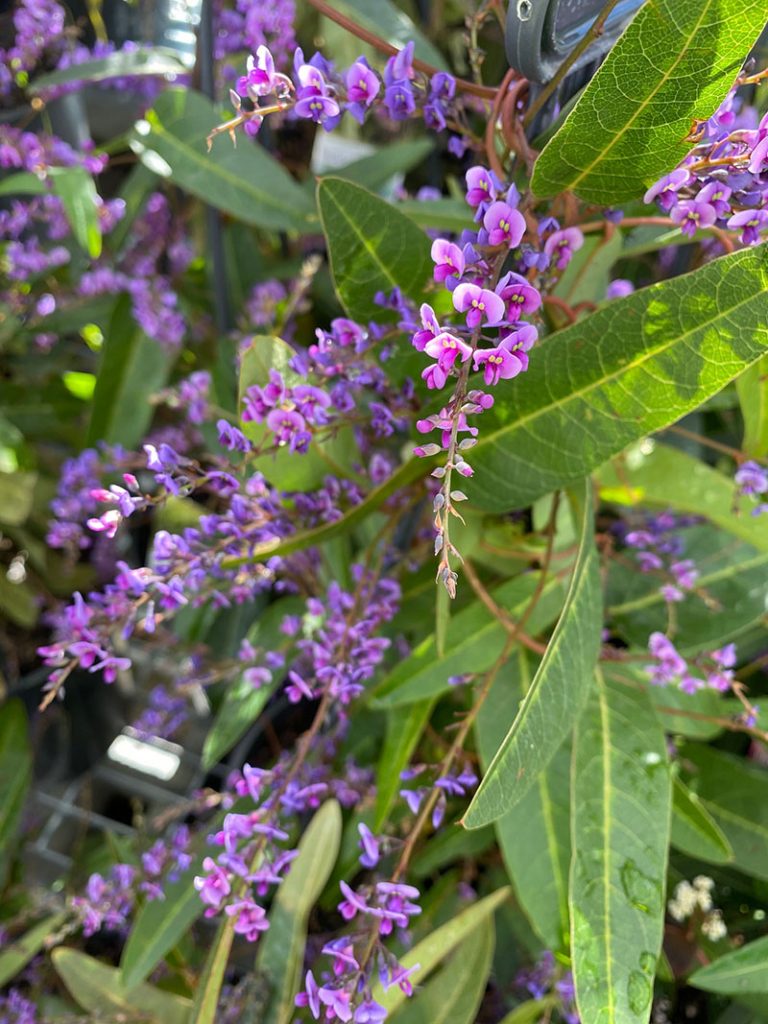
Hardenbergia violacea is usually grown as a climber although its natural habit is remarkably versatile. It can scramble across the ground as a dense groundcover, spill down an embankment or climb over a fence or trellis. Compact shrubby cultivars are also available if you love the flowers but do not have room for an enthusiastic climber.
It performs well in full sun or light shade with flowering usually heavier in brighter positions. Good drainage is important although Hardenbergia adapts to sandy, loamy and light clay soils.
Once established it has reasonable drought tolerance and requires very little fertiliser. Avoid feeding heavily with high phosphorus fertilisers as Australian native plants generally prefer products formulated specifically for natives.
Pruning after flowering controls vigorous growth and encourages a denser plant.
Train it over a fence, trellis or pergola or let it cascade down a retaining wall. It looks particularly beautiful in a native cottage garden where the glossy green foliage provides structure long after flowering has finished.
4. Coastal Rosemary – Westringia ‘Wynyabbie Gem’
If you want a dependable purple flowering shrub that does not demand constant attention, ‘Wynyabbie Gem’ is extremely hard to beat.
This Australian native cultivar is a hybrid between Westringia fruticosa and Westringia eremicola. It has attractive grey green foliage and masses of soft lilac to blue mauve flowers.
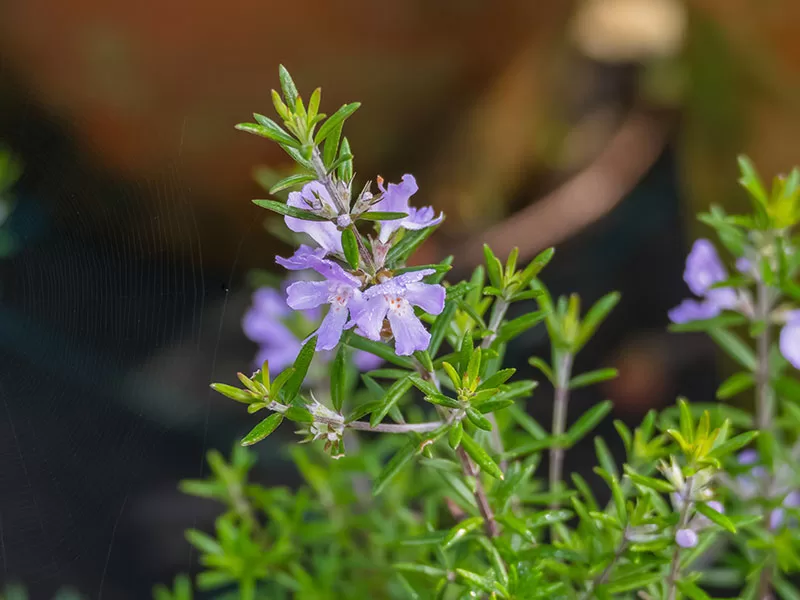
The main floral display occurs in Spring although one of the great advantages of ‘Wynyabbie Gem’ is its habit of producing scattered flowers at other times of the year.
It generally grows to around 1.5 metres high and wide although favourable conditions may produce a slightly larger shrub. Regular pruning can keep it considerably smaller.
Westringias have a well deserved reputation for toughness. ‘Wynyabbie Gem’ tolerates coastal conditions, moderate frost, heat and dry periods once established. It grows best in full sun or light shade and prefers reasonably well drained soil.
The plant also responds extremely well to pruning. Clip it into a formal hedge or leave it with a softer natural shape.
This is one of those shrubs that quietly gets on with the job without developing a complicated list of demands. Quite frankly we could use more plants like that.
5. Spurflower – Plectranthus ‘Mona Lavender’
Finding beautiful flowering plants for shaded areas can be frustrating so ‘Mona Lavender’ earns its place on this list very easily.
This hybrid was bred at Kirstenbosch National Botanical Garden in South Africa and has become a popular ornamental in Australia. Unlike some spreading Plectranthus species, ‘Mona Lavender’ develops into a compact upright plant rather than racing enthusiastically through the garden.
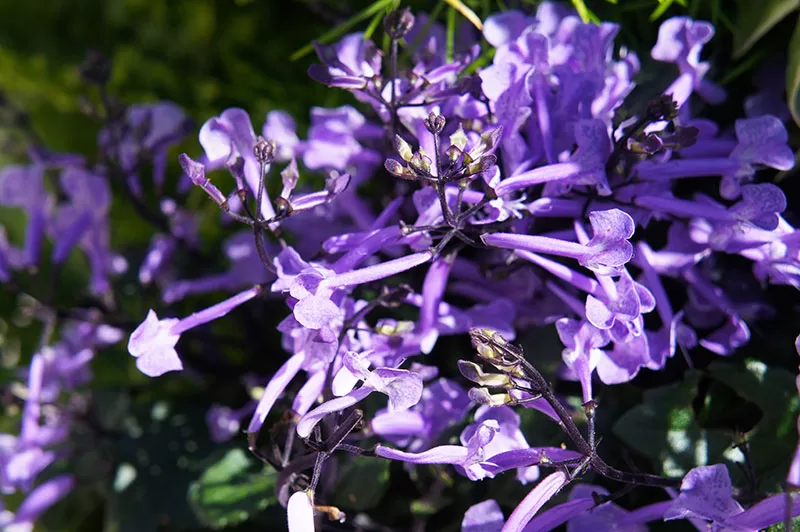
It produces upright spikes of lavender purple flowers above glossy deep green foliage with rich purple undersides. The combination of foliage and flowers means the plant remains attractive even when it is not at peak bloom.
Most plants reach around 60 to 80 centimetres high and approximately 60 centimetres wide. Flowering generally begins in late Summer and continues through Autumn.
Bright filtered light or part shade is ideal. Harsh afternoon sun can damage the foliage while very deep shade may reduce flowering. Morning sun with protection later in the day usually produces lovely foliage colour and plenty of flowers.
‘Mona Lavender’ prefers moist but well drained soil and appreciates regular water during very hot weather. It dislikes frost so choose a protected position in cooler climates.
Give it a prune after flowering to prevent legginess and encourage fresh dense foliage. It works particularly well beneath trees, beside shaded pathways, in protected courtyards and in large pots.
6. Yesterday, Today And Tomorrow – Brunfelsia Species
Yesterday, Today And Tomorrow earns its place among purple flowering plants because a single shrub can display several different flower colours at once.
The wonderfully fragrant flowers open in rich violet purple then gradually fade through lavender before becoming almost white. New flowers continue opening while older ones change colour which produces the distinctive purple, mauve and white display.
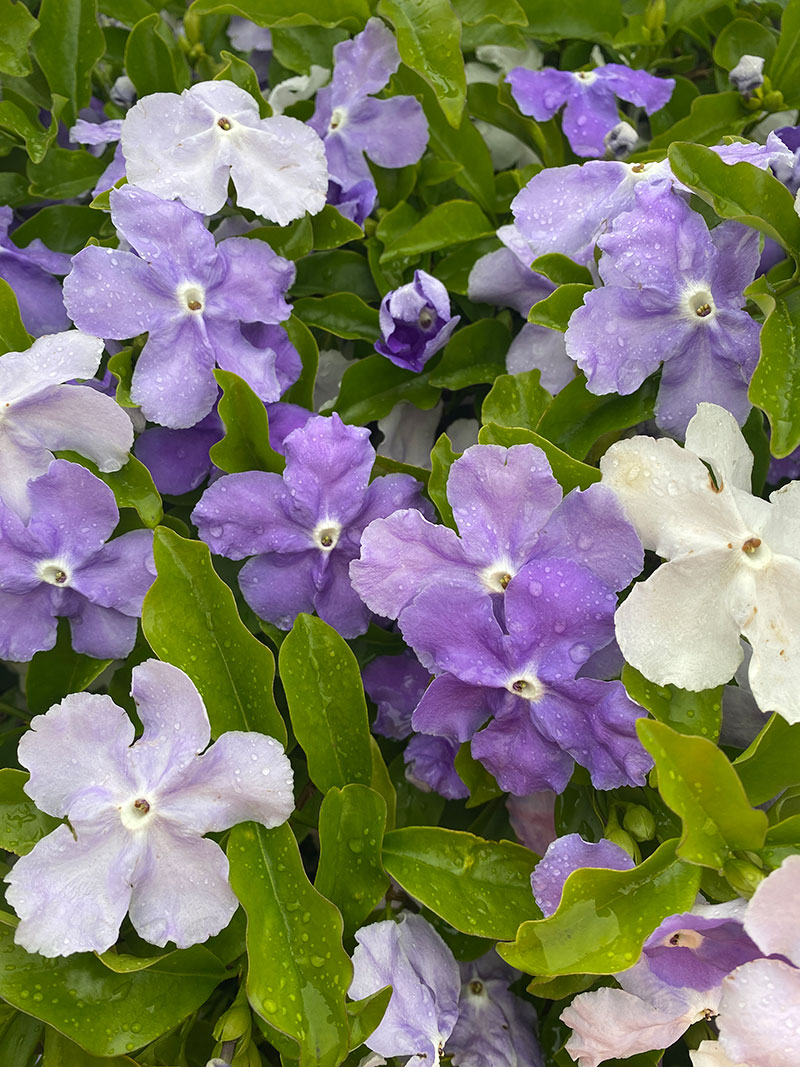
Flowering is generally at its best from late Winter through Spring although warm conditions can encourage further flushes.
Plants sold as Yesterday, Today And Tomorrow in Australia can carry different Brunfelsia names including Brunfelsia australis, Brunfelsia latifolia and Brunfelsia bonodora. Nursery labelling can vary so check the mature size of the particular plant you are buying.
Most garden forms develop into evergreen or semi evergreen shrubs around 1.5 to 2 metres high.
They prefer fertile well drained soil with reliable moisture and grow well in full sun to part shade. Protection from intense western sun is helpful in very hot climates.
A light prune after flowering keeps the plant dense and manageable.
There is one important consideration. All parts of Brunfelsia are poisonous if eaten and the berries and seeds are particularly dangerous. Poisoning in dogs can cause serious neurological symptoms including tremors and seizures.
For that reason I would not plant Yesterday, Today And Tomorrow in a garden where a dog regularly chews plants or berries.
Beautiful? Absolutely. Suitable for every household? Definitely not.
7. Cut Leaf Daisy – Brachyscome multifida
For something considerably smaller, Cut Leaf Daisy is a wonderful Australian native groundcover.
Fine green foliage forms a soft spreading mound dotted with mauve, lilac or purple daisy shaped flowers with cheerful yellow centres.
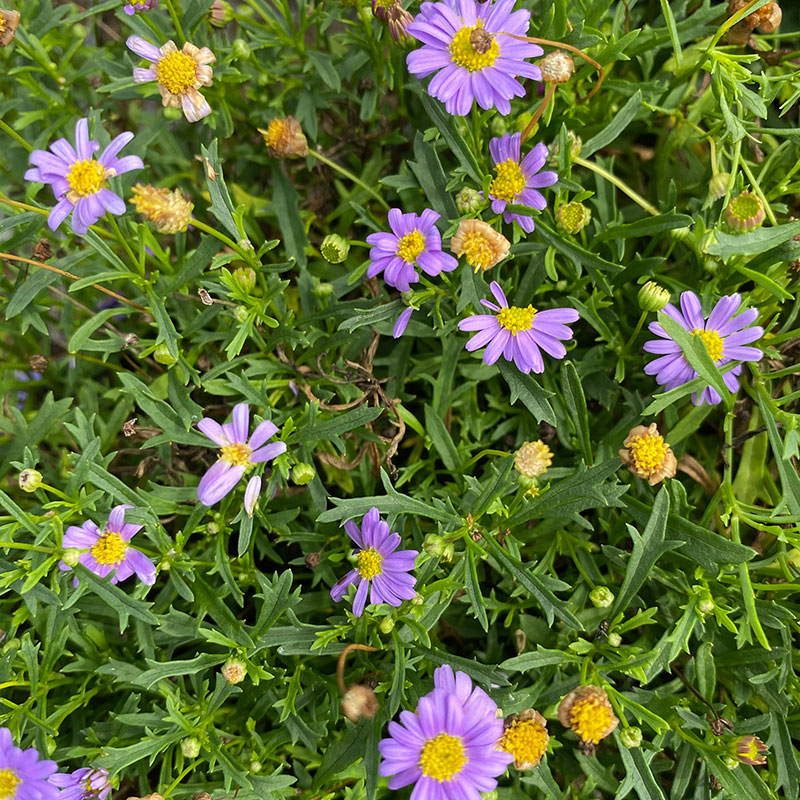
It is also an impressively long flowering plant. In cultivation some forms can produce flowers throughout much of the year with particularly strong displays during Spring and Autumn. Warm conditions may extend flowering even further.
Most forms remain under about 30 centimetres high although they can spread considerably wider over time.
Plant Cut Leaf Daisy in full sun or light shade. It adapts to a surprisingly broad range of soils and is more tolerant of dry conditions than many other Brachyscomes. Occasional deep watering during prolonged Summer heat will keep it looking considerably happier.
Flowering is generally strongest in sun or semi shade.
If the plant starts looking untidy, give it a light trim. New foliage and flower buds usually follow surprisingly quickly.
Use Cut Leaf Daisy along pathways, at the front of garden beds, in pots, rockeries or retaining walls. It also makes a lovely cascading plant where its flowers can spill over an edge.
The flowers attract bees, butterflies and other beneficial insects which makes this little native considerably more useful than its size suggests.
8. Fan Flower – Scaevola aemula
Fan Flower easily makes my shortlist of Australian natives that deserve to be planted more often.
Its unusual flowers have their petals arranged on only one side which creates the little fan shape responsible for the common name. Flowers can be white or blue although the purple and mauve cultivars are particularly beautiful.
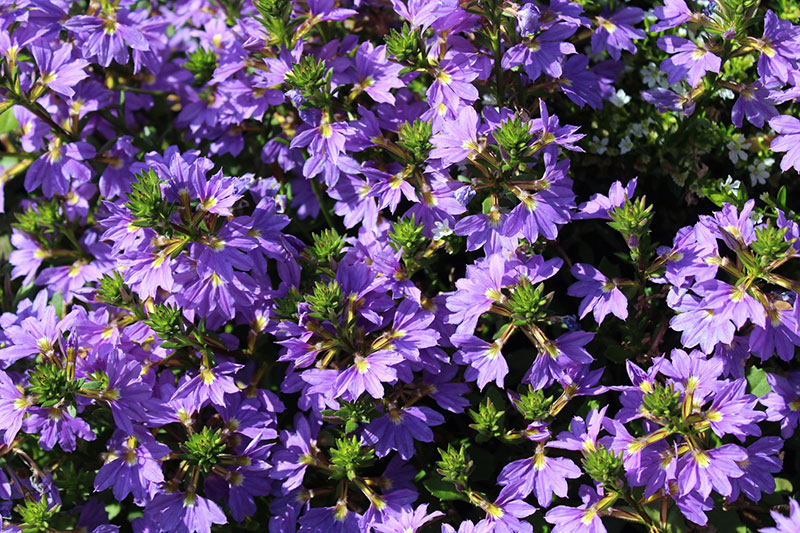
Flowering is generally strongest from Spring through Summer and into Autumn. In warm areas an established plant can flower over a remarkably long period.
Scaevola aemula is naturally a low growing spreading perennial. Its cascading habit makes it perfect for hanging baskets, pots, retaining walls and the edges of raised garden beds.
Give it full sun to light shade with freely draining soil. Established plants cope well with heat and short dry spells although an occasional deep watering during extended hot weather helps maintain flowering.
Avoid overfeeding. Like many Australian natives Scaevola does not require constant fertilising to perform well.
A light prune encourages dense new growth and helps stop older plants becoming sparse in the centre.
For plenty of colour with relatively little fuss, Fan Flower is difficult to fault.
If you would like to add more native colour while giving pollinators a helping hand, our Australian Wildflower Seed Bombs – Wildflowers For Native Pollinators are an easy place to start. The mix includes Swan River Daisy and Native Wisteria along with a selection of other Australian wildflowers chosen to support native bees, butterflies and beneficial insects. Simply plant them in a sunny patch or large pot, keep them watered while they establish and let the flowers do the rest.
9. Purple Mint Bush – Prostanthera ovalifolia
If you would like an Australian alternative to some of the traditional purple flowering shrubs, Purple Mint Bush deserves serious consideration.
Prostanthera ovalifolia produces masses of mauve to deep blue purple flowers mainly from late Winter through Spring. A mature plant in full flower can be spectacular with the blooms almost obscuring the foliage.
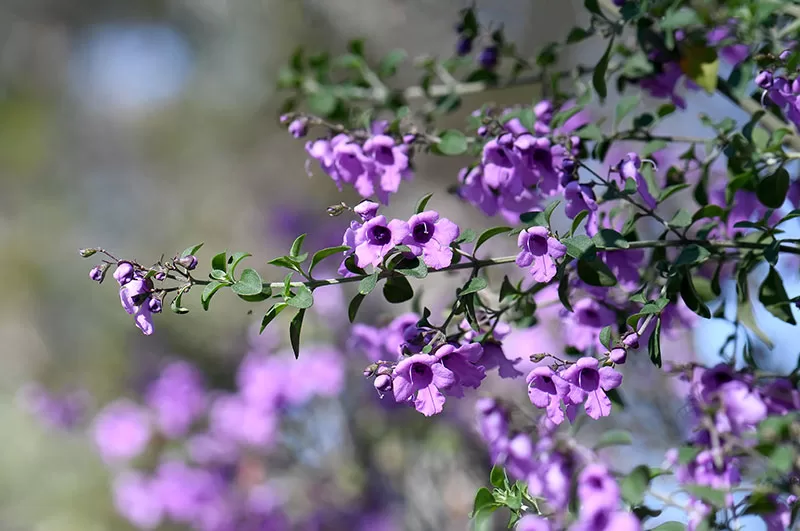
The species is variable and this includes the fragrance of the foliage. Many cultivated forms have strongly aromatic leaves while some wild forms are only lightly aromatic. Where you have a fragrant form, planting it close to a path allows the foliage to release its scent when brushed against.
Purple Mint Bush is also more variable in size than nursery labels sometimes suggest. Plants can reach several metres in the wild although cultivated specimens are commonly kept around 2 to 2.5 metres with pruning.
It prefers moist but well drained soil. Full sun is tolerated although light shade or protection from harsh Summer afternoon sun can be beneficial in warm climates.
Prostantheras often need more water than people expect from an Australian native. Plants can wilt dramatically when dry although they frequently recover once watered.
Heavy poorly drained soil is a different story. Sudden collapse can be caused by poor drainage rather than lack of water so improve heavy soil before planting.
Prune the plant by around one third after flowering to encourage a dense bushy habit and reduce the tendency to become straggly.
10. Thyme Honey Myrtle – Melaleuca thymifolia
Small in stature but remarkably generous with flowers, Thyme Honey Myrtle is a native shrub well worth tracking down.
Melaleuca thymifolia naturally occurs along the east coast of New South Wales and into southern Queensland. It generally develops into a small shrub around 1 metre high although growing conditions can produce both lower spreading forms and plants exceeding 1.5 metres.
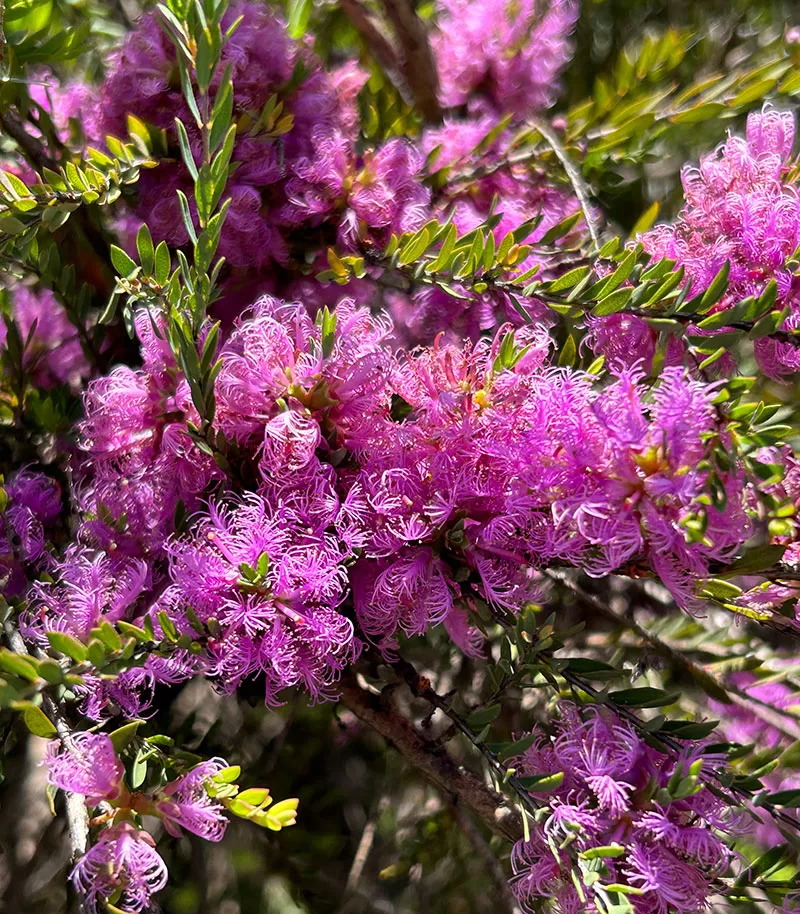
The flowers are the real attraction. Clusters of curved stamens create distinctive claw shaped blooms in shades of rich mauve and purple. Pink and white forms are also available.
Spring brings the main flowering period although established plants can carry flowers for many months of the year depending on climate and rainfall.
Unlike some drought loving Melaleucas, this species appreciates reliable moisture. It can even tolerate less than perfect drainage although it performs best where excess water can still escape.
Full sun encourages the heaviest flowering while part shade is tolerated.
It responds well to light pruning and its naturally compact size makes it useful in small gardens, beside pools, in mixed borders and as a low informal shrub.
It is particularly useful for anyone who has ever bought a plant labelled “compact” only to discover several years later that the plant and the nursery apparently had very different definitions of the word.
11. Heliotrope – Heliotropium arborescens
Heliotrope combines rich purple flowers with one of the loveliest fragrances in the garden.
Clusters of small violet to deep purple flowers have a sweet perfume commonly compared with vanilla or cherry pie. Unsurprisingly, Cherry Pie is another common name for the plant.
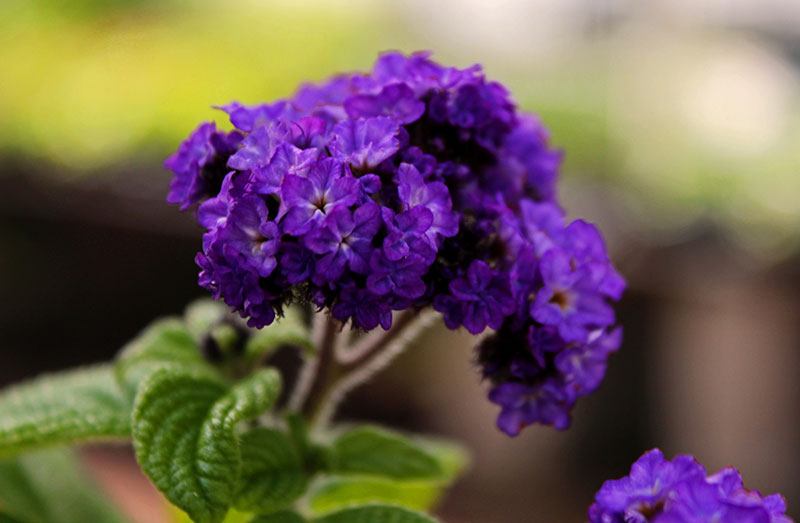
Flowering generally begins in late Spring and can continue through Summer and Autumn in warm conditions.
Garden forms vary in size although many remain between 50 centimetres and 1 metre high. This makes Heliotrope useful in pots, cottage gardens and mixed perennial borders.
It prefers full sun to light shade with fertile well drained soil. Regular moisture through Summer encourages a longer flowering period although the roots should never remain permanently wet.
Removing old flower heads encourages further blooms and occasional pruning maintains a compact plant.
Butterflies are particularly fond of the flowers.
There are two important cautions. All parts of Heliotropium arborescens contain potentially toxic compounds and the plant should not be eaten. This is particularly relevant where livestock have access to garden plants.
Garden Heliotrope should also not be confused with Blue Heliotrope – Heliotropium amplexicaule. Blue Heliotrope is an invasive agricultural and environmental weed in parts of Australia. They may share a common name but they are not the same plant.
12. Salvia ‘Mystic Spires Blue’
Salvia ‘Mystic Spires Blue’ earns its place in the garden through sheer persistence.
Tall spikes of intense blue purple flowers rise above dense green foliage for months. Flowering starts during the warmer part of Spring and continues through Summer with further flowering into Autumn in suitable climates.
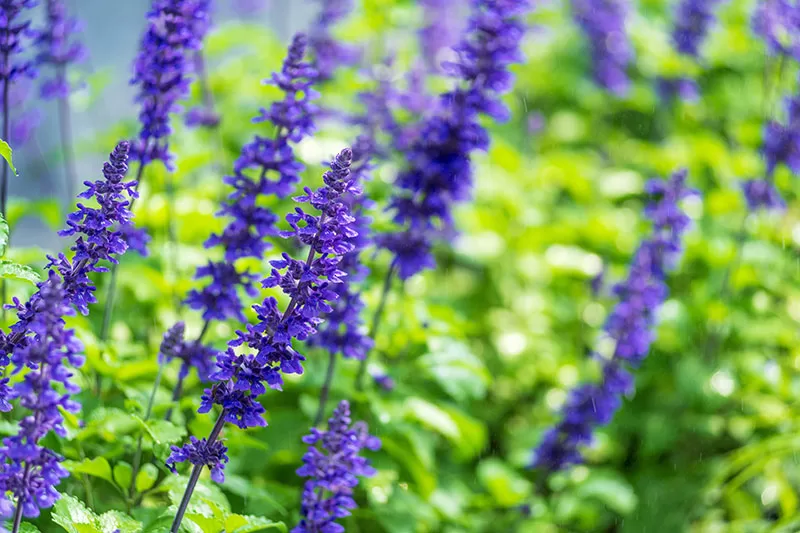
‘Mystic Spires Blue’ is a compact relative of the much larger Salvia ‘Indigo Spires’. Its parentage comes from Salvia longispicata and Salvia farinacea.
Plants generally reach around 45 to 60 centimetres high with a similar or slightly narrower spread. That makes this Salvia easy to fit into a mixed border without allowing it to overwhelm everything around it.
Full sun is ideal. The plant is heat tolerant and performs particularly well through Summer. Some light shade is tolerated although flowering is generally heavier in the sun.
Good drainage is especially important during Winter.
Removing old flower spikes encourages new blooms and a harder prune when the plant starts looking tired will promote vigorous fresh growth.
Bees and butterflies love the flowers.
For gardeners wanting long lasting purple colour without constant maintenance, ‘Mystic Spires Blue’ is one of the most reliable ornamentals on this list.
13. Queen’s Wreath – Petrea volubilis
Queen’s Wreath brings something different to this collection because it delivers spectacular purple flowers at eye level and above.
Also known as Sandpaper Vine or Purple Wreath, Petrea volubilis is a woody climber native to tropical parts of the Americas. It is particularly well suited to subtropical and tropical Australian gardens.
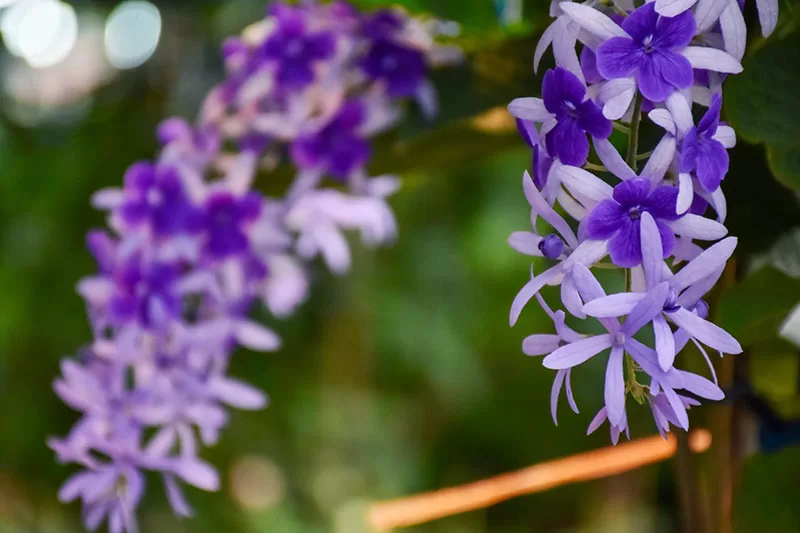
Long hanging flower clusters are packed with purple star shaped structures that give the plant an almost Wisteria like appearance.
Look closely and the display becomes even more interesting. The true flowers are small and dark purple while the larger lighter purple structures surrounding them are persistent calyces. These remain on the vine after the flowers have dropped which considerably extends the colourful display.
In warm Australian climates flowering can occur from Summer into Autumn with additional flushes when conditions are favourable.
Queen’s Wreath prefers full sun although it will tolerate some partial shade. Give it fertile well drained soil and regular moisture while establishing.
Once mature it develops strong woody stems and can become a substantial climber. Provide a sturdy pergola, fence or trellis rather than assuming a tiny decorative wire frame will somehow contain it.
Regular pruning after flowering keeps growth under control.
It is frost tender so gardeners in cooler climates will need a warm protected position.
When Queen’s Wreath is in full flower it is an absolute showstopper. There is really no restrained way of describing it.
14. Silky Purple Flag – Patersonia sericea
Silky Purple Flag gives the garden an entirely different shape and texture to the shrubs, climbers and groundcovers on this list.
This Australian native forms a clump of narrow upright leaves growing from an underground rhizome. The foliage gives it an Iris like appearance even before the flowers arrive.
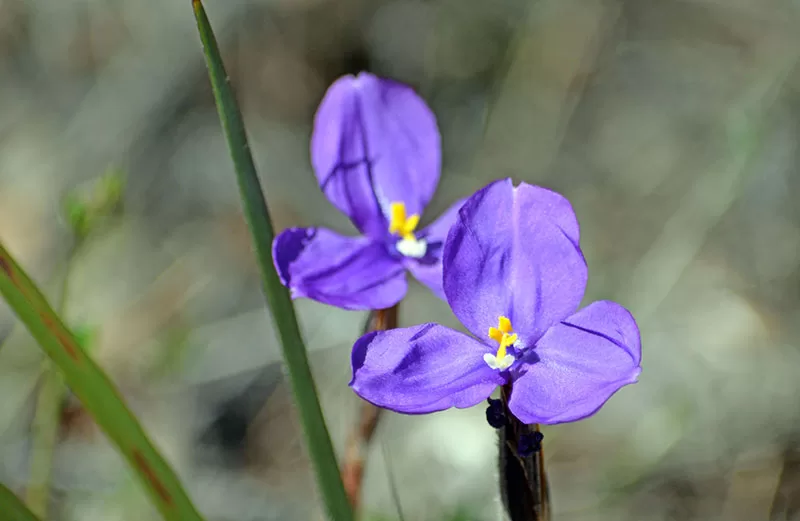
Deep violet blue to purple flowers are produced from Winter through Spring or into Summer depending on location and conditions.
Each individual flower lasts for less than a day. That initially sounds rather disappointing although established plants continue producing new flowers from the same flowering stems over an extended period.
Patersonia sericea occurs naturally from north eastern Victoria through New South Wales and into south eastern Queensland. It grows in heathland, woodland and dry sclerophyll forest.
Give it a sunny or lightly shaded position with excellent drainage. It is surprisingly tough once established and tolerates moderate frost as well as hot dry conditions.
The plant generally grows around 30 to 60 centimetres high.
Silky Purple Flag looks particularly effective planted in groups where its narrow upright foliage creates repetition through a native or contemporary garden.
It is also an excellent choice for rockeries and mixed perennial beds.
15. Blue Dampiera – Dampiera diversifolia
If you want a low growing Australian native with seriously vivid colour, Blue Dampiera deserves a look.
Dampiera diversifolia is native to south western Western Australia where it forms part of the spectacular Spring wildflower display.
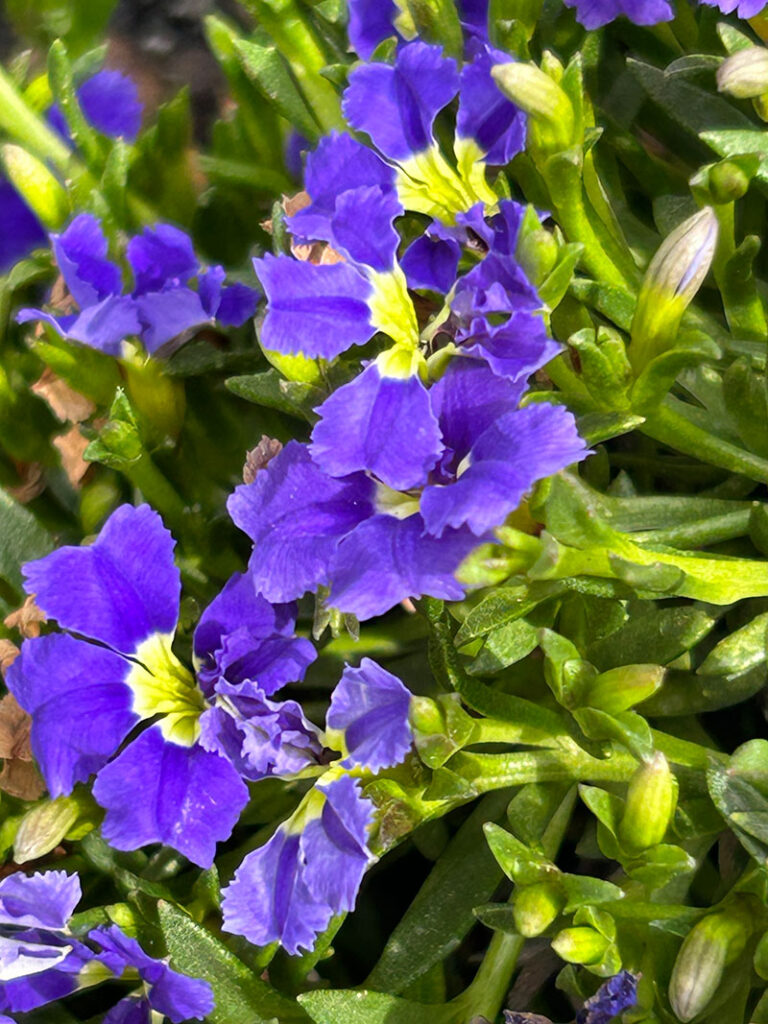
It develops into a low prostrate perennial or small undershrub with a spreading habit. Rich violet blue to purple flowers appear above the foliage during Spring and Summer.
Plants can spread to around a metre across while remaining comparatively low which makes them useful at the front of garden beds, on slopes and around retaining walls.
The flowers are an incredibly intense shade of blue purple and look particularly striking beside silver or grey foliage.
Although naturally a Western Australian species, Blue Dampiera has been successfully cultivated in other parts of the country. Good drainage is the key. It also appreciates some protection from strong wind and competition from more aggressive plants.
Once established it can spread through suckering.
Blue Dampiera is much more effective planted in groups than as a lonely little specimen marooned between larger shrubs.
A patch of those electric purple blue flowers is extremely difficult to miss.
16. Austral Indigo – Indigofera australis
Austral Indigo is a hardy Australian native shrub with a softer and more natural appearance than many traditional flowering shrubs.
Sprays of small pea shaped flowers appear mainly from late Winter through Spring. Flower colour varies considerably from soft pinkish mauve through to deeper purple.
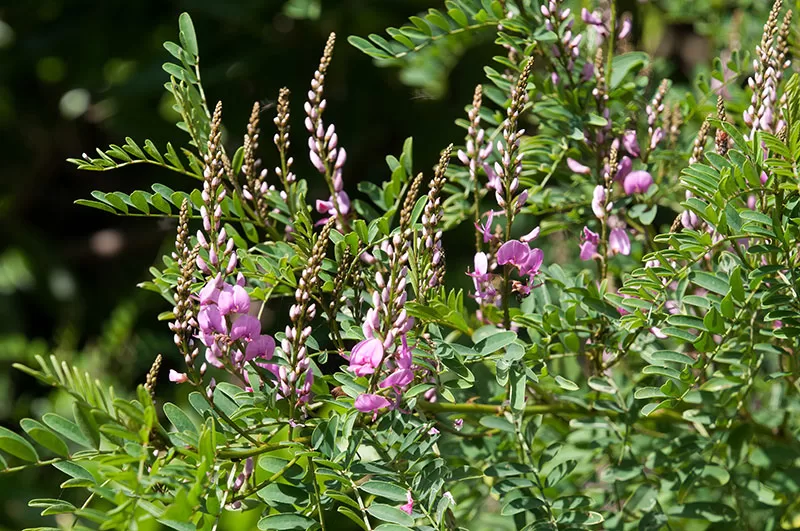
The foliage is equally attractive. Delicate blue green leaflets are carried along slender stems and create a lovely contrast with darker foliage plants.
Indigofera australis occurs across a large part of mainland Australia which gives you some idea of its adaptability. Natural forms grow in everything from woodland and dry forest to the margins of wetter forest communities.
Mature plants generally reach around 1.5 to 2.5 metres high.
Austral Indigo grows in full sun although many forms perform very well in semi shade. It adapts to a range of well drained soils and established plants tolerate dry periods and moderate frost.
Regular pruning helps maintain a dense shrub. Tip pruning young plants is particularly useful because older unpruned plants can become open and woody. Remove old or straggly stems close to the base rather than cutting indiscriminately into very old wood.
The flowers provide pollen and nectar for native insects including bees and wasps and the plant is also associated with several butterfly species.
One caution is worth noting. Indigofera australis should not be promoted as a livestock fodder plant. Australian veterinary information records toxic compounds including cyanogenic compounds in the species and potential poisoning of grazing animals has been reported. This is generally a concern for grazing situations rather than the ordinary suburban garden but it is worth knowing.
How To Use Purple Flowers In The Garden
Purple is surprisingly easy to work with in garden design.
For a fresh high contrast combination, plant purple flowering plants beside yellow or white flowers. Silver foliage is another particularly good companion for violet, mauve and deep purple flowers.
If you prefer something softer, combine several shades of purple with pale pink and white.
You can also use different plant heights to repeat purple throughout the garden rather than creating one enormous purple patch.
A Queen’s Wreath or Hardenbergia can provide height while Native Hibiscus, Tibouchina ‘Jules’, Westringia or Purple Mint Bush create the middle layer. Brachyscome, Dampiera or Scaevola can then continue the colour at ground level.
Repeating the colour in different parts of the garden helps the planting feel connected without making it look as though you bought everything purple at the nursery during one particularly enthusiastic Saturday morning.
Purple also works beautifully with Australian foliage colours. Grey green Westringia, blue green Austral Indigo and the softer foliage of Native Hibiscus all allow purple flowers to stand out without creating a harsh combination.
Choosing Plants That Will Actually Thrive
It is very tempting to buy whichever purple flowering plant looks magnificent at the nursery that weekend then spend the next two years trying to convince it that your garden is exactly where it wants to live.
There is an easier way. Start with the conditions you already have then choose the plant.
Full sun, filtered light, heavy clay, sandy soil, coastal exposure, humidity and frost all favour different plants. A Purple Mint Bush and a Queen’s Wreath might both have beautiful purple flowers but they certainly do not want identical growing conditions.
Get that match right and these purple flowering plants for warm climates can bring colour to an Australian garden for many years without endless watering, fertilising and coaxing.
With Australian natives such as Hardenbergia, Scaevola, Native Hibiscus, Brachyscome and Purple Mint Bush available alongside reliable ornamentals such as Tibouchina ‘Jules’, Heliotrope, Salvia and Queen’s Wreath, there is certainly no shortage of purple to choose from.
FAQs – Purple Flowering Plants For Warm Climates In Australia
For warm sunny positions consider Native Hibiscus, Hardenbergia, Westringia, Scaevola, Brachyscome, Melaleuca thymifolia, Salvia ‘Mystic Spires Blue’, Petrea and Dampiera.
Good drainage becomes particularly important for many of these plants during wet weather.
There are plenty of options for gardens that do not receive full sun.
Plectranthus is the standout for genuinely shaded garden beds. Purple Mint Bush appreciates protection from harsh Summer afternoon sun. Hardenbergia, Brachyscome, Heliotrope and Austral Indigo also perform well with some shade.
Yesterday, Today and Tomorrow is another excellent option for a protected partly shaded garden.
Australia has an extraordinary selection of native purple flowering plants. Some of the easiest garden choices include:
Native Hibiscus
Hardenbergia
Westringia
Brachyscome
Scaevola
Purple Mint Bush
Melaleuca thymifolia
Silky Purple Flag
Dampiera
Austral Indigo
Choosing natives suited to your local conditions also provides valuable food and habitat for native insects, birds and other wildlife.
Many purple and violet flowers are highly attractive to bees.
Brachyscome, Scaevola, Hardenbergia, Salvia, Heliotrope and Westringia are all useful for bringing pollinating insects into the garden.
A mixture of plants that flower at different times of year is far more valuable than one spectacular flowering period. Aim to keep something flowering through as many seasons as possible.
Yes. Yesterday, Today and Tomorrow is the one to watch most closely because the berries are highly toxic to dogs and Australian vets see cases every year. Heliotrope also contains toxic alkaloids.
If you have a dog that chews plants, choose natives such as Westringia, Brachyscome or Scaevola instead. Contact your vet or the Animal Poisons Helpline immediately if you suspect your pet has eaten something toxic.