A steep bank can be one of the most frustrating parts of a garden. It dries out quickly, weeds are awkward to reach and every heavy downpour seems determined to relocate a little more soil to the bottom of the hill. Then there is mowing. If mowing your slope feels more like an extreme sport than garden maintenance, it may be time to plant it instead.
The right plants for steep banks and slopes can help protect exposed soil, slow water as it moves downhill and reduce surface erosion. Their foliage softens the impact of heavy rain while their roots help hold the upper layers of soil together.
Australian native plants are particularly useful for this job. We have tough clumping plants with dense fibrous roots, vigorous groundcovers that spread across bare soil and scrambling plants that are perfectly happy making themselves at home on a difficult bank.
The best results usually come from using a mixture rather than relying on one plant to do all the work.
Table Of Contents
- How Plants Help Control Erosion
- Choosing Plants For A Steep Bank
- Top 12 Plants For Steep Banks And Slopes
- Slope Plants At A Glance
- Mix Groundcovers With Fibrous Rooted Plants
- How To Plant A Steep Slope
- Avoid Leaving A Bank Completely Bare
- Do Not Ignore Drainage
- Creating A Bank That Looks Good Too
- FAQs About Plants For Steep Banks And Slopes
How Plants Help Control Erosion
Bare soil is vulnerable to heavy rain and flowing water. Raindrops hitting the surface can loosen fine soil particles which are then carried downhill in runoff. Plants provide protection both above and below the soil.
Leaves and stems intercept some of the rainfall before it reaches the ground at full force. Spreading groundcovers create a living layer over exposed soil while grasses, Lomandra and other clumping plants develop networks of roots beneath the surface.
Dense fibrous roots are particularly useful because they help bind the upper layers of soil. Creeping and rhizomatous plants can also spread through exposed areas and reduce the amount of bare ground vulnerable to erosion.
Plants cannot fix every slope problem though. A bank that is cracking, slipping, collapsing or threatening a house, retaining wall or neighbouring property needs professional advice. Planting is useful for controlling surface erosion rather than repairing a structurally unstable hillside.
Choosing Plants For A Steep Bank
Take a good look at your slope before heading to the nursery. Conditions can change surprisingly quickly between the top and bottom of the same bank. The upper section is often hotter and drier while the bottom may collect more moisture. In much of Australia a north facing slope can bake during Summer while a south facing bank may receive considerably less direct sunlight.
Consider how much sun the slope receives, your soil type, drainage, exposure to wind, coastal salt if applicable, your local climate and how easily you can reach the plants for maintenance.
That final point matters more than you might think. A shrub requiring constant pruning can look perfectly reasonable at the nursery. It becomes considerably less delightful when you need mountain goat skills to reach it. Low maintenance plants usually make far more sense.
Top 12 Plants For Steep Banks And Slopes
1. Creeping Boobialla – Myoporum parvifolium
Creeping Boobialla is one of Australia’s most useful spreading groundcovers for sunny banks. It grows close to the ground and can form broad mats around 2 to 3 metres across. Dense foliage protects exposed soil and helps suppress weeds while small white or pale pink flowers add interest through the warmer months.
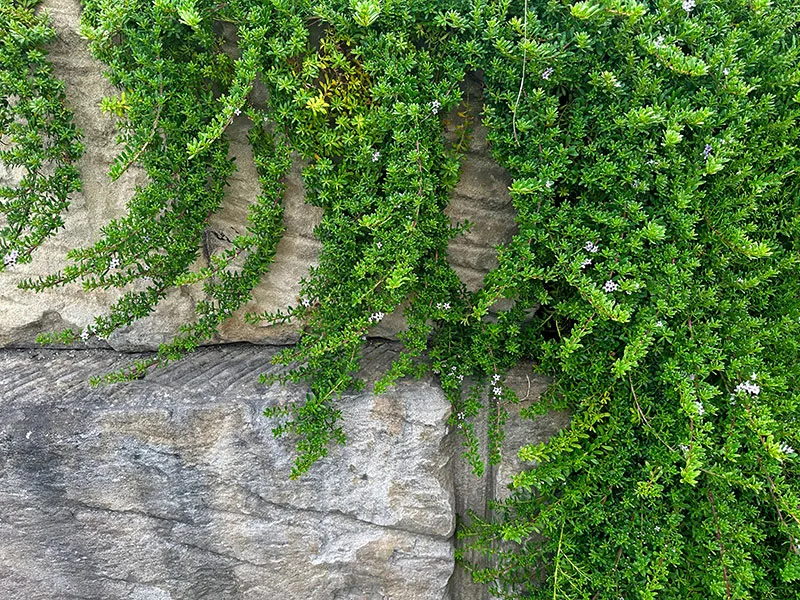
It is hardy across a range of soils and climates once established although it performs best with plenty of light. Plants growing in too much shade can become thinner and more sparsely foliaged.
Creeping Boobialla is particularly useful when you need to cover plenty of ground without creating a tall or bulky planting.
If low growing plants are going to do most of the work on your slope, you might also like our guide to Top 10 Australian Native Groundcovers.
2. Grevillea ‘Poorinda Royal Mantle’
Grevillea ‘Poorinda Royal Mantle’ is a fabulous plant for a large bank where you want serious spreading power.
This prostrate Grevillea stays close to the ground but can eventually spread several metres across. Coppery red new growth adds colour while red toothbrush flowers appear mainly from Winter into late Spring with occasional flowers at other times.
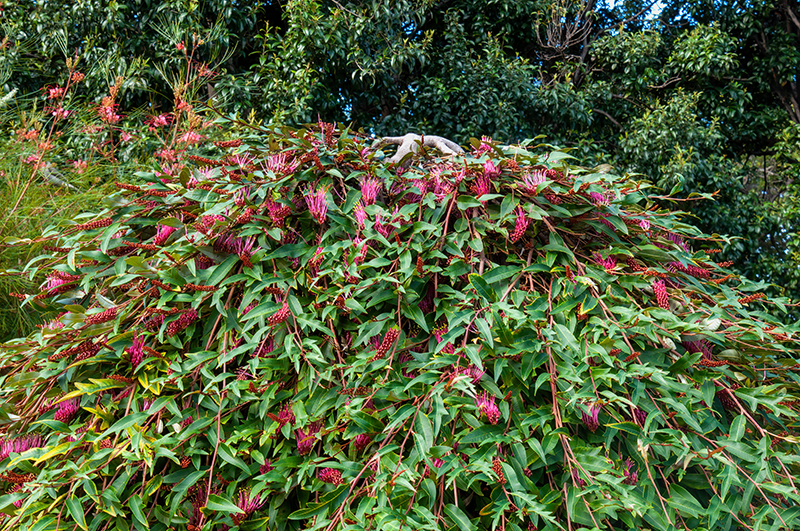
An established plant can cover an impressive area which makes it especially useful on broad slopes where dozens of smaller groundcovers would otherwise be required.
The flowers also provide nectar for birds, bees and other insects so the plant earns its keep above ground as well as below. Give it plenty of room. This is not a groundcover with modest ambitions.
3. Spiny-headed Mat-rush – Lomandra longifolia
Lomandra is almost impossible to ignore when talking about erosion control. Its dense fibrous root system is one of the reasons Lomandra is so widely used in landscape and revegetation planting. Those roots create a network through the upper layers of soil while the foliage helps interrupt water travelling downhill.
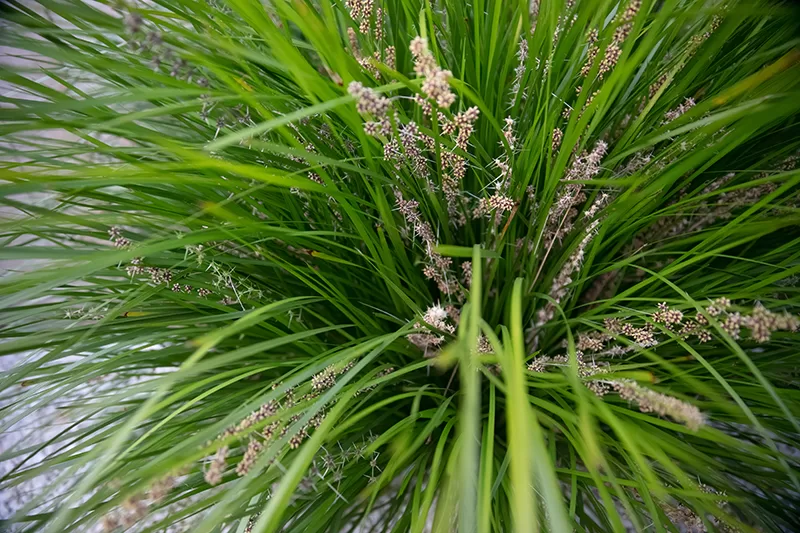
Lomandra longifolia is tough and adaptable although the many cultivated forms available can vary considerably in size and tolerance of different conditions. A larger form may be ideal on a broad bank while compact cultivars suit smaller residential slopes.
Repeated groups of Lomandra planted across a bank provide excellent structure and look particularly good with lower spreading plants weaving between the clumps.
4. Common Tussock Grass – Poa labillardierei
Native grasses deserve far more attention in garden design, particularly when erosion is part of the problem. Common Tussock Grass forms substantial clumps of fine arching foliage with airy flower stems rising above them. Beneath the soil is the important part for a slope, a dense network of fibrous roots.
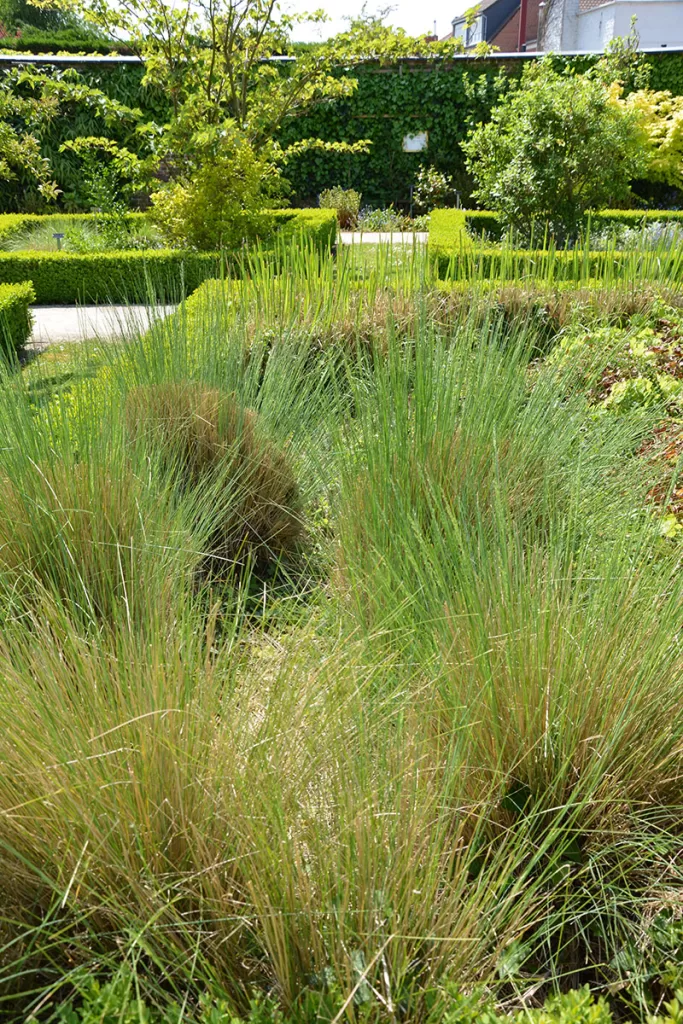
It is particularly useful in cool and temperate parts of Australia and generally prefers a little more soil moisture than the toughest dryland plants on this list. That can make it a good option lower down a bank, around naturally damper areas or on slopes that retain some moisture.
Mass planting creates a beautifully soft and natural effect while providing useful habitat for insects and other small garden visitors.
5. Blue Flax-lily – Dianella caerulea
One of my favourite plants, Blue Flax-lily combines attractive foliage with a very useful growth habit.
This eastern Australian native forms clumps of strappy leaves and spreads through underground rhizomes. Over time those expanding clumps can develop into colonies rather than remaining as isolated plants. Blue flowers appear from Spring into Summer followed by wonderfully vivid blue berries.
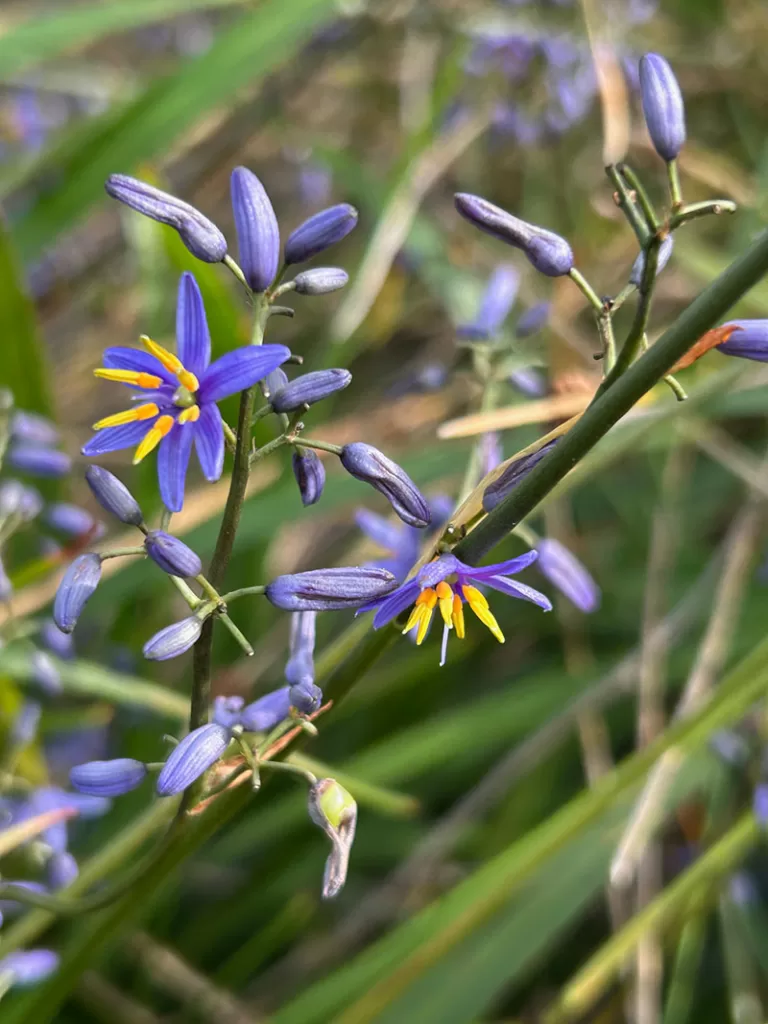
Dianella caerulea is hardy across a range of climates and soils and tolerates periods of dry weather once established. It works particularly well when repeated throughout a bank with spreading groundcovers growing between the clumps.
6. Running Postman – Kennedia prostrata
Running Postman proves that erosion control planting does not have to look relentlessly practical. This low growing Australian native scrambles across the ground and can eventually spread around 2.5 metres. Brilliant scarlet pea shaped flowers add wonderful colour during Spring.
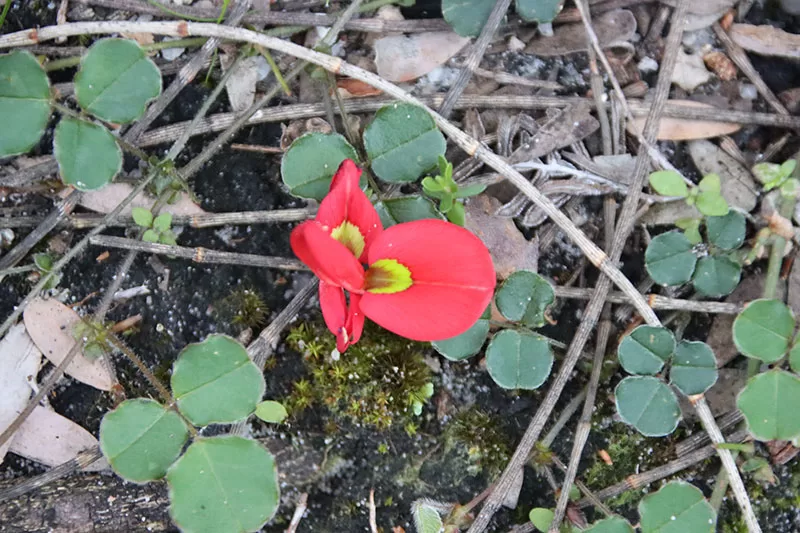
Running Postman prefers reasonably well drained soil and grows in sun or semi-shade. During an extended drought the foliage may die back although established plants can reshoot from the root system when conditions improve.
It is not as densely smothering as Creeping Boobialla so it works particularly well as part of a mixed planting. Let it wander between Lomandra, Dianella and native grasses or spill over the upper edge of a bank.
If you are planting tubestock or small plants into the more accessible areas of your slope, the Australian Made Garden Hand Tool Combo Pack from The Curious Gardener Shop includes a lightweight hand fork and trowel made from 100% recycled plastic bottle lids.
7. Snake Vine – Hibbertia scandens
Snake Vine is one of those Australian natives that deserves far more attention for difficult garden areas. Also known as Golden Guinea Vine, Hibbertia scandens is a vigorous scrambling plant with flexible stems that can extend several metres.
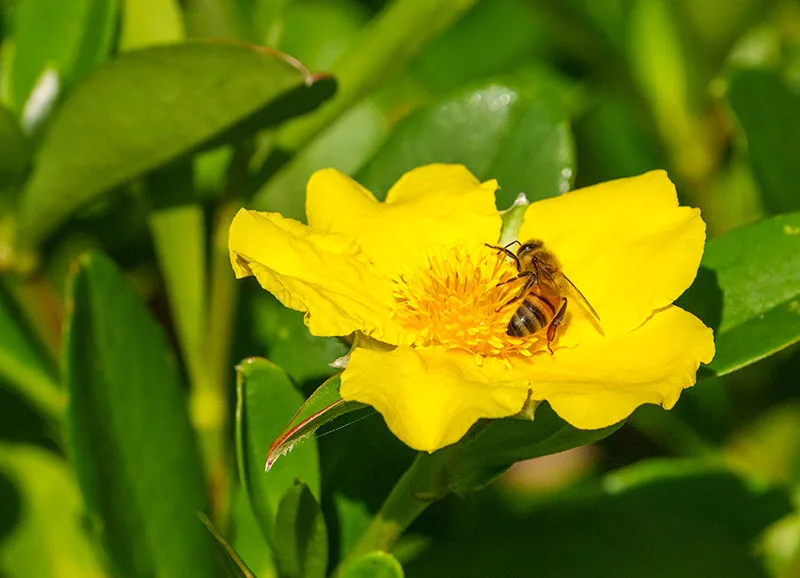
Give it a fence and it will climb. Give it a bare slope and it is quite happy to head sideways instead. Large golden yellow flowers can appear through much of the year with the strongest display often occurring through the warmer months.
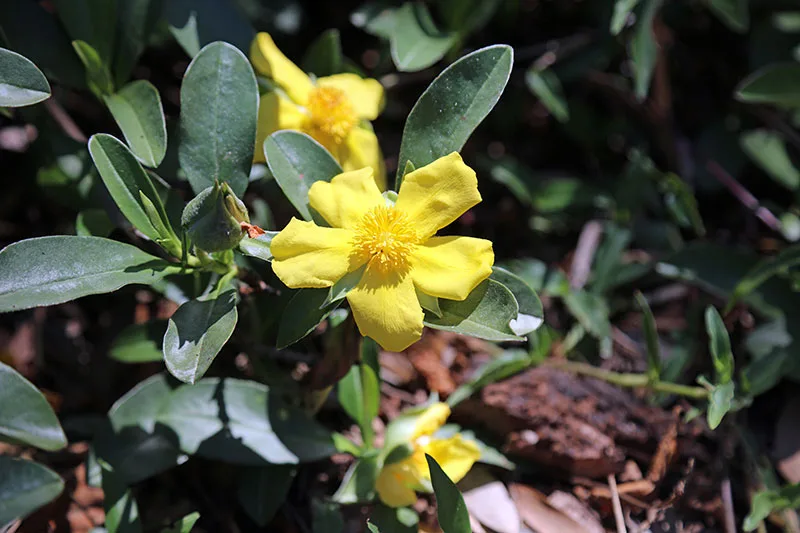
Golden Guinea Vine is also a very useful option for coastal gardens. It naturally occurs along Australia’s east coast and can tolerate exposure to salty coastal winds once established.
Give it some room to move. Its enthusiastic scrambling habit can wander over smaller plants nearby so pair it with neighbours sturdy enough to hold their own.
8. Coastal Rosemary ‘Flat’n’Fruity’ – Westringia fruticosa ‘Flat’n’Fruity’
Coastal Rosemary ‘Flat’n’Fruity’ is a wonderfully low growing form of one of Australia’s toughest native shrubs.
Unlike the more upright forms of Coastal Rosemary, this cultivar hugs the ground at around 10 to 30 centimetres high and can spread up to approximately 2 metres. Its dense grey green foliage helps cover exposed soil while small white flowers appear through Spring, Summer and Autumn.
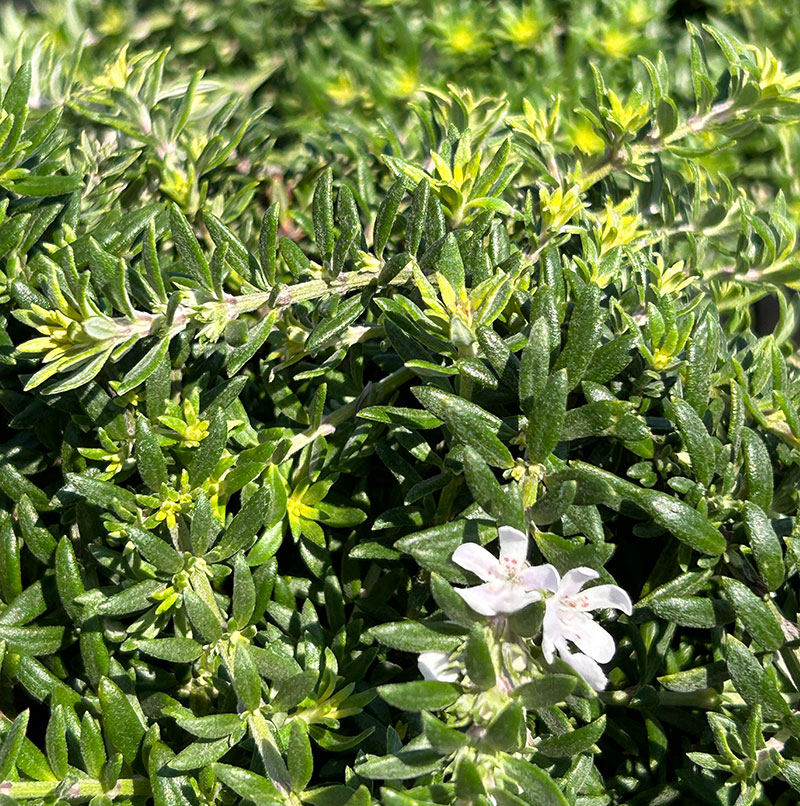
That low spreading habit makes it particularly useful on erosion prone banks where you want good surface coverage without adding much height. It tolerates a wide range of soil types including sandy, loamy and clay soils provided drainage is reasonable. It also handles dry conditions, poor soils and coastal exposure once established.
The flowers attract native bees, butterflies and other insects which gives the plant an extra reason to earn its place on a sunny bank. Maintenance is refreshingly simple. An occasional trim to remove dead or untidy growth is generally all it needs.
For slopes exposed to salt and strong coastal winds, our guide to Top 12 Plants For Coastal Gardens has plenty more ideas.
9. Prostrate Banksia – Banksia petiolaris
Prostrate Banksia is proof that a useful slope plant can still be rather spectacular. This Western Australian native grows horizontally across the ground with large serrated leaves and upright yellow flower spikes. In favourable conditions it can spread several metres while remaining relatively low.
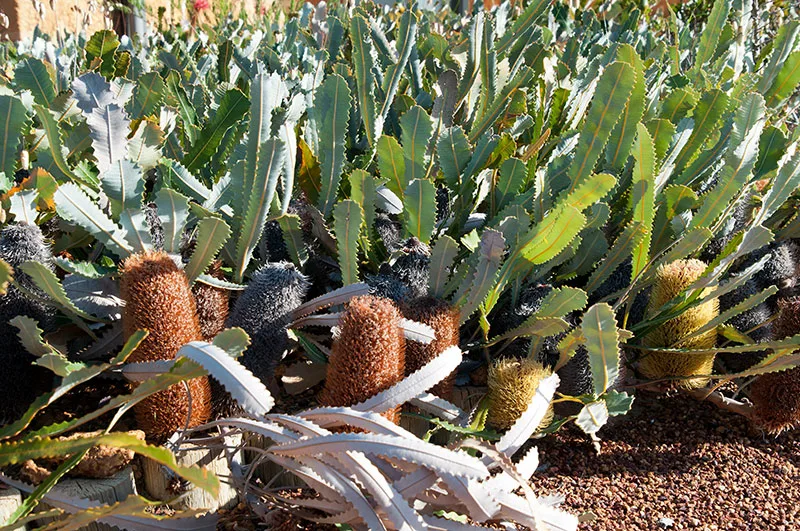
It is best suited to sandy or very well drained ground and can make an excellent feature on rocky or coastal style banks. Drainage is important. Banksia petiolaris naturally grows in sandy soils so I would not choose it for a wet heavy clay bank simply because it looked fabulous at the nursery.
Gardeners in humid regions should also pay particular attention to drainage and local growing conditions. Get the position right though and this is one practical plant that certainly does not look as though it was chosen purely for practical reasons.
10. Native Sarsaparilla – Hardenbergia violacea
Native Sarsaparilla is usually encouraged to climb fences and trellises but there is no rule saying it has to head upwards. Trailing forms can scramble across the ground, tumble down banks or spill over retaining walls.
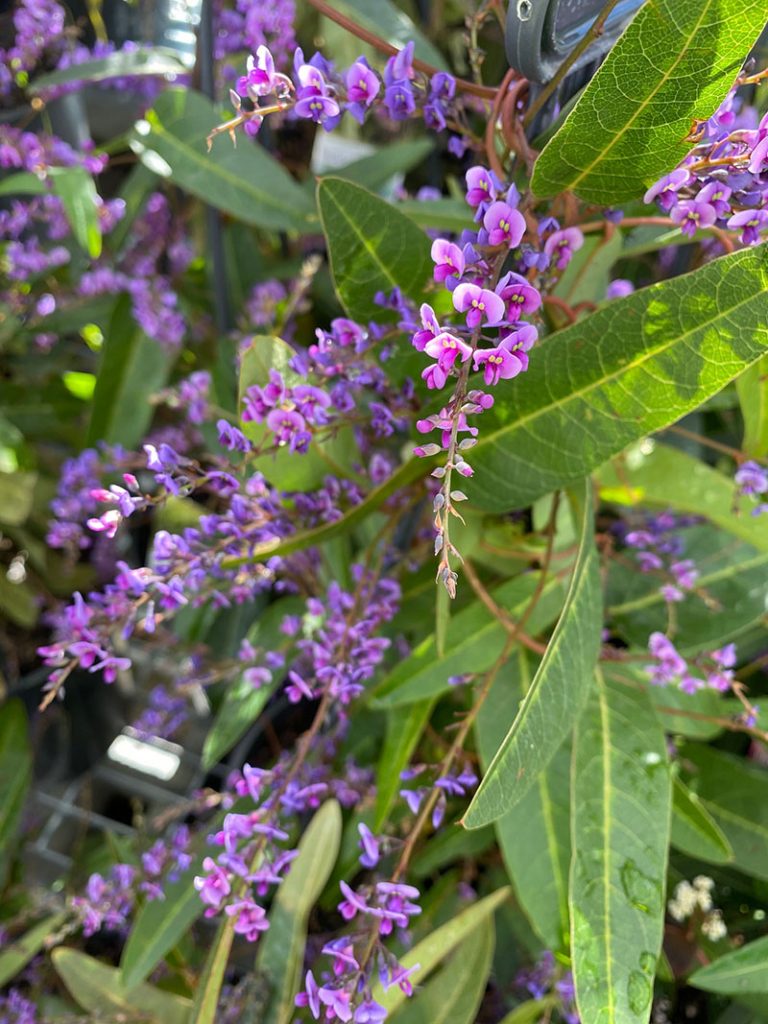
Glossy green foliage creates useful coverage while purple pea shaped flowers appear mainly through Winter and Spring. Pink and white flowering forms are also available.
The species occurs naturally across a large part of eastern and southern Australia and adapts to a range of garden conditions. Different cultivars can have quite different habits so look for a vigorous trailing selection if covering a slope is the main objective.
11. Native Pigface – Carpobrotus glaucescens
A hot sandy coastal bank can be a thoroughly unpleasant place to grow. Native Pigface seems remarkably unconcerned by the whole arrangement.
This tough east coast succulent develops long creeping stems that can root as they spread across the soil. Brilliant pink to purple flowers add plenty of colour. Its natural tolerance of coastal exposure, sandy soils and dry conditions makes it particularly useful for sunny seaside slopes. The spreading stems are also useful for covering loose sandy soil.
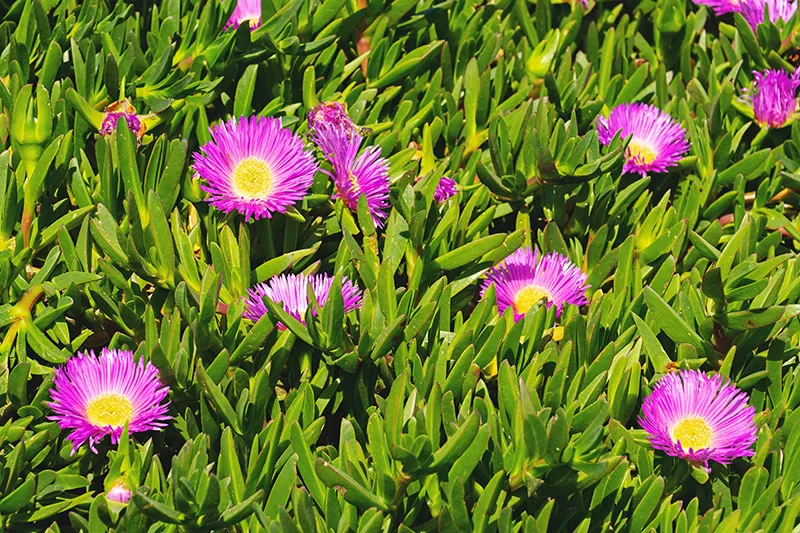
Correct identification matters as introduced Carpobrotus species also occur in Australia. Source native Pigface from a reputable nursery if you specifically want Carpobrotus glaucescens.
Native Pigface also fits beautifully into relaxed native planting. You can find more combinations in our guide to Top 26 Plants For An Australian Native Cottage Garden.
12. Kidney Weed – Dichondra repens
Not every troublesome bank sits in blazing sun. Kidney Weed is a low creeping Australian native with small rounded leaves and spreading stems that form a soft carpet over the soil.

It is particularly useful in cooler or partly shaded areas where many of the sun loving groundcovers on this list may struggle. The plant remains very low which makes it useful beneath open tree canopies or between larger clumping plants such as Dianella.
Kidney Weed generally appreciates more moisture than plants such as Pigface so save it for the cooler areas of your slope rather than expecting it to thrive at the driest exposed top.
Slope Plants At A Glance
| Plant | Best Position | Useful Feature | Approximate Size Or Spread |
|---|---|---|---|
| Creeping Boobialla | Full sun to light shade | Dense surface coverage | Up to around 3m wide |
| Grevillea ‘Poorinda Royal Mantle’ | Full sun to light shade | Large scale spreading groundcover | Around 3m to 6m wide |
| Spiny-headed Mat-rush | Full sun to part shade | Dense fibrous roots | Varies considerably by form |
| Common Tussock Grass | Full sun to part shade | Fibrous roots and naturalistic cover | Up to around 1m high |
| Blue Flax-lily | Full sun to light shade | Rhizomatous clumping growth | Up to around 75cm high |
| Running Postman | Full sun to part shade | Low scrambling coverage | Up to around 2.5m wide |
| Golden Guinea Vine | Full sun to semi-shade | Vigorous scrambling cover | Stems around 2m to 5m long |
| Coastal Rosemary ‘Flat’n’Fruity’ | Full sun to part shade | Dense coastal groundcover | Around 30cm high x 2m wide |
| Prostrate Banksia | Full sun | Spreading cover for sandy banks | Can spread several metres |
| Native Sarsaparilla | Full sun to light shade | Trailing and scrambling growth | Varies by form or cultivar |
| Native Pigface | Full sun | Coverage for sandy coastal slopes | Around 2m or more |
| Kidney Weed | Part shade to shade | Low cover for cooler areas | Low spreading mat |
Mix Groundcovers With Fibrous Rooted Plants
A successful slope does not need twelve different species. In fact, repeating three to five suitable plants usually creates a much more cohesive garden than planting one of everything. The important part is combining different growth habits.
Lomandra, Poa and Dianella provide clumping, rhizomatous or fibrous root systems. Creeping Boobialla, Grevillea and Westringia cover the soil surface. Hibbertia, Hardenbergia and Running Postman scramble through the spaces between them.
Pigface can take the hottest exposed coastal areas while Kidney Weed can fill cooler shaded pockets. Prostrate Banksia is a lovely option where the soil is sandy and exceptionally well drained.
Where possible, include plants indigenous to your local area. They are already adapted to regional conditions and can provide particularly valuable habitat for native insects, birds and other wildlife.
How To Plant A Steep Slope
Autumn is an excellent time to establish a bank through much of temperate Australia. The soil still holds some warmth while cooler conditions reduce stress on new plants. In subtropical and tropical areas, choose a milder period when useful rainfall is expected rather than planting an entire slope immediately before extreme heat.
Tubestock can be particularly useful. Smaller plants require smaller planting holes which means disturbing less vulnerable soil. They are also much more economical when you need dozens of plants. Plant across the contour of the slope rather than creating neat rows running directly downhill. Staggering plants helps interrupt the path of surface water instead of providing convenient channels for runoff.
Create a shallow basin around each new plant so irrigation and rainfall have a chance to soak into the root zone.
On freshly disturbed or particularly steep soil, biodegradable jute or coir erosion matting can provide temporary protection while roots establish. Reclaimed rocks or suitable untreated logs already available on the property may also help interrupt water movement where they can be positioned safely.
Use coarse mulch rather than fine lightweight material that is likely to migrate downhill after the first serious storm. Most importantly, water new plants properly while their roots establish. Drought tolerant does not mean capable of being planted on Tuesday and abandoned on Wednesday.
Avoid Leaving A Bank Completely Bare
If you are renovating an overgrown slope, it can be tempting to clear absolutely everything before starting again. That can make an existing erosion problem worse. Even unwanted vegetation may currently be protecting the soil from heavy rainfall and helping hold the surface together.
Where practical, clear and replant sections of the bank gradually so there is always some vegetation protecting the ground. The same principle applies to planting density. Tiny isolated plants surrounded by metres of exposed soil cannot provide much protection during their first few years.
Aim for a planting that will eventually knit together and cover most of the soil surface.
Do Not Ignore Drainage
Plants are only one part of managing a slope. Water pouring from a downpipe, driveway or paved area onto one point of a bank can quickly overwhelm planting and carve channels through the soil.
Watch what happens during heavy rain. You may discover that the main problem is not rainfall landing on the slope at all. It may be concentrated water arriving from somewhere else. Drainage problems need to be addressed rather than expecting plants to compensate indefinitely.
Deep cracks, obvious soil movement, significant slumping or failing retaining walls are also signs that the problem has moved beyond ordinary garden erosion. That is the point where the trowel goes back in the shed and professional advice becomes the sensible option.
Creating A Bank That Looks Good Too
Erosion control does not mean your slope needs to look purely functional. Start with repeated clumps of Lomandra, Dianella or Poa to give the planting structure.
Add broad spreading plants such as Grevillea ‘Poorinda Royal Mantle’, Creeping Boobialla or Coastal Rosemary between them. Allow Golden Guinea Vine or Native Sarsaparilla to wander through selected areas then use Pigface or Running Postman for bursts of colour.
Repeating the same plants in groups will make the bank look intentional rather than chaotic. Over time foliage begins to meet, roots spread through the soil and weeds have fewer gaps to exploit. Eventually that awkward bare slope can become one of the most interesting parts of the garden.
It is certainly preferable to watching your topsoil make a determined escape towards the neighbour’s place every time the forecast mentions heavy rain.
FAQs About Plants For Steep Banks And Slopes
Plants with dense fibrous, rhizomatous or spreading root systems are particularly useful. Lomandra, Dianella, native tussock grasses, Creeping Boobialla, prostrate Grevilleas and spreading native groundcovers can all play a role depending on the site.
Yes. Dense groundcovers protect bare soil from direct rainfall and help slow surface water while their roots hold the upper soil layers together. Combining them with clumping or fibrous rooted plants generally provides better coverage than relying on one plant type alone.
Spacing depends on the eventual size of each species. On erosion prone slopes the aim is usually for mature plants to meet or overlap rather than leaving large permanent areas of exposed soil between them.
Plants are extremely useful for controlling surface erosion and helping hold the upper layers of soil together. They cannot correct serious slope instability, major drainage problems or structural movement. A slipping, cracking or collapsing bank should be professionally assessed.