Walk into a nursery looking for Periwinkle and you may come home with one of several quite different plants. One is a tidy flowering plant smothered in pink. Another creeps enthusiastically across the ground and shows absolutely no respect for where you thought the garden bed ended.
You are not imagining the difference. The name Periwinkle is used for several different garden plants. Two of the most commonly confused are Catharanthus roseus and Vinca minor.
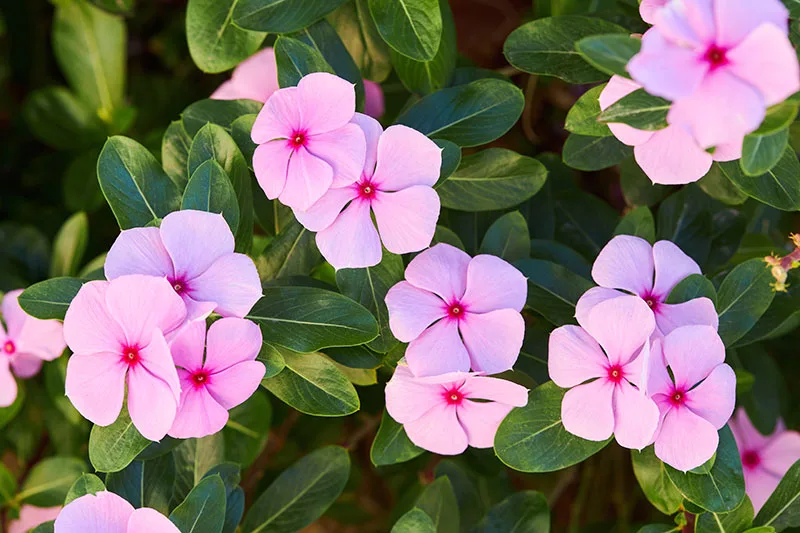
The confusion has a genuine botanical explanation. Catharanthus roseus was once known as Vinca rosea. That old botanical name has stuck around and the plant is still commonly sold simply as Vinca.
Both plants belong to the Apocynaceae family and both carry attractive five petalled flowers. Beyond that they are very different plants with different growing habits, climate preferences and potential problems in Australian gardens.
There is also a third plant worth knowing about, Vinca major, which is the Periwinkle most likely to earn a stern look from your local weed officer.
So which Periwinkle do you actually have? Let’s sort out this botanical identity crisis once and for all.
On This Page
- Why Is Periwinkle So Confusing?
- Catharanthus Roseus: The Colourful Garden Vinca
- How To Grow Catharanthus Roseus
- Vinca Minor: The Creeping Periwinkle
- Catharanthus Roseus Vs Vinca Minor Vs Vinca Major
- What About Vinca Major?
- Is Periwinkle Invasive In Australia?
- How To Get Rid Of Unwanted Periwinkle
- Which Periwinkle Should You Grow?
- Australian Native Groundcovers Worth Considering
- A Quick Note About Periwinkle And Safety
- Periwinkle FAQs
Why Is Periwinkle So Confusing?
Most of the trouble comes down to plant naming. The pink flowering plant many Australians know as Vinca, Rose Periwinkle or Madagascar Periwinkle is botanically Catharanthus roseus. One of its former botanical names is Vinca rosea.
The accepted botanical name is now Catharanthus roseus although Vinca never quite disappeared from garden centres, plant labels or gardeners’ vocabulary.
True Vinca plants belong to a separate genus. The two Australian gardeners are most likely to come across are Vinca minor, called Lesser Periwinkle or Common Periwinkle and Vinca major, called Greater Periwinkle or Blue Periwinkle.
Here is the quick version. An upright plant covered in pink, white or rosy flowers is probably Catharanthus roseus. A plant crawling through a shady bed with blue to violet flowers is much more likely to be Vinca minor or Vinca major.
Catharanthus Roseus: The Garden Vinca
Botanical Name: Catharanthus roseus
Former Botanical Name: Vinca rosea
Common Names: Madagascar Periwinkle, Rose Periwinkle, Pink Periwinkle, Vinca
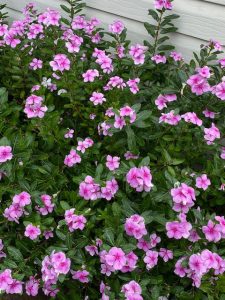
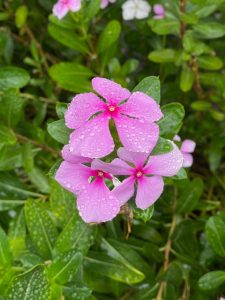
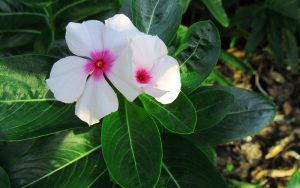
This is the colourful Periwinkle many Australian gardeners recognise on sight. The species is native to Madagascar. It is naturally a perennial herb or subshrub although it is often grown as a warm season annual in cooler Australian climates. Many compact garden varieties remain relatively low while the species can grow towards one metre tall in suitable warm conditions.
The leaves are glossy and dark green with a prominent pale central vein. Young growth may be slightly hairy and broken stems release a milky sap.
The flowers are the giveaway. They have five broad petals and are generally around 2.5 to 5 cm across. Modern varieties come in a fabulous range of colours including:
- White
- Pale pink
- Hot pink
- Rose
- Mauve
- Purple
- Deep rosy red
Many varieties also have a contrasting eye at the centre.
How To Grow Catharanthus Roseus
Madagascar Periwinkle loves warmth. It performs best in full sun to light shade and plenty of light usually encourages more flowers. In very hot areas some protection from harsh afternoon sun can help keep plants looking their best.
Good drainage is particularly important. Catharanthus roseus tolerates dry spells surprisingly well once established although it is not fond of sitting in constantly wet soil. In warm frost free climates it can behave as a perennial. Cold weather and frost can damage it badly so gardeners in cooler regions often treat it as an annual.
Plant in Spring after the danger of frost has passed. In suitable conditions you can expect flowers through Summer and well into Autumn.
Madagascar Periwinkle works beautifully in:
- Sunny garden beds
- Pots and containers
- Courtyards
- Cottage gardens
- Colourful borders
- Hanging baskets
- Hot spots where fussier flowering plants tend to sulk
Deadheading is generally unnecessary. An occasional light trim can help keep the plant compact and encourage fresh growth. Avoid overwatering and make sure pots drain freely. This is one flowering plant that would rather be a little thirsty than spend its days with soggy feet.
If you are planting a new bed or digging out unwanted spreading Periwinkle, our Garden Hand Tool Combo Pack with Hand Fork and Trowel is Australian Made from 100% recycled plastic and very handy for loosening soil, planting and chasing down wandering roots.
Vinca Minor: The Creeping Periwinkle
Botanical Name: Vinca minor
Common Names: Lesser Periwinkle, Common Periwinkle, Dwarf Periwinkle
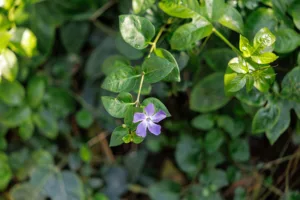
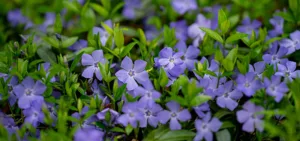
Now we arrive at the plant that started all the confusion. Vinca minor looks quite different from Madagascar Periwinkle once you know what to look for. It is a low evergreen creeping groundcover rather than an upright flowering plant.
The spreading stems run across the soil and can root at the nodes. Established plants may spread a metre or more and form a dense mat. The leaves are glossy, dark green and arranged in opposite pairs. They are relatively small at around 1 to 4.5 cm long.
Flowers are usually blue to violet although white and reddish purple forms also occur. In South Eastern Australia, flowering is generally concentrated through Spring and early Summer.
Gardeners have traditionally used Vinca minor in difficult shaded areas including beneath established trees where lawn and many flowering plants refuse to cooperate. It tolerates shade well and established plants can handle some dry conditions. Dense growth also covers bare ground efficiently.
Unfortunately, that enthusiasm for covering ground is exactly where the problems begin.
Catharanthus Roseus Vs Vinca Minor Vs Vinca Major
Here is the easiest way to tell our three Periwinkles apart.
| Feature | Catharanthus roseus | Vinca minor | Vinca major |
|---|---|---|---|
| Common Name | Madagascar Periwinkle, Rose Periwinkle, Vinca | Lesser Periwinkle, Common Periwinkle | Greater Periwinkle, Blue Periwinkle |
| Growth Habit | Upright or spreading herb or subshrub | Low creeping groundcover | Vigorous trailing groundcover |
| Flower Colour | White, pink, rose, mauve or purple | Usually blue to violet with white and reddish purple forms | Usually blue to violet and sometimes whitish in the centre |
| Leaf Length | Usually around 2.5 to 9 cm | Around 1 to 4.5 cm | Around 2 to 8 cm |
| Preferred Climate | Warm temperate, subtropical and tropical | Temperate | Temperate with some occurrence in cooler subtropical areas |
A simple rule of thumb works most of the time. Pink and upright usually points towards Catharanthus. Blue and creeping points towards Vinca. Leaf size and the presence of tiny hairs along the leaf margins can then help distinguish Vinca major from Vinca minor. Nature does enjoy ruining a perfectly good rule though so check the botanical name whenever identification really matters.
What About Vinca Major?
There is one more Periwinkle every Australian gardener should recognise. Vinca major, known as Greater Periwinkle or Blue Periwinkle, looks like a larger and much more vigorous version of Vinca minor.
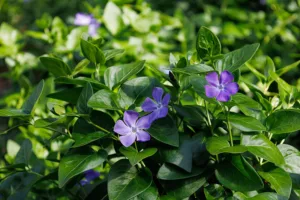
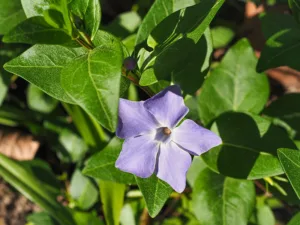
It can grow up to around 50 cm high although most stems trail across the ground. Stems may extend a metre or more from a woody crown and root as they spread.
The leaves are an excellent identification clue. They are glossy, oval to broadly ovate and around 2 to 8 cm long with fine hairs along the margins. Some cultivated forms have white variegation along the leaf edges. Flowers are usually blue to violet with five petals and may have a whitish centre.
This species has become a serious environmental weed across temperate southern Australia. It forms dense mats along creeks, gullies, roadsides, bushland margins and other disturbed areas.
Vegetative spread does most of the damage. Creeping stems root at their nodes and new infestations can develop from stem pieces, roots or crowns moved in garden waste, contaminated soil or floodwater. Viable seed is uncommon in many Australian populations although it can occur in some locations.
Is Periwinkle Invasive In Australia?
The answer depends very much on which Periwinkle you mean.
| Plant | Australian Situation | Main Concern |
|---|---|---|
| Catharanthus roseus | Naturalised in parts of northern and eastern Australia and other warm coastal districts | Can invade sandy coastal habitats and disturbed natural vegetation |
| Vinca minor | A garden escape with established populations including parts of Victoria and south eastern NSW | Recognised as an environmental weed in Victoria including the Dandenong Ranges |
| Vinca major | Widely naturalised across temperate southern Australia with occasional occurrence in south eastern Queensland | Serious environmental weed that can smother native ground vegetation and spread through waterways and dumped garden waste |
Vinca major is the biggest concern by a considerable margin. In the ACT its propagation and supply are prohibited. In NSW, the General Biosecurity Duty applies and it is also subject to specific regional management recommendations in the Hunter. Weed classifications and management requirements can change so check with your council or state weed authority before planting if you are unsure.
None of this means every Periwinkle growing happily in a suburban pot needs to be dug out tomorrow. It does mean knowing what you are growing.
Avoid planting potentially invasive Periwinkle beside bushland, waterways, drainage corridors or reserves. Never dump clippings into natural areas and keep an eye on spreading stems or unwanted seedlings.
Local context changes everything. A contained plant in a Sydney courtyard presents a very different risk from the same species sitting beside a creek or coastal reserve.
How To Get Rid Of Unwanted Periwinkle
Removing an established patch of spreading Periwinkle is entirely achievable. It simply asks for persistence.
For Vinca major in particular, the root system can form a tough fibrous mat around 15 to 30 cm deep. Plants can also regenerate from stem pieces, roots and crowns.
Hand Removal
Start after decent rain or water the area first so the soil is easier to work. Begin at the outside of the infestation and work towards the centre. Fold runners inwards as you go rather than dragging them across clean soil.
Dig out small patches carefully and remove as much plant material as possible. A sturdy hand fork earns its keep here.
Smothering
For small Vinca major infestations growing in sunny areas, recycled black plastic can be used as part of a control program. Cover the patch during Summer and leave the plastic in position for up to a year. Once it is removed, dig out the remaining roots and runners.
Do not use this method where desirable native plants are growing through the infestation unless you are prepared to lose those plants too.
Follow Up And Disposal
Check the area regularly after removal and deal with any regrowth promptly. Large established infestations can require repeated control over several years. Like Onion Weed and Asparagus Fern, Periwinkle is very good at teaching gardeners the meaning of commitment.
Never leave freshly removed Vinca major runners or roots lying in contact with soil. If you cannot remove the plant material from the site, bag it securely until it is completely dead. Contact your local council for advice about the correct disposal method in your area rather than assuming it can go into any waste bin.
Which Periwinkle Should You Grow?
If you want masses of colour through the warm months, Madagascar Periwinkle (Catharanthus roseus) is very likely the plant you are actually looking for. It suits sunny beds and containers beautifully and modern cultivars offer an impressive range of colours.
Keep in mind that Catharanthus roseus can naturalise in warmer Australian regions. Check local advice if you garden near bushland, dunes or coastal reserves.
I would avoid Vinca minor and most certainly Vinca major altogether. In plenty of Australian gardens a native groundcover is a much better solution.
Australian Native Groundcovers Worth Considering
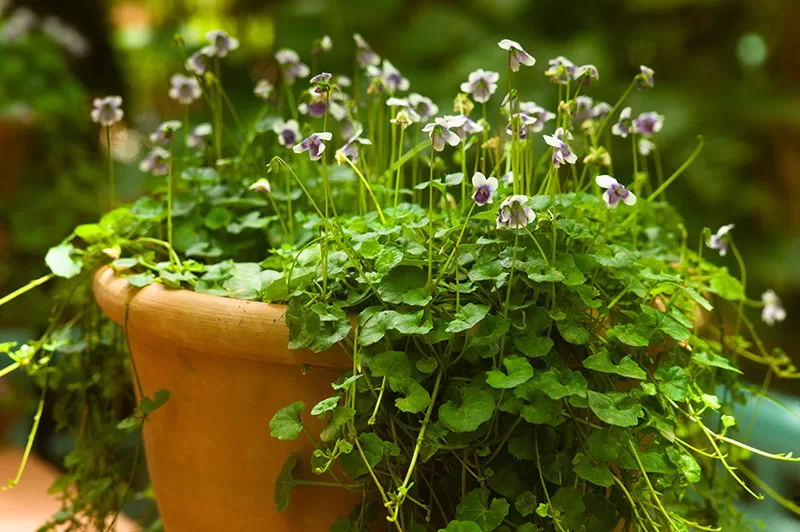
Native Violet – Viola hederacea is an excellent option for sheltered moist shade. It spreads via stolons and produces pretty mauve and white flowers through Spring and Summer.
Kidney Weed – Dichondra repens forms a soft spreading carpet and is one of our best native lawn alternatives for low traffic areas. It handles shade particularly well and can also grow in brighter positions.
Creeping Boobialla – Myoporum parvifolium suits sunnier situations. It forms a dense spreading mat and is particularly useful for covering large areas and helping to suppress weeds.
Goodenia – Goodenia ovata ‘Gold Cover’ is another useful groundcover where you want cheerful yellow flowers and a plant that can cope with some shade.
Cut Leaf Daisy – Brachyscome multifida is worth considering for sunnier or lightly shaded positions. It produces masses of daisy flowers and makes a lovely filler through native and cottage style gardens.
Choosing a species that occurs naturally in your region brings another advantage. Locally indigenous plants can provide useful habitat and resources for the insects, birds and other wildlife that share your garden.
A Quick Note About Periwinkle And Safety
Catharanthus roseus has a remarkable place in medical history. The plant produces alkaloids that led to the development of the chemotherapy medicines vinblastine and vincristine. Vincristine became an important part of combination chemotherapy used to treat childhood Acute Lymphoblastic Leukaemia and other cancers.
The quantities naturally present in the plant are tiny. Historically, around 500 kg of dried Catharanthus roseus leaves were required to isolate approximately one gram of vinblastine. That fascinating history absolutely does not make Madagascar Periwinkle a home remedy.
All parts of the plant are considered potentially toxic if eaten. Small accidental ingestions may not produce symptoms although more significant exposure can cause effects including nausea, vomiting, fever, headache, hallucinations and nerve problems.
The plant also produces a milky sap so washing your hands after handling cut material is sensible. Keep this in mind if you garden around young children or pets that like sampling the landscaping.
Periwinkle FAQs
Vinca is commonly used as a name for several plants called Periwinkle. The colourful pink and white garden Vinca is generally Catharanthus roseus while true Vinca species include Vinca minor and Vinca major.
Catharanthus roseus was formerly known botanically as Vinca rosea. Although Catharanthus roseus is now the accepted name, Vinca still remains widely used in horticulture.
Some Periwinkles are environmental weeds in parts of Australia. Vinca major is the most problematic while Vinca minor and Catharanthus roseus have also escaped cultivation in suitable climates.
Catharanthus roseus is naturally perennial although it is often grown as an annual in cooler climates. Vinca minor and Vinca major are evergreen perennials.