Finding the right plants for under trees can be surprisingly difficult. On the surface it seems simple enough. There is an empty patch of ground, there is some shade and surely there must be something attractive we can plant there.
Then you start digging. Suddenly you are dealing with hungry tree roots, dry soil, compacted ground, limited light and possibly a shovel that refuses to go any further than three centimetres. Planting under trees is not impossible though. Far from it.

Plenty of plants will grow happily beneath established trees. The trick is choosing plants that suit the particular type of shade you have rather than simply looking for something labelled ‘shade tolerant’.
Some areas beneath trees are extremely dry. Others stay cool and moist. Trees with open canopies may provide lovely dappled light while dense evergreen trees can create almost permanent shade.
Choose accordingly and that awkward bare patch can become one of the loveliest parts of the garden.
Table Of Contents
- Why Is It So Difficult To Grow Plants Under Trees?
- Matching Plants To The Conditions Under Your Tree
- Which Plants Suit Your Climate Zone?
- Quick Reference Table For Plants Under Trees
- The Top 15 Plants For Under Trees
- Three Planting Combinations That Work
- How To Plant Under Trees Without Damaging The Roots
- How Often To Water New Plants Under Trees
- What About Dry Shade Under Trees?
- A Few Words About Planting Under Gum Trees
- What Not To Plant Under Trees
- Getting Started Under Your Own Trees
- Frequently Asked Questions About Planting Under Trees
Why Is It So Difficult To Grow Plants Under Trees?
Shade is only half the problem. Mature tree roots are extremely efficient at finding water and nutrients. Any smaller plants growing beneath them have to compete for what remains.
The tree canopy can also prevent rain from reaching the soil. You may have had decent rainfall only to discover that the soil directly beneath the tree is still bone dry.
The usual culprits are:
- Competition from established tree roots
- Dry soil beneath a dense canopy
- Low light
- Compacted soil
- Heavy leaf litter
- Difficulty digging without damaging tree roots
- Uneven moisture levels beneath the same tree
Before choosing your plants, take a good look at the area at different times of the day. A position receiving several hours of filtered or dappled light will support a much wider range of plants than somewhere sitting in deep shade all day.
Also check what happens after rain. Does the soil stay moist or does the canopy shed most of the water away from the planting area? A little detective work now can save you a surprising amount of plant replacement later.
Matching Plants To The Conditions Under Your Tree
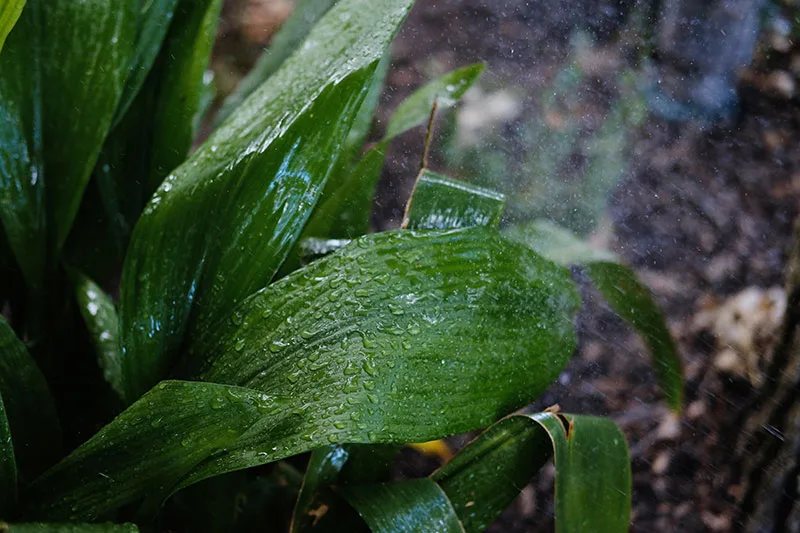
Not every plant on this list will suit every tree. For deep dry shade, look at genuinely tough plants such as Clivia, Cast Iron Plant and Liriope.
For cooler or moister shade, Bird’s Nest Fern, Hosta, Australian Native Violet, Native Ginger and New Guinea Impatiens are better choices.
For dappled or lighter shade around the outer canopy, plants such as Spiny Headed Mat Rush, Silver Spurflower and Australian Bugle become possibilities.
This distinction matters. A Hosta may adore the shade beneath your tree yet still curl up its toes if the soil is permanently dry. A Spiny Headed Mat Rush may cope beautifully with dry soil yet look decidedly underwhelmed in very deep shade.
Right plant, right place. It is an old gardening saying for a reason.
Which Plants Suit Your Climate Zone?
Australia covers an enormous range of growing conditions so a plant that thrives beneath a tree in Cairns may have a very different opinion about life in Hobart.
Cool Temperate Gardens
In cool temperate gardens across Tasmania, Victoria and the tablelands, Hosta, Liriope, Australian Bugle and Cast Iron Plant are all worth considering. Clivia can also perform well in sheltered positions although it needs protection from severe frost.
Native Ginger and Xanadu need considerably more shelter in cold districts. Some Bromeliads tolerate cool conditions surprisingly well while more tropical varieties are better grown in protected positions or containers.
Warm Temperate Gardens
Warm temperate gardens around Sydney, Adelaide and Perth have a particularly broad range of options. Clivia, Cast Iron Plant, Australian Native Violet, Spiny Headed Mat Rush and Silver Spurflower can all perform beautifully in suitable conditions.
Prickly Rasp Fern is another excellent choice where there is filtered light and reasonable moisture. Hostas will need a cool moist position and protection from harsh Summer conditions while Xanadu appreciates shelter from frost.
Subtropical And Tropical Gardens
In subtropical and tropical gardens through Brisbane, northern New South Wales and further north, you can really lean into the lush options. Bird’s Nest Fern, Bromeliads, Xanadu, Native Ginger and Australian Native Violet are all excellent possibilities.
Hostas are generally much less reliable in warm climates because most perform best where they experience a cool Winter dormancy period.
If you desperately love a Hosta, and frankly their foliage makes that understandable, choose a suitable cultivar and give it the coolest protected microclimate you can.
The Top 15 Plants For Under Trees
1. Clivia miniata
Clivia miniata is one of the great classics when it comes to plants for under trees and with good reason. It tolerates shade, root competition and dry conditions once established remarkably well.
The thick dark green strap-like leaves form handsome evergreen clumps that provide structure throughout the year. Bright funnel-shaped flowers appear from late Winter into early Spring with orange being the traditional colour. Yellow, cream, salmon and deeper red-orange forms are also available.
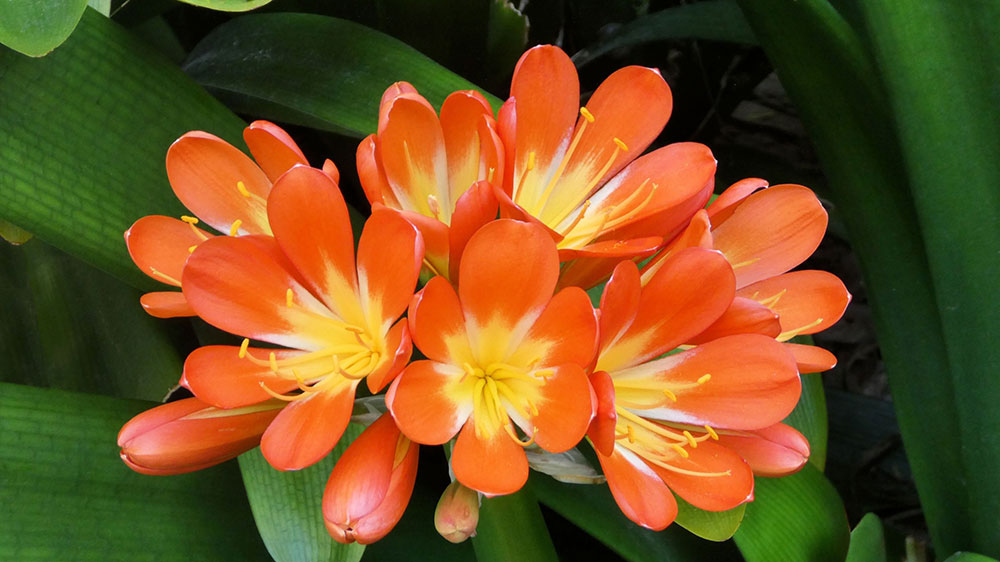
Clivias will grow in fairly deep shade although flowering is generally better where some filtered light reaches the plants. They are particularly useful beneath established trees where the soil is difficult to cultivate.
They prefer mild conditions and protection from severe frost. In very cold districts they are best positioned somewhere sheltered or grown in containers that can be protected during Winter.
Clivias also look much more impressive planted in groups rather than dotted around individually. Give them time and they slowly form substantial colonies. This is gardening at a sensible pace. Nobody needs another plant creating an administrative emergency.
2. Liriope muscari ‘Isabella’
Liriope muscari ‘Isabella’ is one of those dependable plants that quietly gets on with the job.
‘Isabella’ forms clumps of glossy green grass-like foliage around 30 to 40cm high. Pinkish lilac flower spikes rise above the leaves during Summer followed by small dark berries.
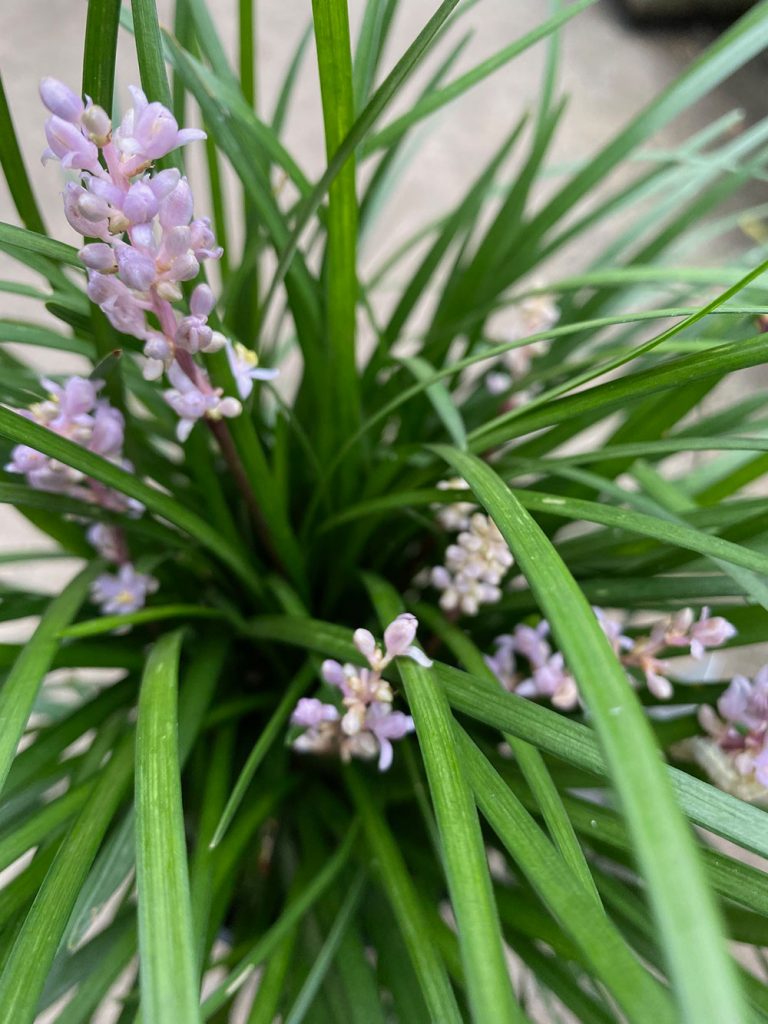
It tolerates considerably more shade than many strappy plants and once established it can cope with periods of dry soil. That makes it particularly useful beneath established trees.
Liriope works beautifully as edging or planted repeatedly through a larger shady garden bed. It also contrasts well with broader foliage plants such as Clivia and Cast Iron Plant.
Give new plants regular water while their root systems establish. Mature Liriope is tough. Newly planted Liriope is considerably less heroic.
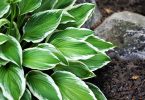
3. Hosta sp.
If you have a cool moist position beneath a tree, Hostas are hard to beat for foliage.
These clumping perennials are grown primarily for their magnificent leaves which range from deep green through blue-green, lime, cream and beautifully variegated combinations.

Leaf size varies enormously between cultivars and plants can range from relatively petite varieties to seriously impressive leafy specimens.
During Summer, tall flower stems rise above the foliage carrying white, pale purple or lavender flowers.
Hostas enjoy shade although they are not the best choice for very dry positions beneath trees. They perform much better where the soil contains plenty of organic matter and receives consistent moisture.
They are particularly well suited to cool and temperate regions of Australia. Most Hostas die back during Winter before returning in Spring.
Snails and slugs also consider Hosta leaves five-star dining so keep an eye out for damage as the new foliage appears. Apparently nobody told them the Hostas were ornamental.
4. Asplenium australasicum (Bird’s Nest Fern)
For a lush Australian native option, Bird’s Nest Fern is hard to go past.
This beautiful fern produces long glossy green fronds from a central rosette. Mature plants can become substantial in ideal growing conditions with fronds reaching well over a metre.
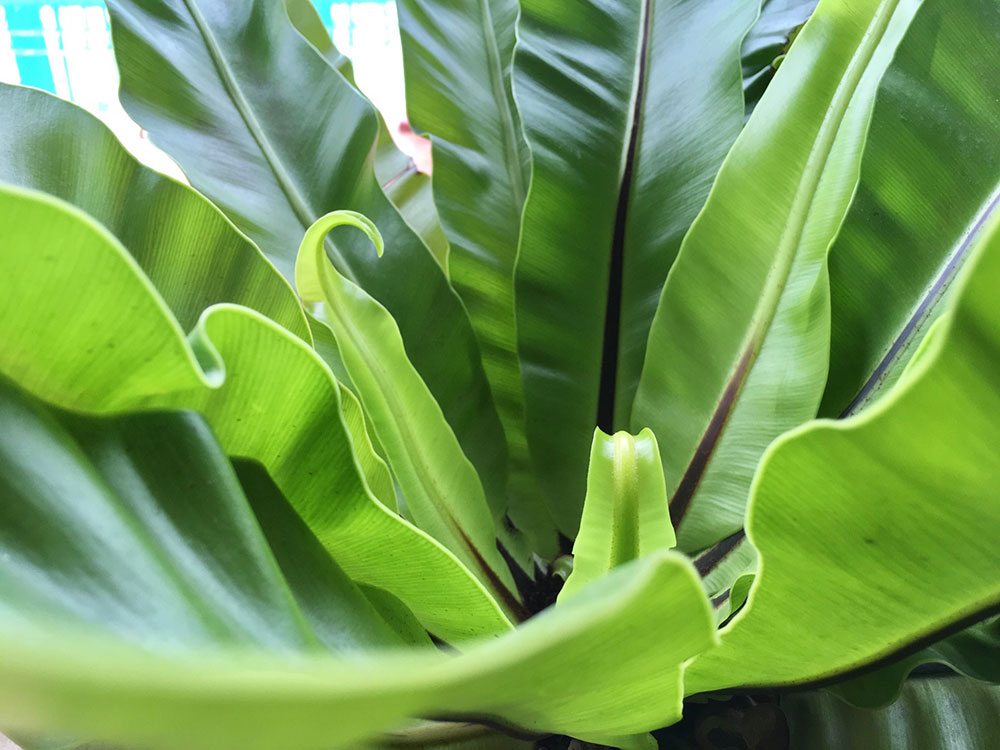
Bird’s Nest Ferns naturally grow in sheltered forests and rainforests where they may be found growing on trees, rocks or in the ground.
Their distinctive central ‘nest’ catches fallen leaves and other organic material which gradually breaks down around the plant.
They prefer moist sheltered shade with good drainage rather than extremely dry conditions. Strong direct sun can scorch the fronds so protection from hot afternoon light and drying winds is important.
Australian Asplenium australasicum is more cold tolerant than the tropical Asplenium nidus with which it is sometimes confused although protection from severe or repeated frost is sensible.
Bird’s Nest Ferns work particularly well beneath established trees in humid coastal and subtropical gardens. Combine them with Bromeliads and other foliage plants if you want that wonderfully lush layered look.
5. Ajuga reptans – Ajuga/Bugle/Common Bugle
Australian Bugle is a very useful little native for semi shaded positions beneath trees.
Ajuga australis is widespread through southern and eastern Australia and grows naturally across an impressive range of habitats.
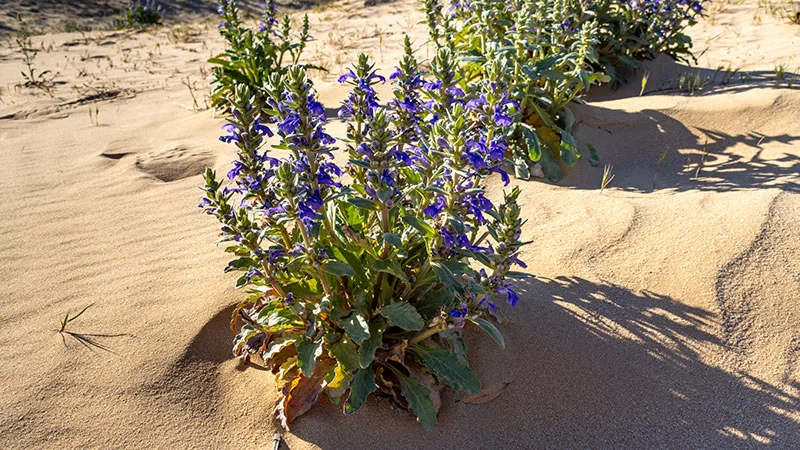
It forms a low perennial plant with soft foliage and upright flower stems carrying purple, blue, mauve and occasionally pink or white flowers mainly through Spring and Summer.
The foliage stays relatively low while the flowering stems can reach considerably higher.
Australian Bugle prefers semi shade although it will tolerate more sun and extended dry periods once established. It also handles moderate frost and a range of soil types provided drainage is reasonable.
The commonly sold exotic species Ajuga reptans is another popular garden groundcover with green, bronze or deep purple foliage. It can spread much more aggressively and has naturalised in parts of Australia.
For that reason I would avoid planting Ajuga reptans close to bushland or environmentally sensitive areas. If I were starting a new Australian garden from scratch, the native option would certainly get my vote.
6. Catharanthus roseus – Pink or Madagascar Periwinkle, Vinca
Catharanthus roseus, commonly known as Pink Periwinkle, Madagascar Periwinkle or simply Vinca, is a colourful option for the brighter areas beneath trees where there is filtered light, dappled sun or several hours of morning sun.
Unlike the creeping Periwinkle Vinca minor, Catharanthus roseus grows as an upright or slightly spreading plant with glossy green leaves and a distinctive pale vein running through the centre. Flowers appear in shades of pink, white, rose, mauve and purple with many cultivars producing a contrasting eye in the centre.

This plant loves warmth and good drainage. It flowers generously through the warmer months and once established it handles short dry periods remarkably well. In warm frost free parts of Australia it can behave as a perennial while gardeners in cooler areas generally grow it as a warm season annual.
It is worth remembering that Madagascar Periwinkle prefers considerably more light than many of the other plants on this list. Plant it towards the outer edge of the tree canopy rather than in deep permanent shade. Too little light usually means fewer flowers and a rather unimpressed looking plant.
There is also a little botanical confusion attached to this one. Catharanthus roseus was formerly known as Vinca rosea which is why the name Vinca is still widely used. It should not be confused with Vinca minor or the much more invasive Vinca major. If Periwinkle identification has your head spinning, our guide to Vinca Or Periwinkle? Catharanthus Roseus Vs Vinca Minor explains the differences.
Catharanthus roseus has naturalised in some warmer parts of Australia, particularly tropical, subtropical and coastal areas. I would avoid planting it close to bushland, coastal reserves or other environmentally sensitive areas where seed could escape into surrounding vegetation. Australian references record it as naturalised across warm northern and eastern regions and coastal habitats are among the areas of concern.
For shady positions where you want a spreading groundcover rather than Summer colour, Australian Native Violet – Viola hederacea (see below) is a much better choice and will tolerate filtered sun through to full shade.
7. Bromelia sp. – Bromeliads
Bromeliads are wonderfully useful beneath trees in warm Australian gardens. There are hundreds of species and cultivars available with foliage ranging from plain green to striped, spotted, burgundy, pink and almost silver.
Many Bromeliads are naturally adapted to growing beneath forest canopies.

Some are epiphytes which means they grow on trees and other surfaces without taking nutrients from their host. This makes them particularly useful where tree roots make digging difficult. Genera including Neoregelia, Aechmea, Billbergia and Vriesea offer plenty of choices for shaded gardens.
Tank-forming Bromeliads collect water in the central rosette. Keep some fresh water in the central cup and flush it periodically rather than allowing old water and debris to sit there indefinitely.
Most Bromeliads prefer sheltered conditions with protection from intense afternoon sun. Cold tolerance varies considerably between species and cultivars so choose varieties suited to your climate.
Mass plant several different foliage colours beneath a tree and you can create an impressive display without relying heavily on flowers.
8. Impatiens sp. – New Guinea Impatiens/Balsam
If colour is what you are missing beneath your trees, New Guinea Impatiens are worth considering.
These compact plants produce masses of bright flowers through the warmer months in shades including white, pink, red, orange and purple.

The foliage is attractive too with many cultivars carrying dark green, bronze or variegated leaves.
New Guinea Impatiens prefer bright shade or filtered light rather than very deep shade.
They also need more moisture than many of the tougher plants on this list so they are not a good solution for extremely dry soil beneath hungry tree roots.
They perform particularly well beneath trees where irrigation or regular watering is available.
Protect New Guinea Impatiens from frost and harsh afternoon sun. For gardeners who insist shady gardens do not have to be entirely green, Impatiens are very happy to provide supporting evidence.
9. Viola hederacea – Australian Native Violet
Australian Native Violet is one of my favourite groundcovers for shady gardens.
This low spreading Australian native generally grows only around 5 to 10cm high. Small rounded leaves form a soft green carpet while delicate mauve and white flowers appear for much of the year in suitable conditions.
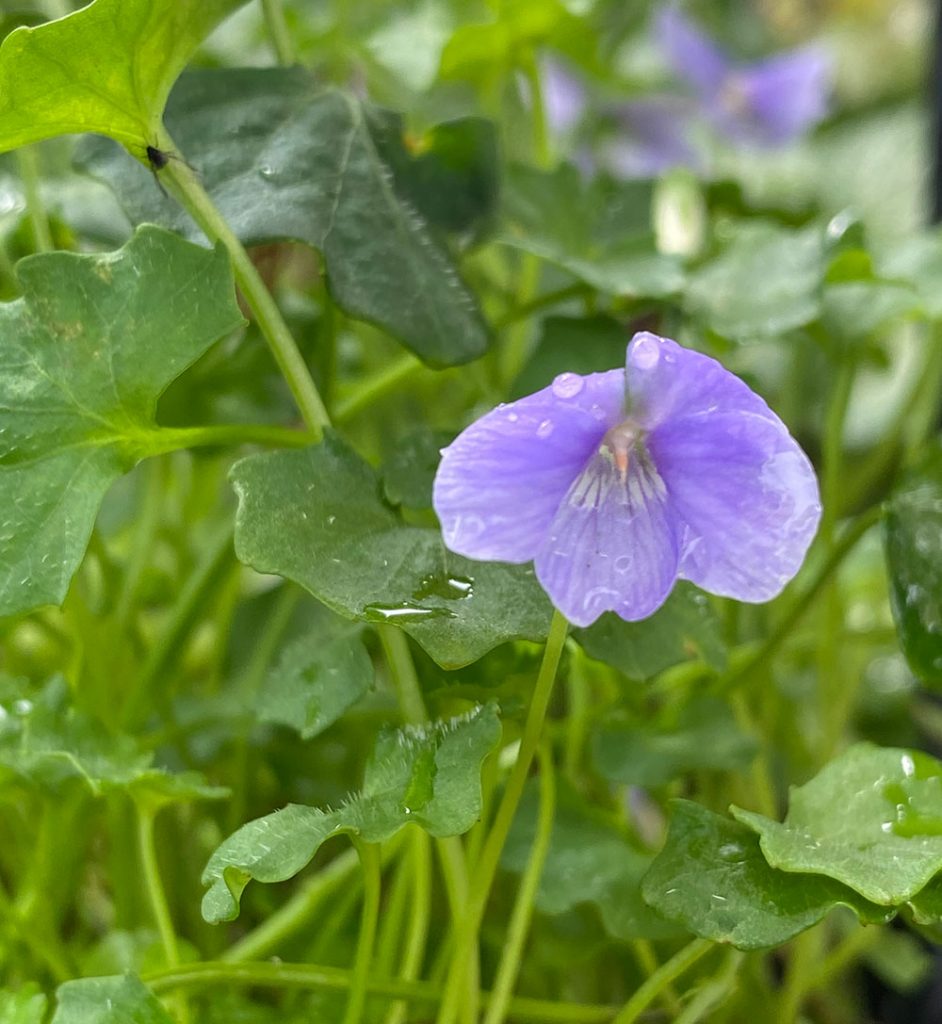
Australian Native Violet is particularly good between stepping stones, around exposed tree roots and beneath larger shrubs.
It prefers dappled shade and reasonably moist soil so it will not be the best choice immediately beneath a very thirsty tree in extremely dry conditions.
Where moisture is available it can spread beautifully and soften hard edges without creating a heavy mass of foliage. It also works particularly well in informal native gardens where a traditional ornamental groundcover might look a little too manicured.
10. Philodendron ‘Xanadu’
Xanadu remains one of the most recognisable foliage plants for warm shaded gardens.
You may also see the botanical name Thaumatophyllum xanadu used in books, nurseries and online. Botanical classification has bounced this plant between the two genera and current taxonomy accepts Philodendron xanadu with Thaumatophyllum xanadu treated as a synonym.

Whichever label happens to be sitting on the nursery pot, it is still a terrific plant. Xanadu forms a dense rounded plant around 1 metre high and wide with large glossy leaves that are deeply divided. It looks especially impressive mass planted beneath larger trees where the foliage creates a lush almost tropical effect.
Xanadu prefers warm conditions, filtered light and reasonable moisture. Established plants tolerate some dryness although they look much better when they are not forced to struggle for water.
Protection from heavy frost is important. For Sydney and other mild coastal areas it can be a wonderfully reliable foliage plant in a sheltered garden.
11. Cast Iron Plant – Aspidistra elatior
The name tells you almost everything you need to know. Cast Iron Plant is ridiculously tough.
Its large dark green leaves rise individually from underground rhizomes and usually reach around 50 to 70cm high. Variegated forms are also available if you want something a little brighter for a gloomy corner.
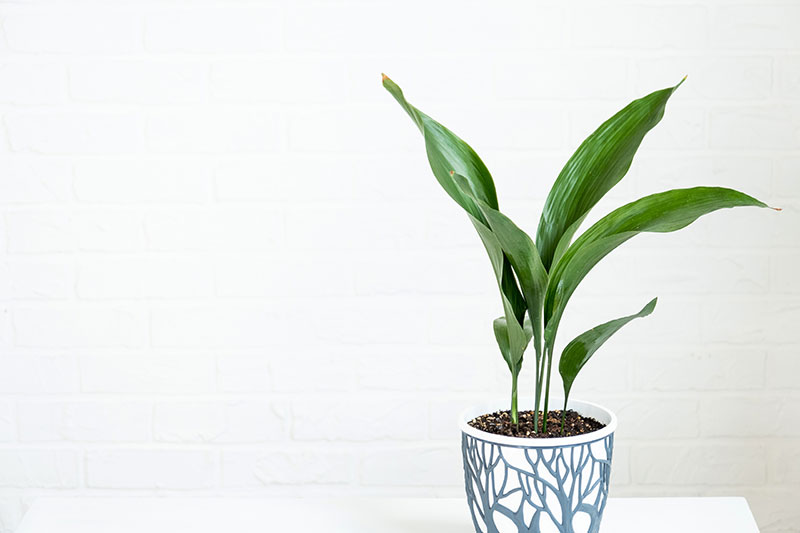
Aspidistra is one of the best choices for genuinely deep shade where many other plants simply refuse to cooperate.
It also handles dry conditions surprisingly well once established which makes it particularly useful beneath mature trees competing heavily for moisture. Avoid strong direct sunlight because the leaves can scorch.
Cast Iron Plant is evergreen and its broad upright leaves provide excellent contrast with finer plants such as Liriope.
Growth is relatively slow so do not expect two small plants to turn into a forest by next Thursday. Planting several together gives a much stronger effect while they gradually spread. For a dark awkward patch beneath a dense evergreen tree, Cast Iron Plant deserves serious consideration.
12. Silver Spurflower – Coleus argentatus
Most gardeners still know this plant as Plectranthus argentatus. It was moved into the genus Coleus in 2019 so you will continue to see both names in gardens and nurseries.
Whatever you call it, this is one of the most useful plants on the list for a shaded bed that needs lifting.
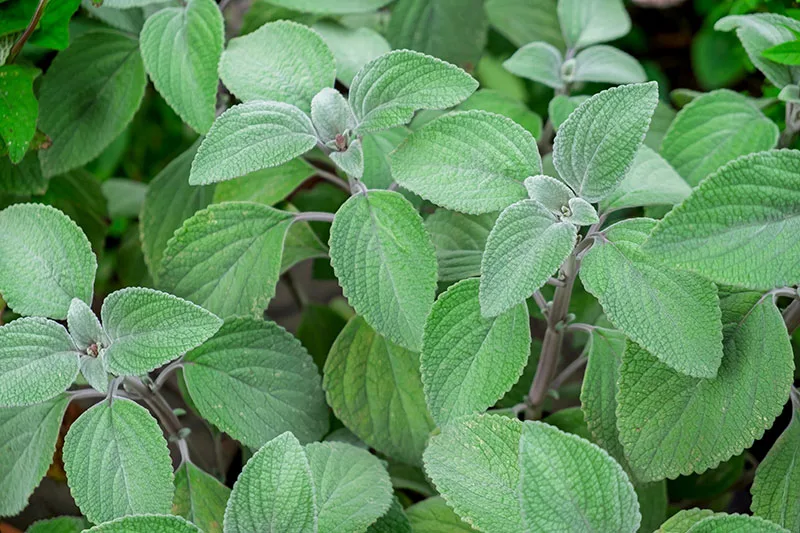
Silver Spurflower is an Australian native from Queensland and north eastern New South Wales. It forms a soft spreading shrub around 1 metre high and can spread wider.
The attraction is the foliage. Large velvety leaves are covered in fine hairs that give the whole plant a sage green to silver appearance. Beneath a tree that silver foliage does something rather clever. It catches the available light and immediately brightens a dark corner.
Small bluish-white flower spikes appear through the warmer months although they are very much a bonus rather than the main event.
Silver Spurflower prefers filtered light, morning sun or dappled shade and established plants cope with periods of dry soil. Extra water through a long dry Summer keeps the foliage looking fresh.
Frost can damage the plant so give it a protected position in colder districts.
For more ideas along these lines, have a look at our Top 12 Plants With Silver Foliage For Australian Gardens.
13. Native Ginger – Alpinia caerulea
Native Ginger gives you something most of the other plants on this list cannot offer. Height.
This Australian native forms substantial clumps around 2 to 2.5 metres high and spreads from underground rhizomes. The broad glossy leaves create a wonderfully lush effect beneath a tree canopy.
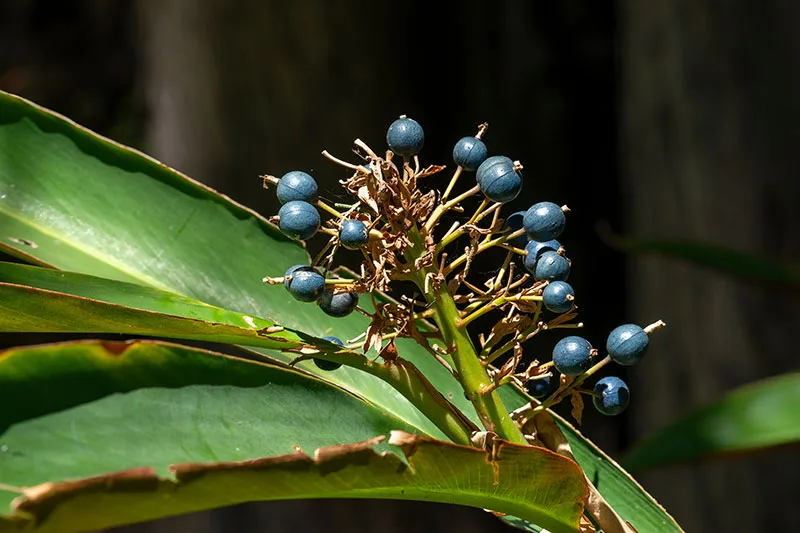
Native Ginger naturally occurs as an understorey plant in rainforest and moist forest environments and performs beautifully in light through to fairly heavy shade. White flowers are followed by decorative blue berries. Native Ginger is also a bush food plant.
The tender growing tips of the rhizome and young shoots are edible and have a mild ginger flavour. When the fruit ripens blue, the white pulp surrounding the seeds can also be eaten and has a pleasant tangy flavour.
It likes consistent moisture and will need watering during prolonged dry periods so this is not the plant for that dusty patch beneath an enormous moisture-hungry tree.
Native Ginger is frost sensitive so it is best suited to subtropical and warm temperate gardens. In colder areas it needs a protected microclimate or can be grown in a large container.
If the clump becomes untidy it can be cut back and will regrow from its rhizomes.
14. Spiny Headed Mat Rush – Lomandra longifolia
Here is one for those difficult Australian gardens where the tree is taking most of the water and the soil is not exactly winning any awards.
Lomandra longifolia is an extremely tough Australian native with dense clumps of strappy foliage. The species can become quite substantial while selected cultivars such as ‘Tanika’ offer more compact and refined garden forms.
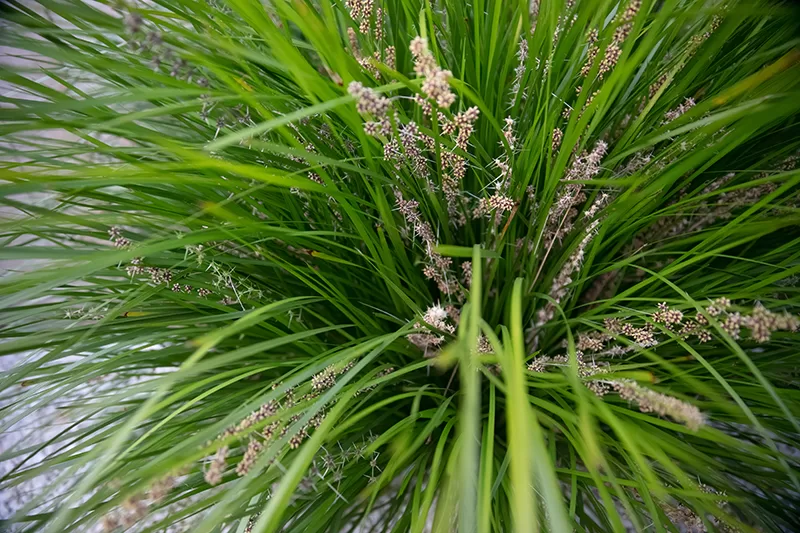
Scented cream to yellow flower spikes appear during Winter and Spring and attract bees and other insects.
Spiny Headed Mat Rush handles poor soil and dry periods once established and tolerates a broad range of Australian conditions.
It is best beneath trees with reasonably open canopies where it receives some filtered or dappled light rather than planted immediately beside the trunk in extremely deep shade.
Use it around the outer section of a tree canopy or repeat several plants through a larger garden bed for structure.
Its fine arching foliage also contrasts beautifully with broader leaved plants such as Clivia, Cast Iron Plant and Xanadu.
Spiny Headed Mat Rush is especially useful if you want something that looks intentional without demanding constant maintenance.
15. Prickly Rasp Fern – Blechnum neohollandicum Syn. Doodia aspera
If you want a fern beneath your tree but the position is drier than many ferns would normally appreciate, Prickly Rasp Fern is worth investigating.
This Australian native is still widely known as Doodia aspera and that name continues to be used by some Australian botanical authorities. The Australian Plant Census currently accepts Blechnum neohollandicum.
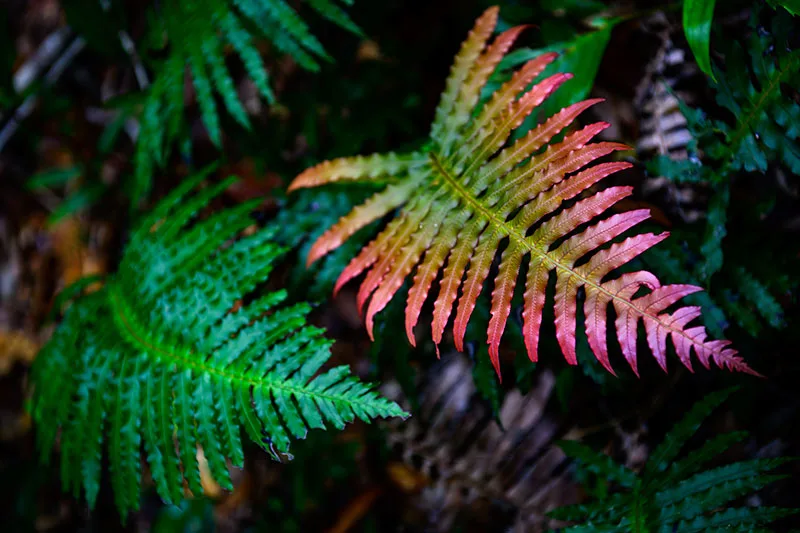
It occurs naturally in a variety of habitats including Eucalypt forest and rainforest which helps explain why it is tougher than its delicate appearance might suggest.
The plant spreads by creeping rhizomes or stolons and can gradually form attractive colonies beneath trees. The real feature is the new growth. Fresh fronds emerge in beautiful red to bronze tones before maturing to green so an established patch often has several colours running through it at once.
Plant it in part shade or filtered light and protect it from scorching western sun. Give it reasonable moisture while it establishes. Once settled it can cope with considerably drier conditions than many traditional garden ferns.
Prickly Rasp Fern also creates useful low habitat for frogs, reptiles and other small garden visitors.
Quick Reference Table For Plants Under Trees
Use this table to narrow your shortlist before you head to the nursery and accidentally come home with seventeen unrelated plants because they all looked lovely.
| Plant | Shade Tolerance | Moisture Needs | Mature Height | Australian Native |
|---|---|---|---|---|
| Clivia | Deep To Dappled | Low Once Established | 40 To 60cm | No |
| Liriope ‘Isabella’ | Medium To Deep | Low To Moderate | 30 To 40cm | No |
| Hosta | Medium To Deep | High | 30cm To 1.2m Depending On Cultivar | No |
| Bird’s Nest Fern | Medium To Deep | Moderate To High | Up To Around 1.5m | Yes |
| Australian Bugle | Dappled To Part Shade | Low To Moderate | Around 10 To 60cm Including Flower Stems | Yes |
| Madagascar Periwinkle | Medium To Deep | Low To Moderate Once Established | Up To 20cm | No |
| Bromeliads | Dappled To Medium | Low To Moderate | 20cm To 1m Or More Depending On Variety | No |
| New Guinea Impatiens | Bright Or Dappled Shade | High | 30 To 50cm | No |
| Australian Native Violet | Dappled To Medium | Moderate To High | 5 To 10cm | Yes |
| Xanadu | Dappled To Medium | Moderate | About 1m | No |
| Cast Iron Plant | Deep | Low Once Established | 50 To 70cm | No |
| Silver Spurflower | Dappled To Medium | Moderate | Around 1m | Yes |
| Native Ginger | Medium To Deep | Moderate To High | 2 To 2.5m | Yes |
| Spiny Headed Mat Rush | Dappled To Light Shade | Low Once Established | 40cm To 1m | Yes |
| Prickly Rasp Fern | Medium To Deep | Moderate | Around 50cm | Yes |
Three Planting Combinations That Work
Rather than choosing fifteen different plants, pick a small palette and repeat it. The result looks deliberate instead of as though the nursery had a clearance sale and you panicked.
For A Lush Shaded Corner
Combine Native Ginger with Bird’s Nest Fern, Bromeliads and Australian Native Violet. Native Ginger provides height, Bird’s Nest Fern anchors the middle layer, Bromeliads add colour and Australian Native Violet fills the gaps at ground level.
This combination is particularly suited to a sheltered garden with reasonably reliable moisture.
For Deep Dry Shade
Combine Cast Iron Plant with Clivia and Liriope. All three cope with difficult shaded conditions once established and the contrast between broad leaves and finer strappy foliage does most of the design work for you.
For An Australian Native Understorey
Under an open canopy, combine Spiny Headed Mat Rush with Silver Spurflower and Prickly Rasp Fern. Spiny Headed Mat Rush gives the planting structure, Silver Spurflower adds light and contrast while the fern provides a softer lower layer.
Where conditions are a little moister, Australian Native Violet can be allowed to creep through the gaps. It is a simple combination but it gives you different foliage shapes, heights and colours without looking overly fussy.
If you like the native approach, our Top 26 Plants For An Australian Native Cottage Garden has plenty more ideas.
How To Plant Under Trees Without Damaging The Roots
The aim when planting beneath established trees is to work with the existing root system rather than launch an excavation project. Small plants are often much easier to establish than large specimens because they require smaller planting holes.
A few things make life considerably easier:
- Use tubestock or smaller pots where practical
- Dig carefully by hand so you can feel where existing roots are
- Move the planting hole rather than cutting through substantial tree roots
- Take advantage of naturally available pockets between roots
- Water new plants thoroughly while they establish
- Apply organic mulch to help reduce moisture loss
- Keep mulch and additional soil away from the tree trunk and root flare
- Avoid dramatically raising the existing soil level beneath established trees
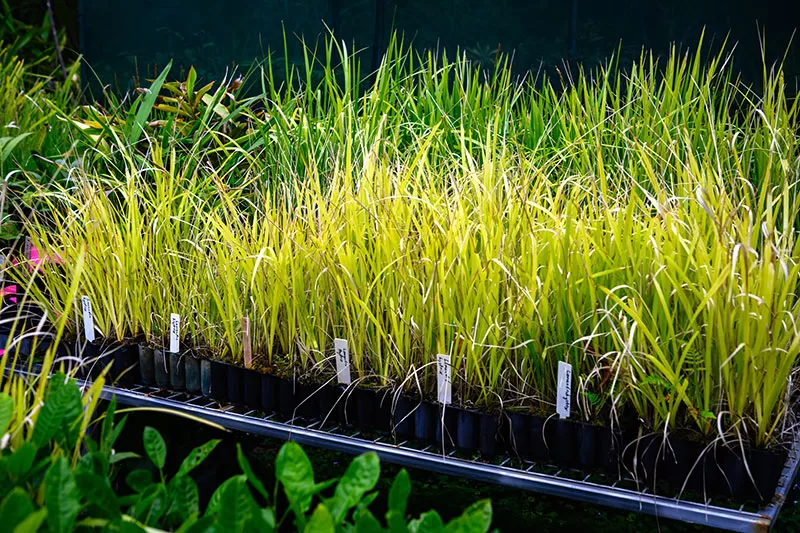
Do not feel you need to completely improve the soil beneath the entire canopy before planting. Apart from being an enormous job, widespread digging and cultivation can damage the very tree you are trying to garden beneath. Work in smaller planting pockets instead.
Autumn is an excellent planting time across many temperate parts of Australia because the soil is still warm while the harsh heat of Summer has passed. This gives new plants time to establish their roots before the following Summer.
Spring is another good option particularly in colder districts where severe Winter frost may damage newly planted frost-sensitive species.
In tropical and subtropical areas, time planting around local rainfall, temperature and dry season conditions rather than relying solely on the calendar.
How Often To Water New Plants Under Trees
This is where many under-tree plantings come unstuck. Water thoroughly at planting so moisture reaches the entire root ball and surrounding soil.
Frequent shallow sprinkling encourages roots to remain close to the soil surface. Deeper watering encourages the root system to explore further into the surrounding soil where it has a better chance of coping with competition from the tree.
There is no single watering schedule that suits every Australian garden. During warm dry weather, newly planted specimens may initially need a thorough watering once or twice a week. Sandy soil may dry much faster while clay or moisture-retentive soil may need water less frequently.
Check the soil rather than automatically watering according to the calendar. By the second year many of the tougher plants on this list should manage with occasional deep watering during extended dry periods.
Hosta, New Guinea Impatiens, Native Ginger and Bird’s Nest Fern will continue to need more reliable moisture.
Mulch makes a real difference. A layer of coarse organic mulch around 5 to 7cm deep helps slow evaporation and improve the soil as it breaks down. Keep mulch clear of both the tree trunk and the crowns or stems of your new plants.
What About Dry Shade Under Trees?
Some trees create particularly brutal dry shade. Dense evergreen canopies intercept rainfall while established roots rapidly absorb whatever moisture reaches the ground. Plants growing close to the trunk may receive very little direct light as well.
If this sounds suspiciously like your garden, concentrate on genuinely tough plants such as Clivia, Cast Iron Plant, Liriope and Australian Bugle. Spiny Headed Mat Rush is another useful option where the canopy is open enough to provide some filtered light.
For more options, have a look at our Top 12 Plants For Dry Shade In Australian Gardens. That article focuses specifically on plants selected for those awkward low light and low moisture positions.
A Few Words About Planting Under Gum Trees
Planting beneath established Eucalypts deserves a little extra thought. The soil is often very dry and root competition can be considerable. Large surface roots should always be left undisturbed. Australian natives adapted to woodland conditions are logical choices.
Spiny Headed Mat Rush and Prickly Rasp Fern can work particularly well beneath open Gum Tree canopies when their individual light and moisture requirements are met. Australian Bugle is another option for semi shaded areas while Australian Native Violet suits positions where the soil stays a little moister.
Rather than trying to cultivate the entire area, plant into existing spaces between roots and allow your plants to gradually fill the gaps. Sometimes the best design also includes areas of natural mulch and leaf litter rather than trying to cover every square centimetre with plants.
Leaving some fallen leaves in place can help protect the soil, return organic matter as they break down and reduce moisture loss. Nature rarely does wall-to-wall planting either.
What Not To Plant Under Trees
Some plants are simply going to make life harder than it needs to be.
Lawn
Lawn is a common problem beneath dense trees.
Most turf grasses need more light than a heavy tree canopy provides and grass also competes with the tree for water and nutrients.
Shade tolerant lawn varieties may cope beneath trees with relatively open canopies although extremely dark areas are usually better planted with a suitable groundcover or mulched.
Vegetables And Herbs
Most vegetables and many herbs will be disappointing beneath established trees.
Fruiting vegetables generally need good sunlight, fertile soil, reliable moisture and regular cultivation. These are not conditions you can easily provide among established tree roots.
Some leafy herbs may cope around the brighter outer canopy although a dedicated edible garden in better light will usually give you a much happier harvest.
Thirsty Annuals
Annuals such as Petunias and Lobelia can demand a surprising amount of water during hot weather.
Unless your under-tree garden receives regular irrigation, they can quickly become a high-maintenance choice through Summer.
Plants That Need Regular Digging And Dividing
Anything requiring frequent digging, lifting or division is also worth thinking twice about. Every time you excavate beneath an established tree you risk damaging roots and disturbing the soil structure the tree relies upon.
Under trees, low-maintenance plants are not simply easier. They are generally kinder to the tree as well.
For more inspiration when planting in the shade, be sure to check out our Top 5 Shade Plants For Hanging Baskets.
Getting Started Under Your Own Trees
Start by watching the space. See where the light falls through the day and notice which areas dry out first after rain or watering. Then choose three or four plants from the table above rather than all fifteen.
Plant them in repeated groups, give them enough room to mature and allow the garden to develop gradually. You will usually get a much stronger result from a few plants repeated well than from squeezing one of everything into the space.
Planting under trees generally means dealing with dry soil, root competition and a fair bit of digging around in awkward spots so it helps to have a few good garden helpers on hand.
Planting under trees usually means dealing with dry soil, root competition and a fair bit of digging around in awkward spots, so it helps to have a few good garden helpers on hand. In the shop, you’ll find Ferti Grind Indoor Plant Fertiliser – Recycled Coffee Puck Pellets, an Australian-made, slow-release fertiliser made from recycled coffee grounds that can help support healthier soil and stronger root growth for indoor and shade plants.
Once you’ve finished wrangling mulch, compost and suspicious mystery dirt, the Activated Charcoal & Pumice Gardener’s Soap is perfect for cleaning hardworking hands after a proper garden session. Both are practical, eco-friendly picks for gardeners who like their plants happy and their hands slightly less feral.
Frequently Asked Questions About Planting Under Trees
Yes although you need to choose carefully. The soil beneath Eucalypts is often dry and root competition can be strong.
Australian natives adapted to woodland conditions are usually logical choices. Spiny Headed Mat Rush and Prickly Rasp Fern can both work beneath open Gum Tree canopies while Australian Bugle is another option for suitable semi shaded positions. Plant into natural spaces between roots rather than digging over the whole area.
Cast Iron Plant is certainly one of the standouts. It handles deep shade and dry soil once established and asks for remarkably little in return. Clivia and Liriope are also excellent contenders.
Small plants installed carefully are unlikely to harm a healthy established tree. The greater risk comes from damaging major roots while digging, piling additional soil over the root system or allowing mulch to build up against the trunk. Work carefully around existing roots and keep the tree’s root flare clear.
There is no universal distance that suits every tree. Keep the area immediately around the trunk and root flare clear then look for natural planting pockets between roots. Where practical, concentrate more planting towards the outer canopy and drip line where there is often better light and more accessible moisture. A huge Gum Tree and a small ornamental tree clearly cannot be given the same one-metre rule. Trees are awkward like that.