A garden filled with Australian native flowers can be beautiful and surprisingly hardworking. Bees pollinate edible crops and ornamental plants. Butterflies add colour and movement while Hoverflies, Lacewings, Ladybirds and tiny parasitic wasps help keep Aphids, Scale and caterpillars under control.
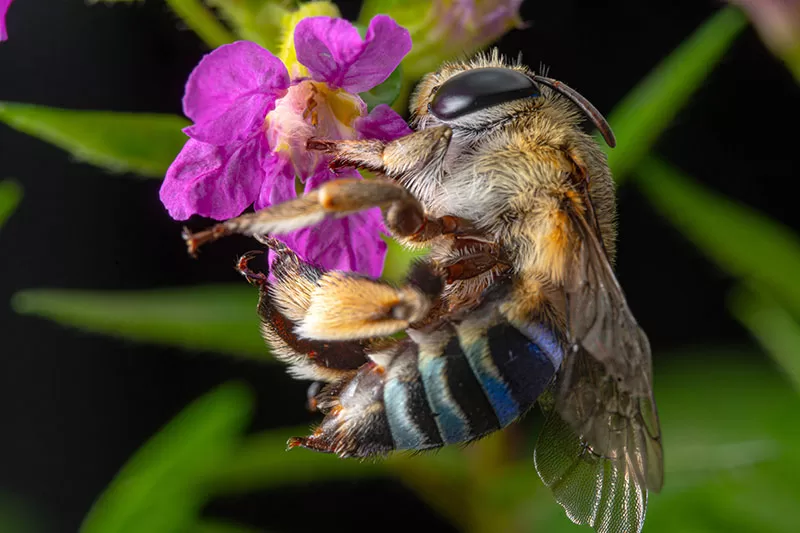
Growing Australian native flowering plants that attract bees is one of the simplest ways to support these valuable garden visitors. Native plants provide pollen, nectar, shelter and breeding habitat. Many have also evolved alongside local insects which makes them especially valuable in wildlife friendly gardens.
Australia covers an enormous range of climates so no single list will suit every backyard. A plant thriving beside a Sydney footpath may behave like a complete diva in tropical humidity or an inland frost. Always check whether a species suits your region and ask a local native nursery about indigenous alternatives.
Local plants are often the most useful to the insects already living in your area.
What Makes A Good Pollinator Plant?
Different flower shapes suit different insects. Open daisy shaped flowers are easy for Hoverflies and small native bees to use. Dense flower clusters offer many feeding opportunities in one place while tubular blooms suit insects with longer mouthparts.
A varied planting will support a much wider range of visitors than a garden filled with one type of flower.
For a more effective pollinator garden:
- Grow several plants of the same species together
- Choose plants that flower at different times of the year
- Include groundcovers, shrubs, climbers and small trees
- Provide a shallow water dish filled with pebbles
- Leave some bare soil for ground nesting native bees
- Retain a few hollow stems in sheltered areas
- Avoid broad spectrum insecticides while plants are flowering
1. Grevillea (Grevillea Species)
Grevilleas are among the best known Australian native flowering plants that attract bees. Their nectar rich blooms also draw butterflies, beetles and nectar feeding birds.
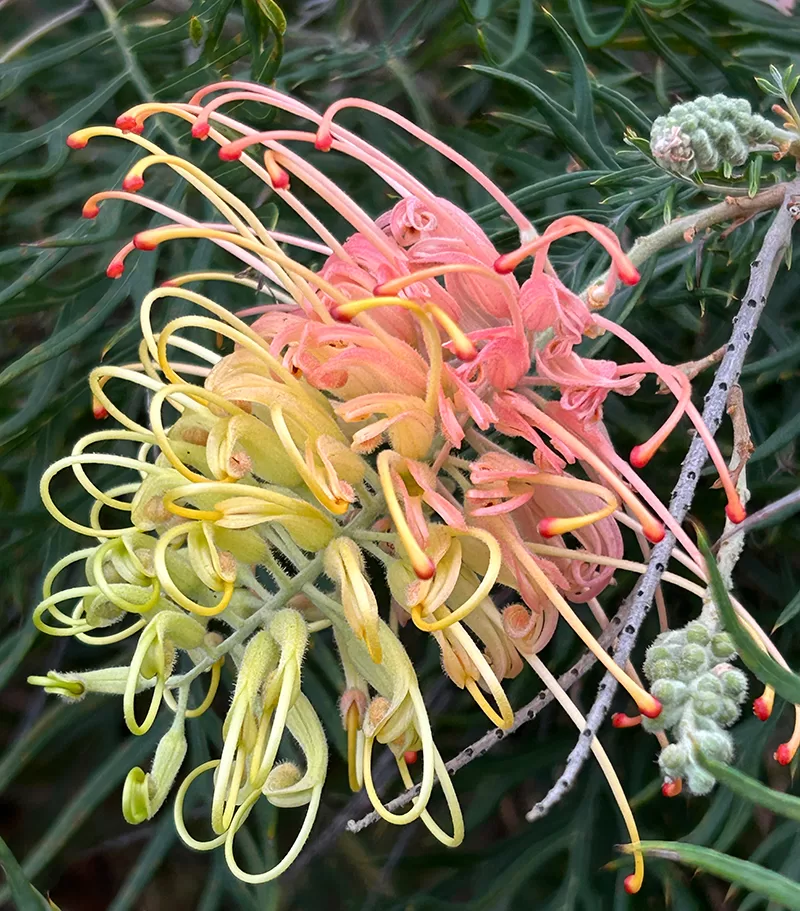
Forms range from low groundcovers to shrubs and small trees so there is a Grevillea for almost every garden. Most prefer full sun, good drainage and fertiliser formulated for Australian native plants.
The foliage and sap of some Grevilleas can irritate sensitive skin. Wear gloves and long sleeves when pruning if you are prone to skin reactions.
2. Coastal Rosemary (Westringia fruticosa)
Coastal Rosemary carries small white, pale blue or mauve flowers that native bees and other small insects can reach easily. It may flower repeatedly throughout the year in mild climates rather than putting on one short display and calling it a day.
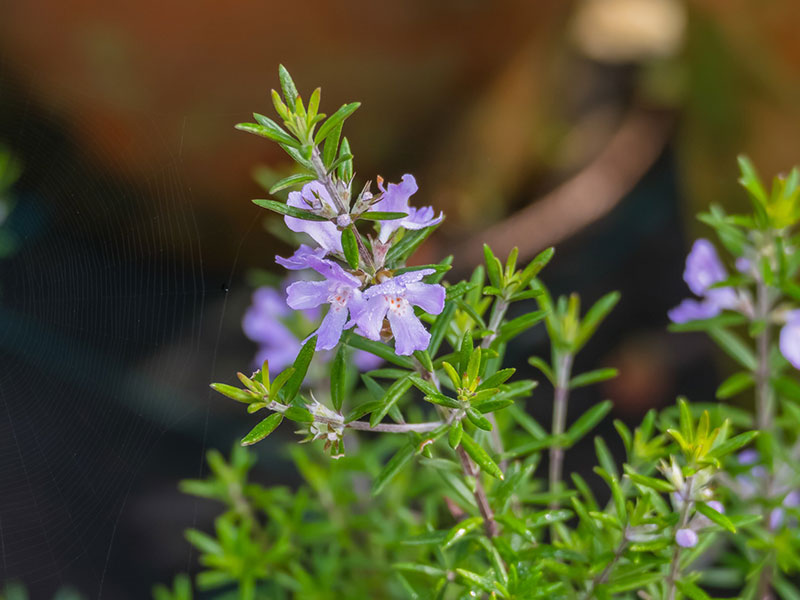
This tough shrub copes with wind, salt spray, heat and regular pruning. Use it as a hedge, a rounded shrub or a spreading groundcover depending on the cultivar.
3. Cut Leaf Daisy/Native Daisy (Brachyscome multifida)
Cut Leaf Daisy/Native Daisy forms a soft mound of finely divided foliage topped with mauve, blue, pink or white flowers. The open centres provide accessible pollen and nectar for native bees and hoverflies.
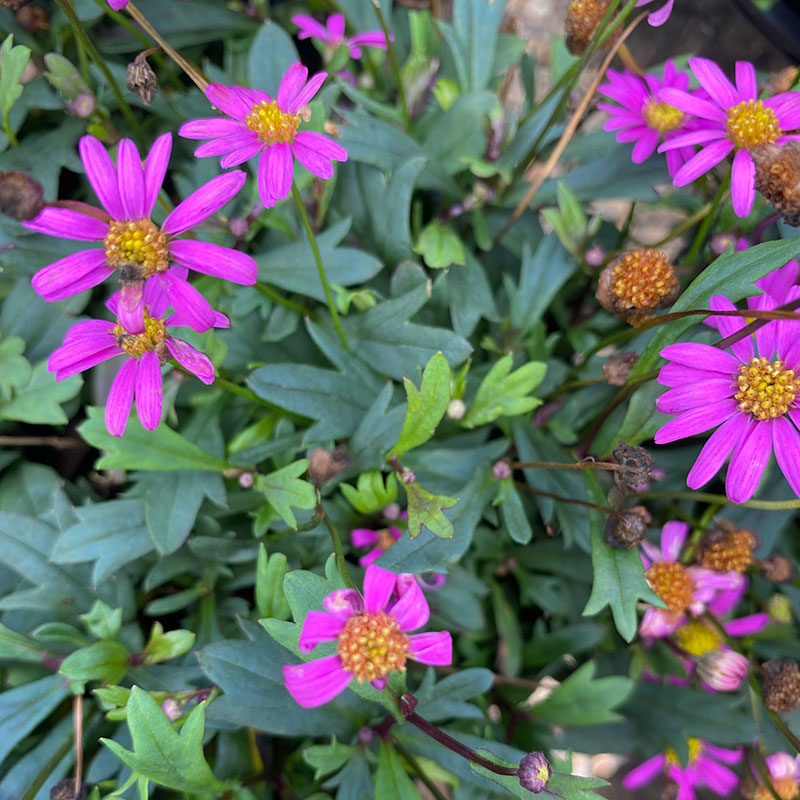
This compact perennial suits borders, rockeries, hanging baskets and pots. Plant it in full sun to part shade then trim it lightly when the growth starts looking a little too enthusiastic.
4. Goodenia (Goodenia Species)
Goodenias include spreading groundcovers and small shrubs with distinctive fan shaped flowers. Many bloom repeatedly over a long period which makes them valuable to native bees, butterflies and other beneficial insects.
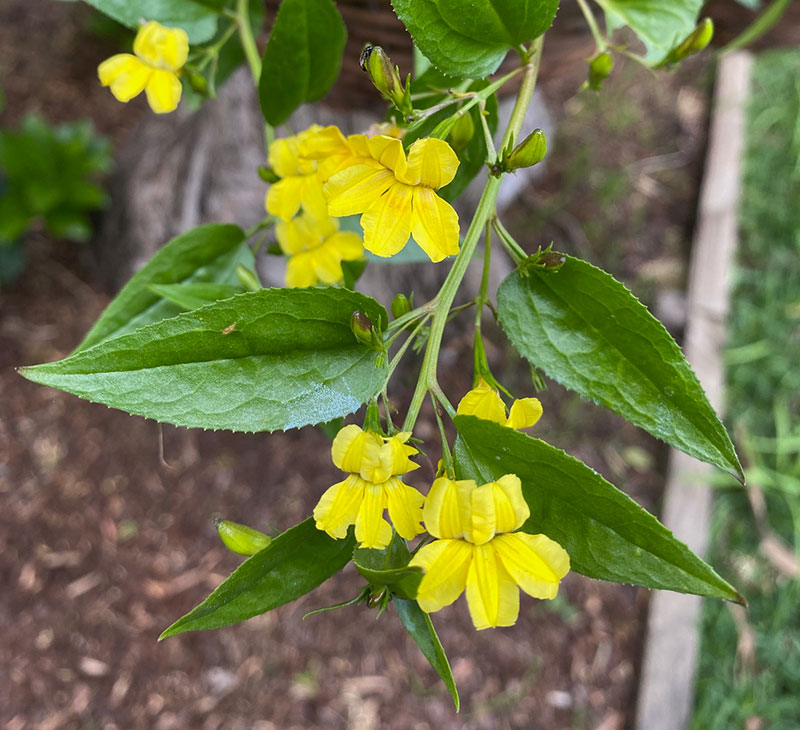
Yellow is the most familiar flower colour although white and mauve forms are also available. Choose a species suited to your rainfall, soil and exposure as growing requirements vary considerably.
5. Everlasting Daisy (Xerochrysum bracteatum)
Everlasting Daisies produce bold papery flowers in shades of yellow, orange, pink, red and white. Their broad blooms make handy landing platforms for bees, butterflies and hoverflies.
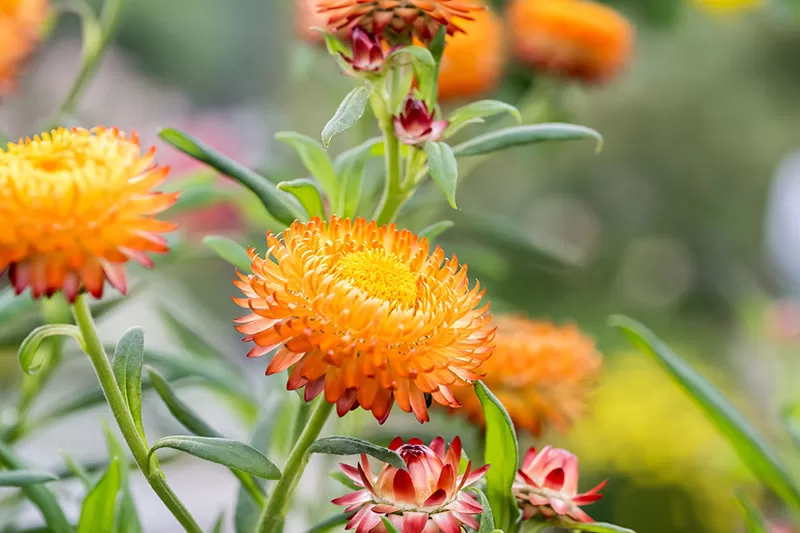
These fast growing natives are useful for filling sunny gaps while slower shrubs become established. Pick some flowers for drying then leave a few heads on the plants to mature and set seed.
6. Billy Buttons (Pycnosorus globosus)
Billy Buttons carry round golden flower heads above slender stems. Each globe contains many tiny flowers that provide food for small native bees, Butterflies and other beneficial insects.
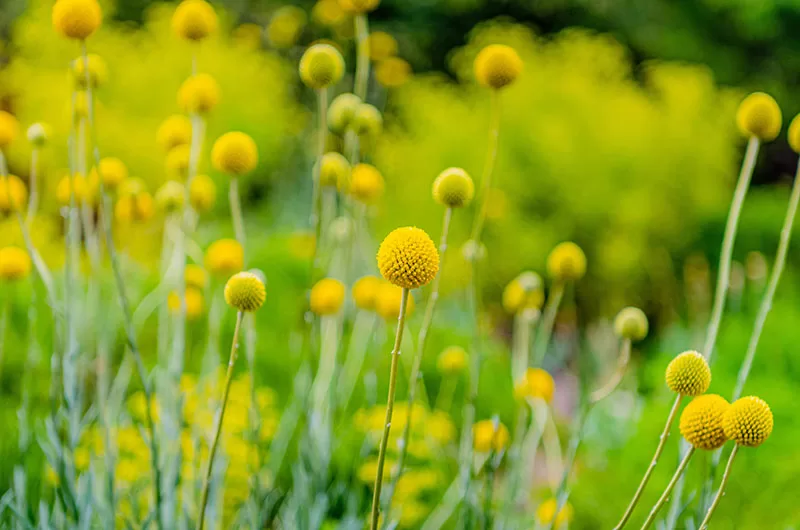
The accepted botanical name is Pycnosorus globosus although many nurseries still use the older name Craspedia globosa. Plants prefer full sun, good drainage and consistent moisture while establishing. The flowers also cut and dry beautifully.
7. Native Mint Bush (Prostanthera Species)
Native Mint Bushes become covered in small white, pink, mauve or purple flowers that attract plenty of bees. Their aromatic foliage releases a fresh scent when brushed or lightly crushed.
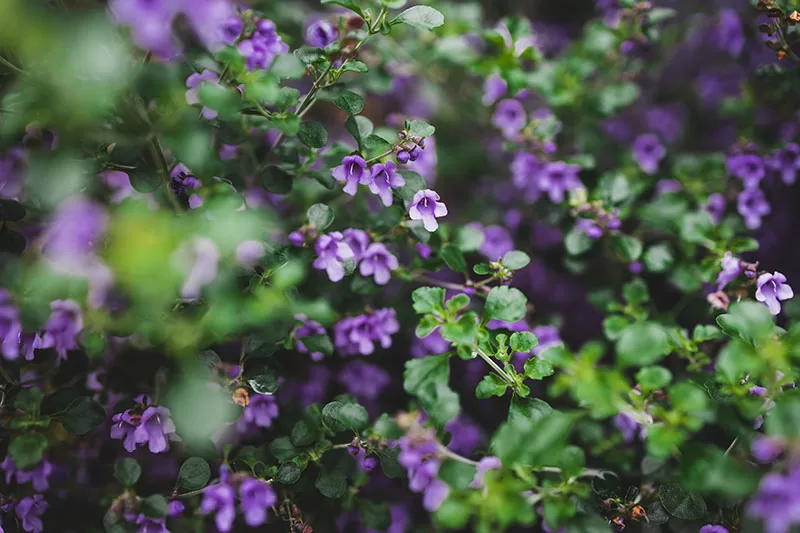
Species range from compact shrubs to taller screening plants. Select one suited to your district and protect more sensitive varieties from harsh afternoon sun. Good drainage is important for many members of the genus.
8. Sweet Bursaria (Bursaria spinosa)
Sweet Bursaria produces clusters of fragrant white flowers chiefly through Summer. Native bees, butterflies, beetles, hoverflies and other insects can crowd around the blooms when the plant is in full flower.
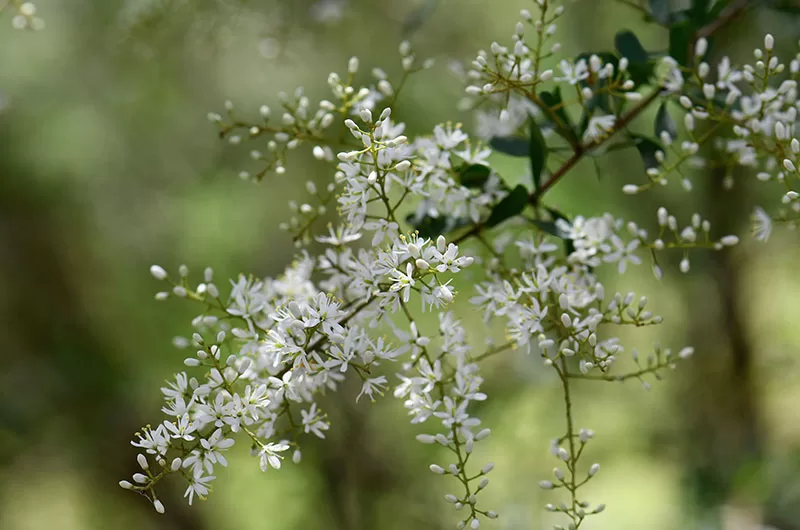
It is an important nectar source for adult butterflies and some forms are also associated with the life cycles of native butterfly species.
Grow Sweet Bursaria as a dense shrub or small tree. Keep its prickly branches away from paths and play areas unless you enjoy being ambushed by your own landscaping.
For a quick burst of pollinator friendly colour while your shrubs become established, the Wildflowers For Native Pollinators Seed Bombs in The Curious Gardener shop can be added to suitable pots and sunny garden spaces.
9. Tea Tree (Leptospermum Species)
Tea Trees carry masses of small white, pink or red flowers that attract bees and other pollen seeking insects. Their simple open blooms are particularly useful to insects with short mouthparts.
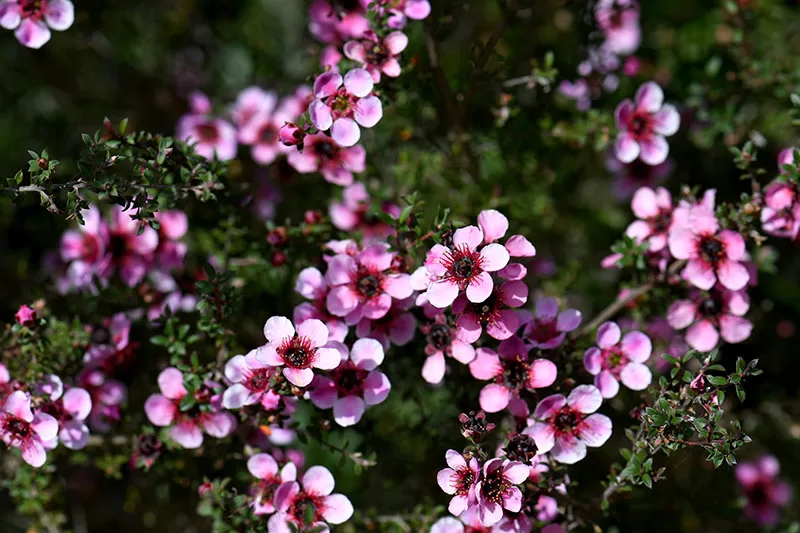
Species range from low spreading plants to small trees. Many tolerate poor soil, coastal exposure and dry periods once established although their requirements vary. Match the species to your local conditions rather than assuming every Tea Tree will tolerate the same treatment.
10. Bottlebrush (Callistemon And Melaleuca Species)
Bottlebrush flowers are formed from hundreds of colourful stamens packed into cylindrical spikes. They provide generous supplies of nectar and pollen to bees, butterflies, beetles and birds.
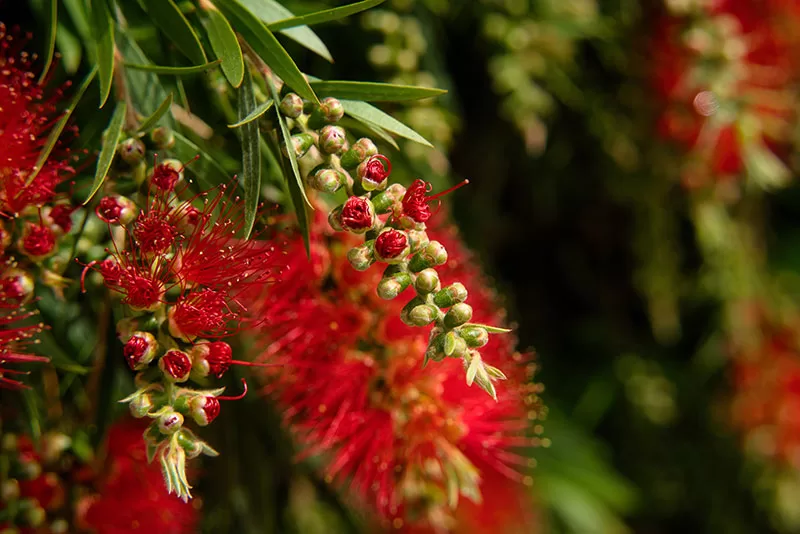
Flower colours include red, pink, purple, cream and yellow. Compact cultivars suit pots and small gardens while larger forms make excellent screens or feature plants.
Many plants traditionally known as Callistemon are now classified as Melaleuca by major botanical authorities. Both names are still widely used in nurseries so do not be surprised if the label and your gardening book disagree. The plant itself is unlikely to care.
11. Rice Flower (Ozothamnus diosmifolius)
Rice Flower carries rounded clusters of tiny white or pink buds that open into soft fluffy blooms. These flower heads create an excellent feeding station for native bees, Hoverflies and other small beneficial insects.
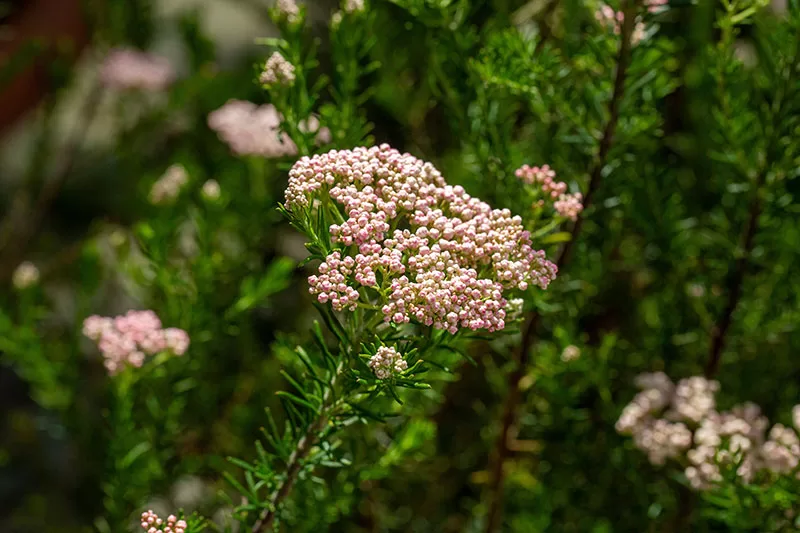
This eastern Australian shrub generally flowers from late Winter into Spring. Give it good drainage then prune lightly after flowering to maintain a dense and attractive shape.
12. Blue Flax Lily (Dianella caerulea)
Blue Flax Lily is a hardy strappy perennial with small blue or purple flowers followed by glossy blue berries. Bees visit the blooms while the dense foliage gives insects and other small creatures somewhere to shelter.
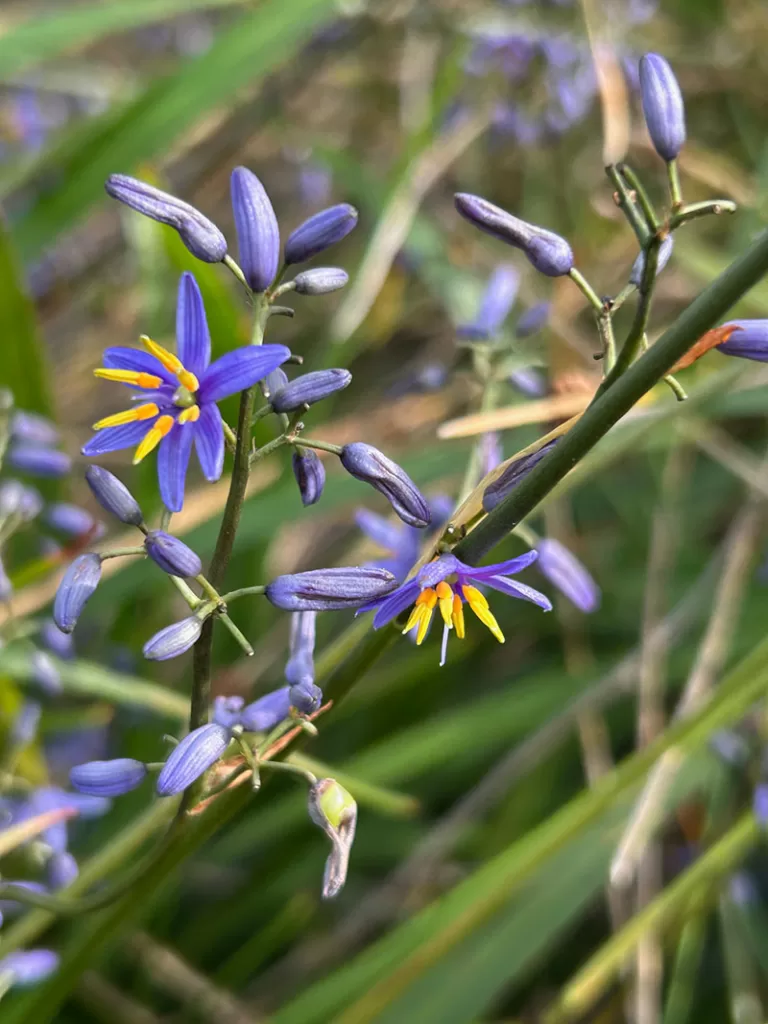
Dianella species can also act as food plants for the larvae of some butterflies and moths. Blue Flax Lily works well beneath open trees, beside paths and in difficult garden spaces. Choose a locally suitable form as the requirements and mature size can vary.
13. Wattle (Acacia Species)
Wattles produce masses of yellow or cream flower heads that supply protein rich pollen to native bees and other insects. They generally do not produce the same quantities of nectar as many other flowering plants although their abundant pollen makes them extremely valuable.
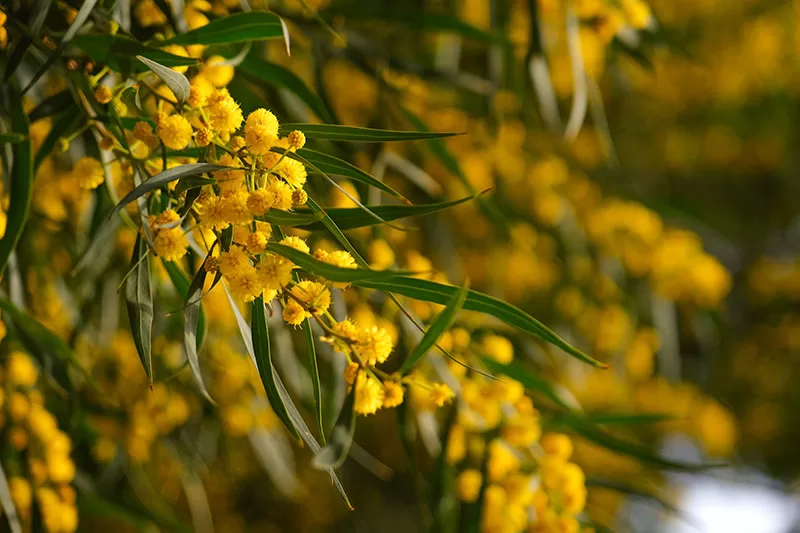
Australia has more than 1,000 native Acacia species so there are groundcovers, shrubs and trees suited to many climates. Choose a local species and check its mature size carefully before planting. A tiny nursery plant can have surprisingly ambitious plans.
Many Wattles flower during Winter and Spring when fewer other plants are blooming which helps extend the seasonal food supply.
14. Purple Coral Pea / Happy Wanderer (Hardenbergia violacea)
Purple Coral Pea / Happy Wanderer covers itself in violet pea shaped flowers from late Winter into Spring. White and pink cultivars are also available.
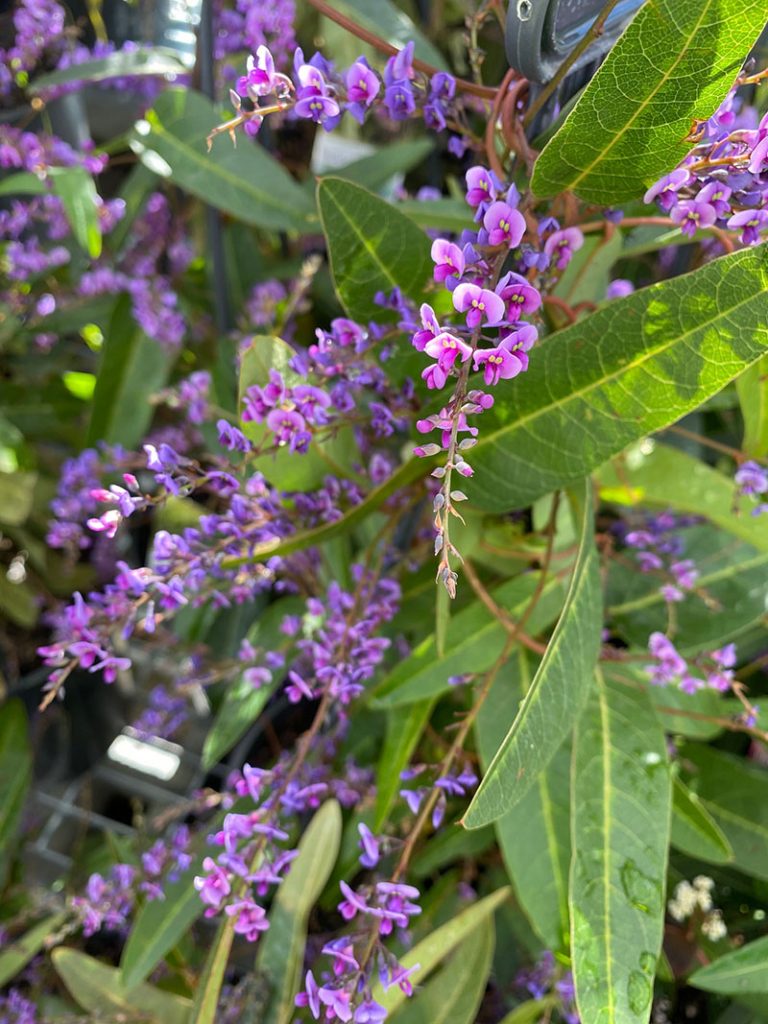
Bees visit the flowers when many warm season plants are still dormant. Grow Hardenbergia over a fence or trellis as a climber or choose a groundcover form for banks and larger garden beds. Good drainage and plenty of light encourage the strongest flowering display.
15. Geraldton Wax (Chamelaucium uncinatum)
Geraldton Wax is a Western Australian shrub with waxy white, pink or purple flowers. Flowering commonly begins in late Winter and can continue through Spring or even into Summer depending on the cultivar and climate.
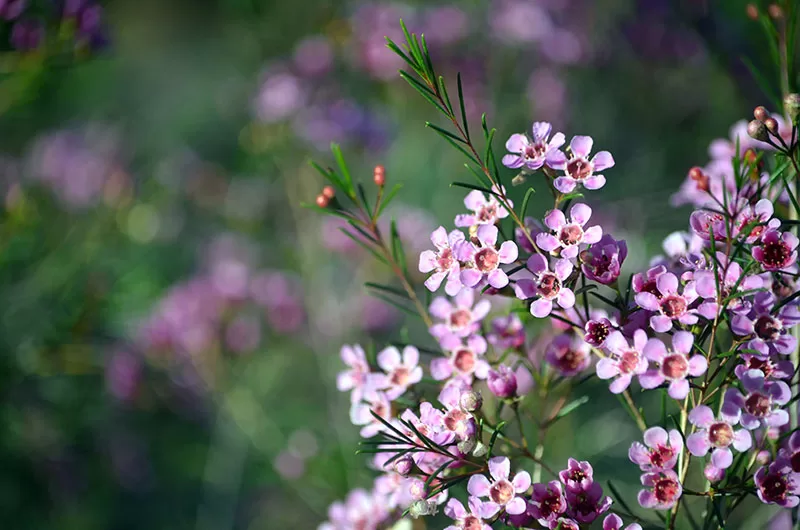
The blooms attract bees, butterflies and other nectar feeding insects. Plants need full sun and excellent drainage. They perform best in climates with relatively dry Summers and may struggle in heavy wet soil or persistent tropical humidity.
Creating A Longer Flowering Season
A garden that flowers heavily for a few weeks then falls silent has limited value to pollinators. Combine plants with different flowering periods so one display begins as another fades.
Grevilleas, Coastal Rosemary and Goodenias can provide flowers over long stretches. Hardenbergia, Rice Flower, Wattle and Geraldton Wax help cover late Winter and Spring. Everlasting Daisies, Billy Buttons and Sweet Bursaria carry the display into the warmer months.
The table below offers a broad guide to the main flowering periods. Timing varies with the species, cultivar, climate and local conditions so treat it as a starting point rather than a legally binding agreement with your plants.
| Plant | Common Flowering Period | Flowering Notes |
|---|---|---|
| Grevillea | Varies Across All Seasons | Many cultivars flower over several Seasons and some bloom for most of the year. |
| Coastal Rosemary | Spring And Summer | May spot flower throughout the year in mild climates. |
| Cut Leaf Daisy | Spring To Autumn | Regular trimming can encourage repeated flowering. |
| Goodenia | Spring And Summer | Some species flower for much longer in suitable conditions. |
| Everlasting Daisy | Spring And Summer | Sowing time and climate influence the flowering period. |
| Billy Buttons | Early Spring To Summer | Flowering can shift with rainfall and local temperatures. |
| Native Mint Bush | Mainly Spring | Timing varies between species and growing regions. |
| Sweet Bursaria | Chiefly Summer | Flowers may appear at other times in favourable conditions. |
| Tea Tree | Spring And Summer | The flowering period differs considerably between species. |
| Bottlebrush | Spring And Summer | Some cultivars produce additional flushes during the year. |
| Rice Flower | Late Winter To Spring | Flowering time may shift slightly between districts. |
| Blue Flax Lily | Early Spring To Mid Summer | Flowers are followed by glossy blue berries. |
| Wattle | Winter And Spring | The enormous range of species provides flowers at many other times too. |
| Purple Coral Pea | Late Winter To Spring | Flowering can begin earlier in warmer districts. |
| Geraldton Wax | Late Winter To Spring | Some cultivars continue flowering into Summer. |
Watch your garden across the year and note any quiet periods. Fill those gaps with suitable local species rather than buying every new plant during the same nursery visit. Tempting though that may be.
Native Bees To Look Out For
Once your garden fills with flowers you will start noticing the bees themselves. Australia is home to more than 1,500 described native bee species so there is plenty to discover.
Most Australian native bees are solitary rather than living in large colonies. Common garden species are generally not aggressive although females of many solitary species can sting if they are handled, trapped or trodden on.
The Blue Banded Bee is a favourite with its shimmering blue stripes and quick darting flight. It uses buzz pollination by gripping a flower and vibrating its flight muscles to shake the pollen loose.
This technique is particularly useful for crops such as tomatoes, eggplants and chillies. The Teddy Bear Bee is a round golden native bee that can perform the same trick.
Resin Bees and Leafcutter Bees are smaller and may nest inside narrow holes or hollow stems.
Give Beneficial Bugs Somewhere To Live
Flowers provide food although insects also need water, shelter and safe places to reproduce.
Bees can drown in deep containers so offer them a shallow water dish filled with pebbles or marbles. These give insects somewhere secure to land while they drink. Top the water up regularly during hot weather.
Many Australian native bees nest in bare ground, clay banks, hollow stems or existing holes in timber. Butterflies need suitable host plants for their caterpillars as well as nectar flowers for the adults.
Make room for wildlife by:
- Leaving some leaf litter beneath shrubs
- Keeping a few hollow stems in a quiet corner
- Allowing small patches of soil to remain uncovered
- Growing plants at several heights
- Accepting a little caterpillar damage
- Avoiding sprays on flowers visited by insects
- Providing shallow water in a safe landing dish
A few chewed leaves are not necessarily a gardening failure. They are often proof that something is actually using the habitat you created.
Bring Your Garden To Life
The best Australian native flowering plants that attract bees are the ones suited to your conditions. Healthy plants flower more freely and need less intervention which creates a safer and more reliable garden for wildlife.
Start with several species that flower at different times then add more as space allows. A balcony pot, narrow garden bed or sunny verge can become part of a much larger wildlife corridor.
Once insects find a steady supply of nectar, pollen, water and shelter they are likely to return. Your garden gains more movement, improved pollination and a healthier natural balance. The beneficial bugs do not even send an invoice.
While native shrubs and perennials provide long term food and shelter for visiting insects, quick flowering additions can help fill the gaps while larger plants become established. The Wildflowers For Native Pollinators Seed Bombs and Everlasting Daisy Fields Seed Bombs from The Curious Gardener shop are an easy way to add bursts of colour to suitable pots and sunny garden beds while creating extra feeding opportunities for bees, butterflies and other beneficial bugs.
FAQs – Australian Native Flowering Plants that Attract Bees, Butterflies and Beneficial Bugs
Several plants in this list carry flowers through the cooler months. Many Grevilleas, Wattles, Rice Flower and Purple Coral Pea all bloom in Winter or very early Spring. Together they help feed bees when little else is out.
Many of them do. Cut Leaf Daisy, Billy Buttons, Everlasting Daisy and compact Bottlebrush or Coastal Rosemary cultivars all suit containers. Use a mix made for native plants then place the pot in full sun. Water when the top of the mix feels dry.
They usually are once matched to the right spot. Healthy plants in suitable soil need little feeding and only light pruning. One thing to watch is that some large hybrid Grevilleas produce so much nectar they attract noisy miners. These bold birds can chase off smaller birds and insects so a mix of smaller flowered local forms helps keep the balance.
Open flowers with easy access tend to draw the biggest crowds. Grevillea, Bottlebrush, Tea Tree, Wattle and the various daisies are all reliable magnets. A mix of shapes and flowering times will bring the widest range of bees over the year.