Living near the coast has plenty going for it. Fresh sea air, cooling breezes and the occasional glimpse of the ocean are fairly difficult to complain about. Gardening beside the sea can be another story entirely.
Salt spray, strong winds, sandy soils and blazing sun can make coastal gardens genuinely challenging. Plants with soft foliage may become scorched or battered while thirsty plants can struggle in soil that drains almost as fast as you can water it.
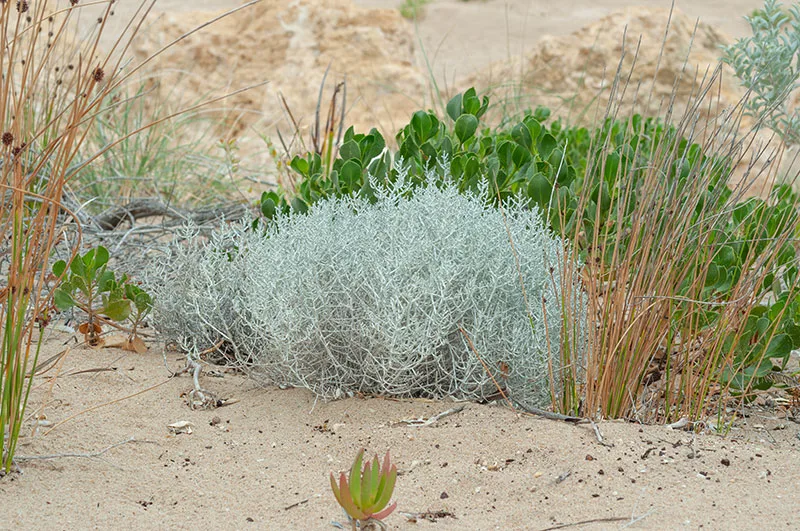
The solution is not to fight the conditions. It is to choose plants that are naturally equipped to handle them.
Some of the best plants for coastal gardens have tough, leathery, waxy, hairy or succulent foliage. These features help protect plants against moisture loss and salt laden winds. Many Australian natives evolved in exactly these sorts of environments which makes them an excellent place to start when planting an exposed garden.
Here are 12 tough Australian natives worth considering along with the plants to be careful with and the mistakes that can make coastal gardening much harder than it needs to be.
What Makes A Plant Suitable For A Coastal Garden
Not every garden near the beach faces the same conditions.
A garden directly opposite the ocean may regularly cop salt spray straight off the water. A property only a few streets back may have buildings, established trees and other gardens filtering much of it before it arrives.
Before choosing plants, work out what your site is actually dealing with:
- How much direct salt spray reaches the garden
- The direction and strength of the prevailing wind
- Whether the soil is sandy and very free draining
- How much shelter comes from buildings, fences and existing vegetation
- Whether the site sits in full sun or gets some afternoon shade
Your local climate matters just as much. A plant enjoying life beside a Tasmanian beach may be considerably less enthusiastic about tropical Queensland. The reverse is equally true.
Understanding Your Exposure Zone
For practical garden planning, it helps to think of a coastal property as a series of exposure zones rather than one single growing environment.
The front line is the most exposed section of the garden. It receives direct salt laden wind and may be hit regularly by salt spray. Only genuinely tough coastal plants belong here.
The second line sits behind that first layer of planting or behind some protection from a building, fence or existing vegetation. The wind still reaches it although much of the salt has been filtered first. Your planting options begin to widen considerably.
The third line is the sheltered pocket closer to the house or behind an established windbreak. Once those first layers have matured, many less salt tolerant garden plants may grow quite happily here.
Most coastal properties contain a mixture of all three. The trick is working out where one finishes and the next begins.
Top 12 Plants For Australian Coastal Gardens
1. Coastal Rosemary – Westringia fruticosa
It would be difficult to start anywhere else. Coastal Rosemary is one of Australia’s most dependable plants for exposed gardens. Westringia fruticosa naturally occurs in coastal environments and is remarkably tolerant of salt spray, strong wind, sun and less than luxurious soil.
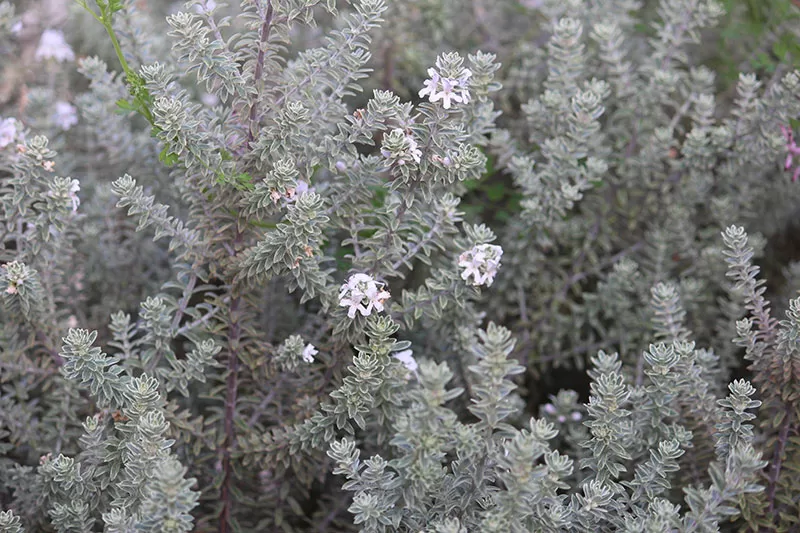
In other words, it is not easily offended. The small grey green leaves help reduce moisture loss while the dense growth responds extremely well to clipping.
Depending on the variety, Coastal Rosemary can be used as:
- A low hedge
- A clipped feature plant
- A screening shrub
- Mass planting
- A compact shrub in a large pot
Small white to pale mauve flowers appear for long periods and add a softer look to what is otherwise a very tough plant.
One thing worth checking before you buy is the plant label. A number of popular plants sold as Coastal Rosemary are selected cultivars or hybrids (such as Westringia fruticosa ‘Smokey’ pictured above) rather than the straight species. They can still be excellent garden plants although it is worth knowing exactly what you are planting.
Best Position: Full sun to part shade in well drained soil.
2. Coast Banksia – Banksia integrifolia
If you have room for something larger, Coast Banksia is an outstanding choice. This Australian native naturally occurs along the eastern coastline from Victoria into Queensland. It copes beautifully with wind, sandy soil and salt laden air.
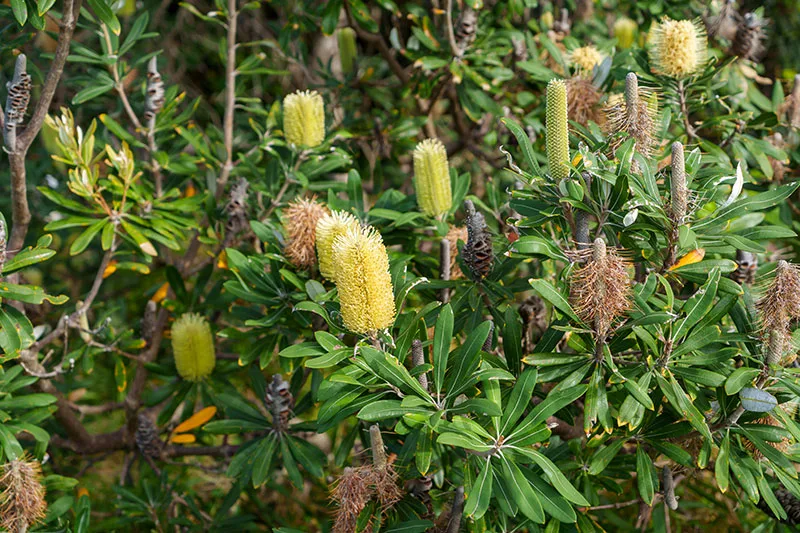
The plant’s eventual size depends heavily on exposure. In sheltered conditions it can become a substantial tree while specimens growing in highly exposed coastal positions are often shorter and wonderfully windswept.
The pale yellow flower spikes provide food for honeyeaters, lorikeets, insects and other native wildlife. Its foliage can also form part of an effective coastal windbreak.
Choose Coast Banksia when your garden needs height and structure rather than relying entirely on low shrubs.
Best Position: Full sun in well drained soil. Allow plenty of room for long term growth.
3. White Correa – Correa alba
White Correa proves that tough plants do not need to look as though they belong beside a motorway.
This rounded Australian native shrub has attractive grey green foliage and delicate white flowers. It naturally occurs in coastal areas from New South Wales through to South Australia and Tasmania and it is particularly resistant to salt spray.
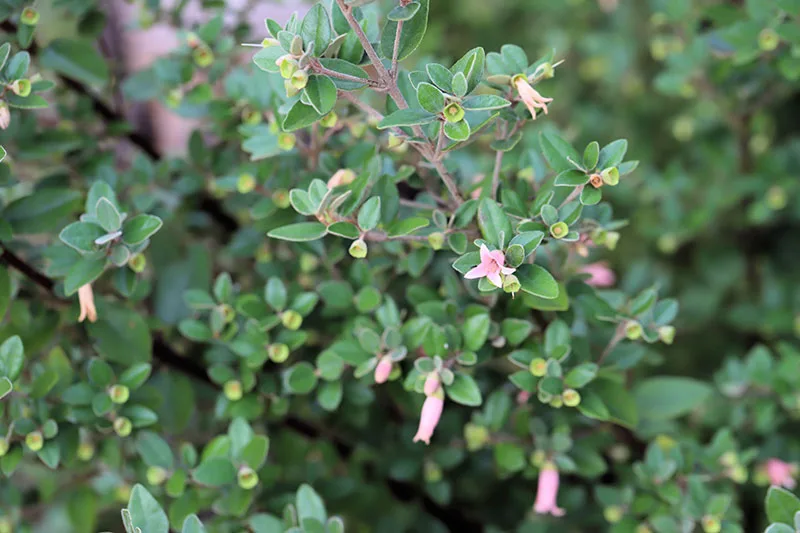
Correa alba can be left to grow naturally or clipped into a low informal hedge. It also tolerates some shade which makes it especially useful where nearby buildings create changing light through the day.
Once established, it asks for very little beyond an occasional prune to keep the growth dense.
Best Position: Full sun to part shade with good drainage.
4. Pigface – Carpobrotus Species
For hot exposed ground where almost nothing else is showing much enthusiasm, Pigface is hard to beat. Its thick succulent leaves store moisture while the spreading growth covers bare soil. Bright pink to purple flowers put on a spectacular display and attract pollinating insects.
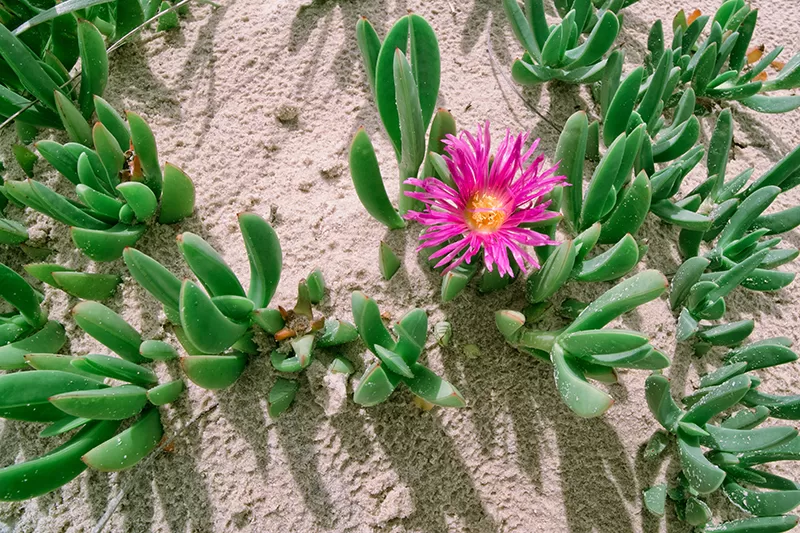
Pigface is particularly useful on slopes, embankments and sandy sites where the spreading stems can help cover and stabilise exposed ground.
Choosing the right species matters. Carpobrotus glaucescens is native to the eastern coastline through Queensland, New South Wales and eastern Victoria. Carpobrotus rossii is widespread across coastal areas of southern Australia.
Avoid planting the introduced Carpobrotus edulis. It has become naturalised in Australia and can hybridise with native Pigface species. Both of our native coastal species look terrific spilling over rocks and retaining walls.
Best Position: Full sun in very well drained soil.
5. Sea Box – Alyxia buxifolia
Sea Box deserves to be grown far more often. This compact Australian native occurs naturally in southern coastal areas where it is quite accustomed to being blasted by wind and salt.
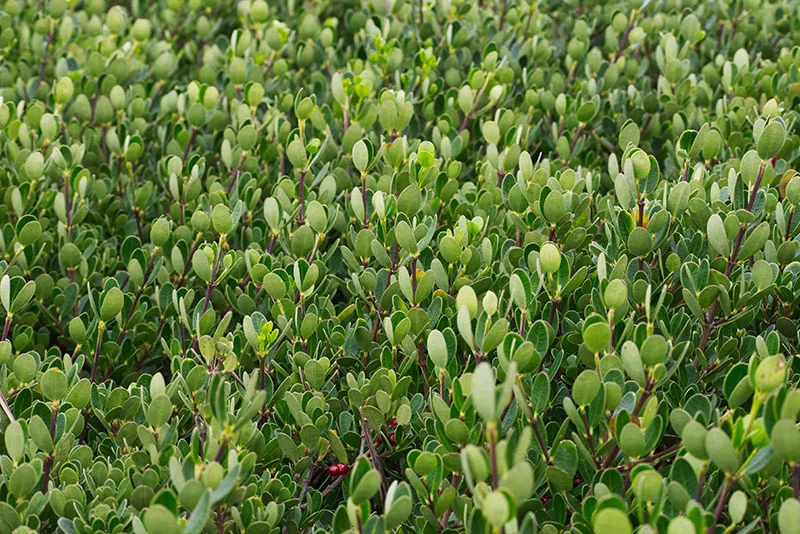
The foliage is thick, glossy and dark green. Small fragrant flowers have white twisted petals with a distinctive orange floral tube. Flowering can continue from Spring into Autumn.
Sea Box has a naturally dense shape which suits informal hedging and coastal landscapes beautifully. The orange to red fruit that follows is eaten by birds although it is considered toxic to humans. It is worth keeping that in mind in gardens used by small children.
Best Position: Full sun in well drained soil.
6. Common Boobialla – Myoporum insulare
Common Boobialla is another excellent Australian native for the exposed side of a coastal property.
It forms a dense shrub or small tree with thick glossy foliage. Small white flowers with purple markings appear mainly through Spring and Summer followed by fleshy purple to black fruit.
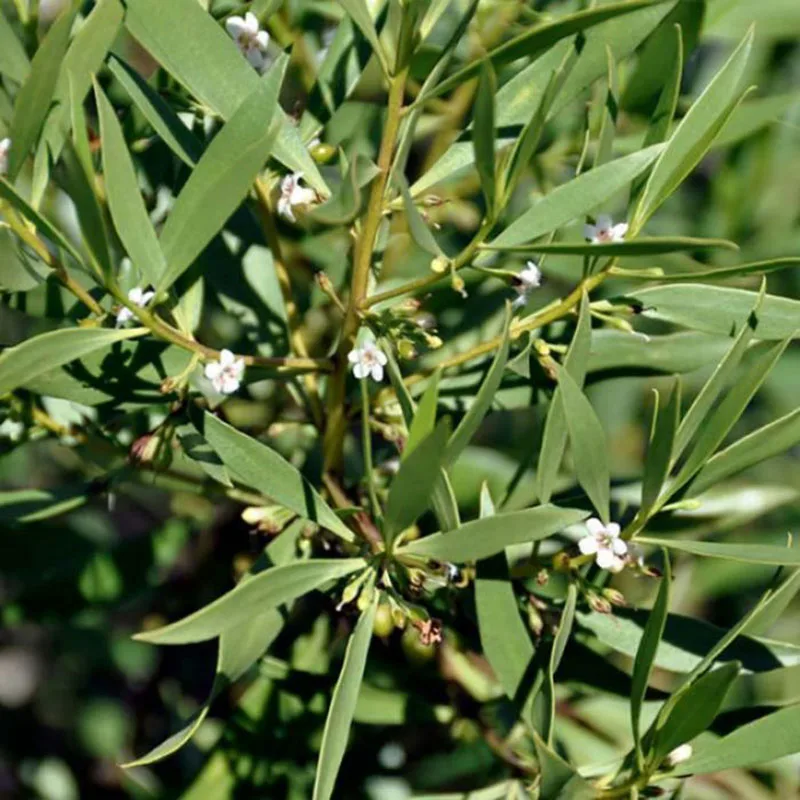
Image credit: Flower Power
Its natural habitat includes coastal heath and its tolerance of sandy soil, drought and exposure makes it useful as a screen or windbreak. Selected forms are available with compact or prostrate growth habits which can be handy in smaller suburban gardens.
Common Boobialla can be damaged by moderate to heavy frost so it makes considerably more sense near a mild coastline than in a freezing inland garden.
If you need a tough protective layer before attempting anything fussier behind it, this plant is well worth considering.
Best Position: Full sun to light shade in well drained soil.
If you are preparing a new coastal garden, the gardening tools in The Curious Gardener shop include an Australian made recycled hand trowel and fork set that is perfect for working compost into planting pockets and getting new plants settled.
7. Saltbush – Atriplex and Rhagodia Species
The name rather gives away why Saltbush belongs on this list. Australian Saltbush species have evolved to cope with some genuinely demanding environments. Many tolerate salt, strong wind, heat, drought and poor soil.
Their silver and grey foliage also looks completely at home in a relaxed coastal garden.
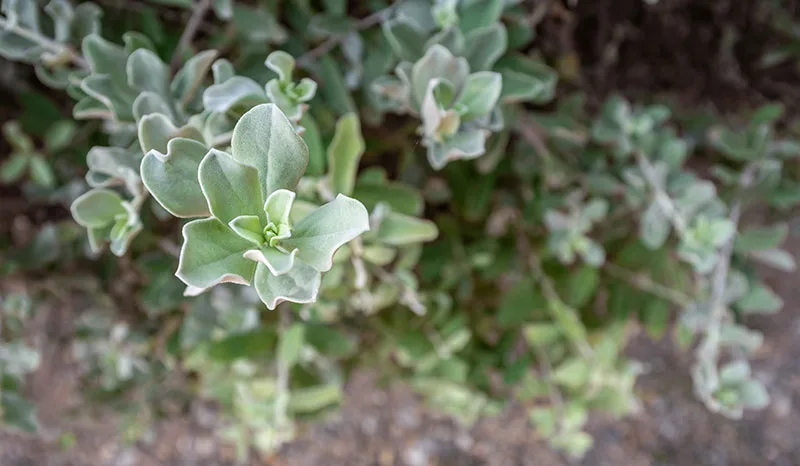
Depending on the species you choose, Saltbush can be useful for:
- Low hedging
- Habitat planting
- Groundcover
- Screening
- Stabilising difficult areas
Seaberry Saltbush – Rhagodia candolleana is particularly well suited to coastal conditions and works beautifully scrambling over banks and low walls.
Conditions vary enormously across Australia so choose a species that naturally occurs in your region or has a good track record in your local climate.
Best Position: Generally full sun with good drainage.
8. Spiny Headed Mat Rush – Lomandra longifolia
There is a reason Lomandra turns up everywhere from suburban gardens to roadside plantings.
It is ridiculously tough. Lomandra longifolia forms dense clumps of narrow strappy foliage that bends with wind rather than presenting a large soft surface for it to batter.
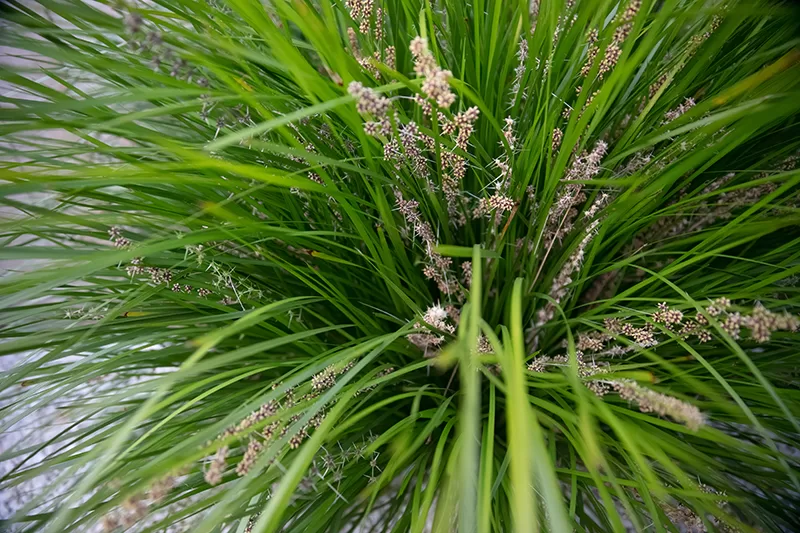
It tolerates a broad range of soils and established plants cope remarkably well with dry spells. Repeated through a coastal garden, the grassy foliage also adds movement and contrast against clipped shrubs and spreading groundcovers.
In very exposed oceanfront gardens I would generally use Lomandra behind the toughest salt spray plants rather than putting it right on the front line. It is superb in wind and difficult soil although direct salt exposure can vary considerably from site to site.
Numerous cultivars are available in different sizes and forms.
Best Position: Full sun to part shade. In severely exposed coastal gardens, give it some protection from direct salt spray.
9. Cushion Bush – Leucophyta brownii
If you love silver foliage, Cushion Bush brings something completely different to a coastal garden.
This small Australian native shrub forms an intricate mound of silver grey stems and tiny scale like leaves. That ghostly colouring is not just there to look fabulous. It reflects its natural habitat on exposed southern dunes and coastal cliffs.
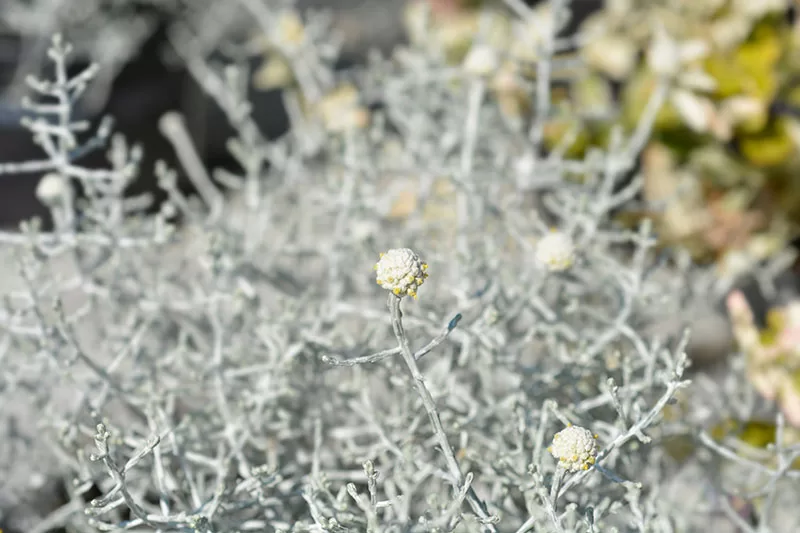
Cushion Bush looks wonderful beside darker green foliage and suits coastal, Mediterranean and contemporary gardens.
Two things matter enormously with this plant… Drainage needs to be excellent. Cushion Bush is much better at coping with salt and wind than wet feet. Pruning should also be light. Regular tip pruning can help maintain its rounded shape although it does not respond well to being hacked back hard into old woody growth.
It can also be relatively short lived. That is not necessarily a reason to avoid it. Enjoy it while it is looking fabulous then take cuttings or replace ageing plants when needed.
Best Position: Full sun in sandy or very well drained soil.
10. Knobby Club Rush – Ficinia nodosa
Knobby Club Rush is a simple plant that does an enormous amount of work in an exposed garden. This rhizomatous native sedge is naturally widespread in coastal environments and produces upright green stems topped with distinctive rounded flower heads.
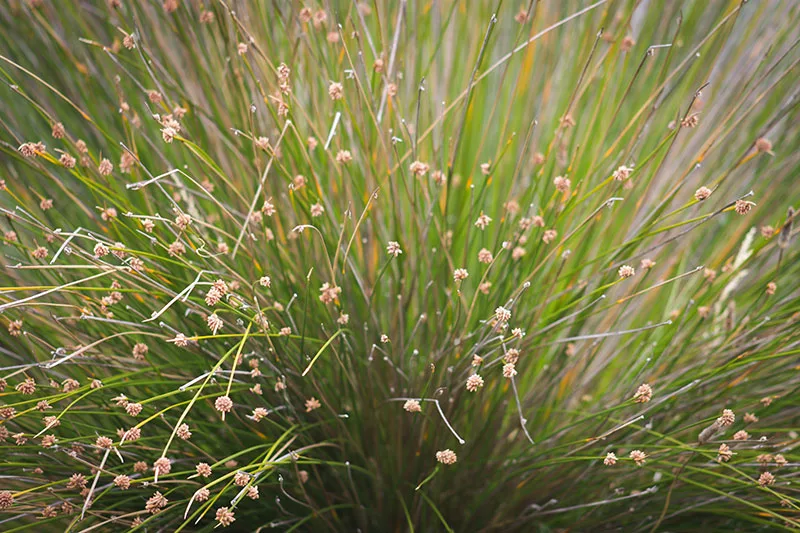
You may still see it sold under its former botanical name of Isolepis nodosa.
Knobby Club Rush is useful for naturalistic planting and areas where you want movement without delicate foliage being shredded by every stiff breeze. It also tolerates saline conditions and can cope with damp ground better than many of the plants on this list. That makes it particularly useful around lower lying coastal sites.
Plant it in groups rather than as lonely individual specimens for the best effect.
Best Position: Full sun to part shade. It adapts to a broad range of soil conditions.
11. Tuckeroo – Cupaniopsis anacardioides
For warmer coastal areas, Tuckeroo is a terrific small to medium Australian native tree.
It occurs naturally in coastal and littoral rainforest along the New South Wales and Queensland coastline. Salt laden winds barely trouble it and it can even tolerate brackish conditions.
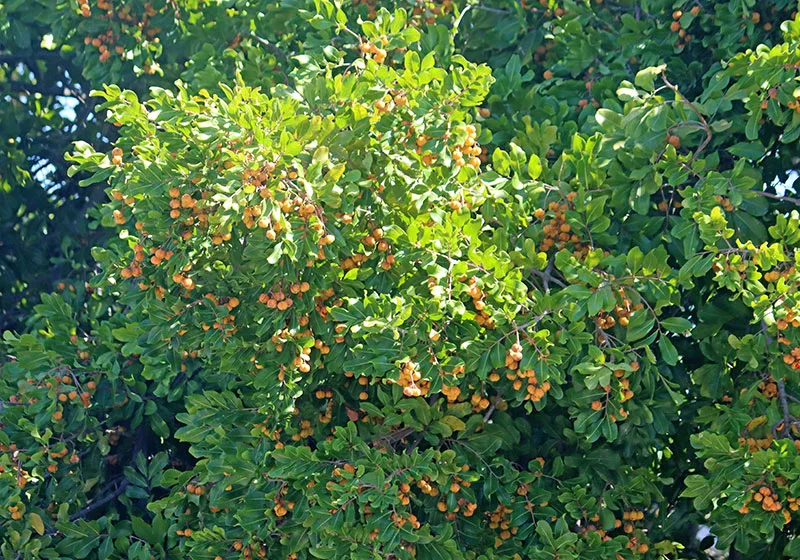
Dense evergreen foliage provides shade, privacy and shelter while flowers and colourful fruit provide food and habitat for wildlife.
Tuckeroo is particularly well suited to subtropical and warm temperate coastal gardens. Gardeners in colder areas should choose a tree better matched to their climate. Give it some room away from paths and heavily used paved areas since fruit can drop beneath mature trees.
Best Position: Full sun to part shade in warm temperate and subtropical regions.
12. Pandanus – Pandanus tectorius
Northern Australian coastal gardens have their own set of conditions and few plants look more at home beside the sea than Pandanus.
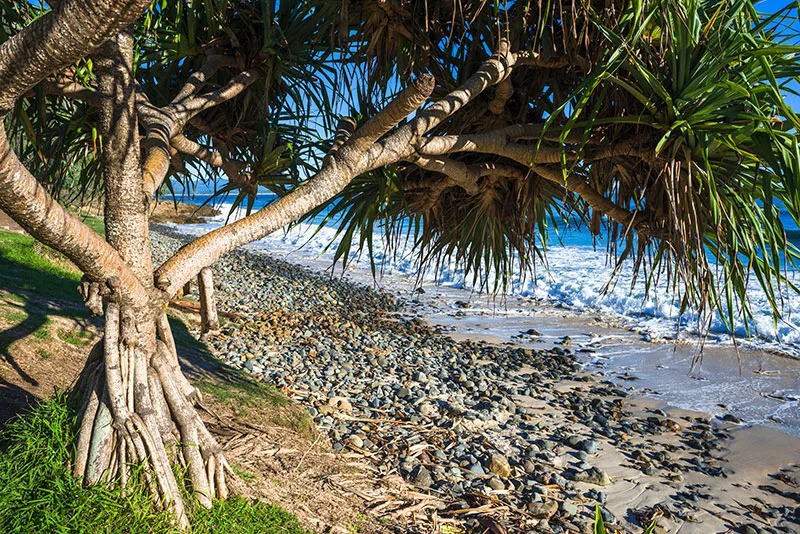
The long architectural foliage, branching habit and distinctive prop roots create an unmistakable tropical coastal look. More importantly, Pandanus tectorius naturally grows on exposed coastal headlands and beaches where it deals with strong winds, salt and sandy soil as part of everyday life.
Those prop roots help anchor the tree into loose sandy ground which is a rather useful trick when you spend your life beside the ocean. Pandanus eventually becomes a substantial feature plant so give it adequate room from the beginning.
It is best suited to tropical, subtropical and warm frost free climates rather than cool southern gardens.
Best Position: Full sun in warm climates with good drainage.
Coastal Plant Comparison Table
Use this table to narrow the list down according to the size of your garden, your climate and how exposed the position is.
| Common Name | Botanical Name | Type And Mature Size | Exposure Zone | Best Climate |
|---|---|---|---|---|
| Coastal Rosemary | Westringia fruticosa | Shrub 1 to 2 m | Front Line | Temperate to subtropical |
| Coast Banksia | Banksia integrifolia | Tree 5 to 25 m depending on exposure | Front Line | Temperate to subtropical |
| White Correa | Correa alba | Shrub 1 to 1.5 m | Front Line | Cool to warm temperate |
| Pigface | Carpobrotus species | Groundcover spreading to 2 m or more | Front Line | Species dependent |
| Sea Box | Alyxia buxifolia | Shrub 1 to 3 m | Front Line | Cool to warm temperate |
| Common Boobialla | Myoporum insulare | Shrub or small tree 2 to 6 m | Front Line | Temperate and mild coastal climates |
| Saltbush | Atriplex and Rhagodia species | Groundcover to shrub 0.5 to 2 m | Front Line | Varies by species |
| Spiny Headed Mat Rush | Lomandra longifolia | Clump 0.6 to 1 m | Second Line on very exposed sites | Cool temperate to subtropical |
| Cushion Bush | Leucophyta brownii | Shrub 0.4 to 1 m | Front Line | Cool to warm temperate |
| Knobby Club Rush | Ficinia nodosa | Clump 0.5 to 1.5 m | Front Line | Cool to warm temperate |
| Tuckeroo | Cupaniopsis anacardioides | Tree 6 to 10 m | Front or Second Line depending on exposure | Warm temperate to subtropical |
| Pandanus | Pandanus tectorius | Feature tree around 5 to 6 m although size varies | Front Line | Subtropical to tropical |
Plants To Avoid In An Exposed Coastal Garden
Knowing which plants are likely to struggle can save just as much money as knowing which ones will thrive. Buxus can be a classic disappointment in a front line coastal position. Salt laden wind may cause browned foliage and ongoing damage.
Many traditional Roses can also struggle when subjected to constant wind and direct salt spray although they can grow very well in a sheltered third line courtyard. Japanese Maples, Hydrangeas and Camellias generally appreciate protection from strong drying wind. Hydrangeas and Camellias also perform best where they have reliable soil moisture which can be tricky to maintain in extremely sandy coastal soil.
Fuchsias and other soft leafed plants can scorch quickly in exposed situations. Large screening plants need a little more thought too.
The problem is not simply whether a tree is native or exotic. A very dense row of trees or shrubs can behave like a solid barrier and create turbulence on the sheltered side.
None of these plants are automatically impossible near the coast. They simply belong in the more protected sections of the garden rather than being sent straight onto horticultural beach patrol.
How To Help Coastal Plants Get Established
Even naturally tough plants need some help while their roots establish. Sandy coastal soil often contains relatively little organic matter and can struggle to retain moisture and nutrients. Some sandy soils also become water repellent after drying which means water can run straight past the area where roots actually need it.
Improving the planting area before you start makes a substantial difference.
Try to:
- Add compost and organic matter without destroying the soil’s natural drainage
- Mulch around plants to slow moisture loss from the surface
- Water deeply during establishment to encourage deeper root development
- Use a soil wetting agent where water repellence is genuinely a problem
- Use temporary shade cloth or hessian screens on extremely exposed sites
- Group plants with similar water and soil requirements together
A coarse mulch is often easier to manage in an exposed coastal garden than very fine material which can disappear down the street during the first serious wind.
Go gently with fertiliser. Australian native plants growing naturally in low nutrient coastal soils rarely benefit from being heavily fed. If fertiliser is required, choose one suitable for Australian natives and follow the application rate on the label.
Young plants that receive a particularly heavy coating of salt spray can also benefit from having the foliage gently rinsed with fresh water once the weather settles. Established coastal natives generally become far more capable of looking after themselves.
Building A Layered Windbreak
Avoid thinking of a windbreak as a completely solid wall. A dense barrier forces air around and over it which can create turbulence on the sheltered side. A permeable planting allows some wind through while reducing its speed.
A layered windbreak works particularly well. Use taller plants such as Coast Banksia or Common Boobialla towards the exposed edge where space allows. Follow with medium shrubs such as Coastal Rosemary and White Correa. Groundcovers, Saltbush, Pigface, Lomandra and other clumping plants can then fill the lower level and protect the soil surface.
Each layer takes a little more energy out of the wind. The aim is to filter it rather than challenge the Pacific Ocean to a fist fight.
Salt Burn Or Wind Burn: How To Tell The Difference
Coastal plants often show stress in recognisable ways although one symptom can have several possible causes. Treat this table as a starting point rather than an invitation to diagnose your garden from twenty metres away.
| Symptom | Possible Cause | What To Do |
|---|---|---|
| Brown crispy leaf tips and margins that are worse on the seaward side | Salt burn | Rinse young plants with fresh water after heavy exposure and consider moving sensitive plants further back |
| Torn, shredded or stripped foliage on the windward side | Wind damage | Add a filtering windbreak layer in front |
| Plant wilts even though it is being watered | Water repellent soil, poor root establishment or another root problem | Check whether water is penetrating the soil before adding more |
| Yellowing between veins on new growth | Possible nutrient deficiency or soil pH problem | Check growing conditions before applying fertiliser |
| Darkened stems and collapse near the base | Possible root or crown rot linked to excess moisture or poor drainage | Check drainage and reduce unnecessary watering |
| Growth develops mostly on the sheltered side | Persistent prevailing wind | Accept the windswept form or provide more protection |
Salt and wind damage frequently occur together. If foliage develops crisp brown margins mainly on the ocean facing side, salt exposure is a likely contributor. Physically torn or shredded foliage points more strongly towards wind damage.
Either way, the plant is telling you something. It pays to listen before replacing it with exactly the same thing and hoping for a personality change.
Create A Coastal Garden That Works With The Conditions
Successful coastal gardening comes down to choosing plants that suit the site rather than trying to convince unsuitable plants to enjoy it.
Start with the toughest plants on the most exposed side of the garden. Use the protection they create to gradually widen your planting choices further back. Within a few years, the conditions behind an established layered windbreak can be remarkably different from the exposed area in front.
A combination of Coast Banksia, Coastal Rosemary, White Correa, Lomandra and Pigface can create a garden that feels lush and interesting without requiring a rescue mission after every strong coastal wind. Choosing the right plants for coastal gardens also gives you the chance to embrace what makes these landscapes special.
Silver foliage, sculptural forms, native flowers and movement through strappy foliage all look completely at home beside the sea.
The coast will keep throwing salt, sand and wind at your garden. Fortunately, Australian plants have had a few thousand generations to practice dealing with all three.
FAQs – Plants for Coastal Gardens
Salt spray typically affects the first few hundred metres from open water, although strong onshore winds can carry it much further. Wind and sandy soil often remain an issue well beyond that. Watch what thrives in neighbouring gardens for the most reliable local guide.
Yes. Coastal Rosemary and Sea Box both clip well and hold a crisp shape. Both handle direct exposure far better than Buxus.
Established coastal natives cope without help. Young plants in their first year benefit from a rinse with fresh water after heavy salt spray, particularly following a storm.
Sea Box produces attractive orange red fruit that is toxic to humans. Pigface fruit is edible and Boobialla fruit is eaten as a bush food. Teach children not to eat anything from the garden without asking.