There is something undeniably charming about a cottage garden. Soft and abundant planting, flowers spilling over pathways and that slightly wild look that feels relaxed rather than rigid.
The beauty of an Australian native cottage garden is that you can achieve that same effect using plants that actually thrive in our conditions.
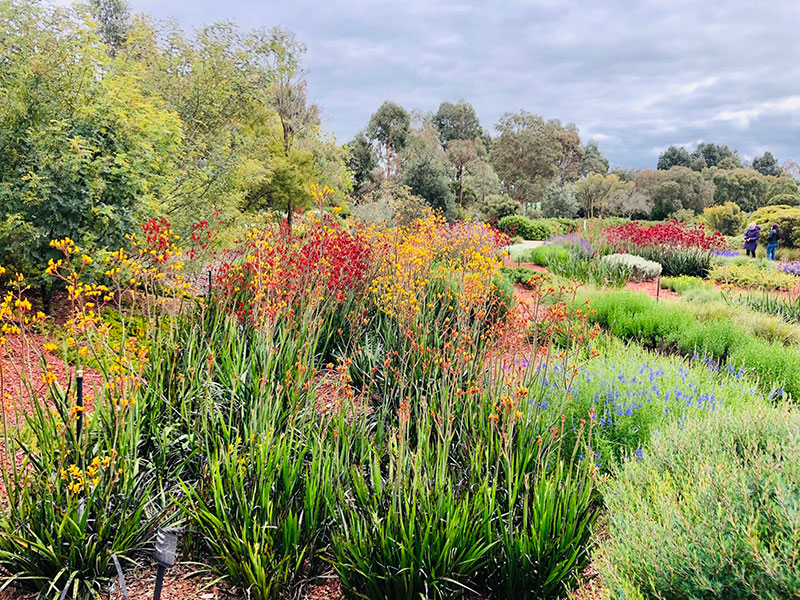
Forget struggling Roses and thirsty perennials. This is about working with the climate rather than against it. Think relaxed planting, layers of texture and flowers that appear as if they have simply decided to be there.
What Makes An Australian Native Cottage Garden Work
Before you start planting, it helps to understand the simple principles that give this style its relaxed, full and effortlessly beautiful feel.
Layering Is Everything
Larger shrubs create structure and anchor the space. Mid-sized plants bring colour and fill the gaps. Groundcovers soften edges and tie everything together. When these three layers work in harmony, the garden feels complete even when individual plants are between flushes.
A Mix Of Textures
Fine foliage planted next to bold leaves creates depth and stops the garden from looking flat. Pairing the needle-like foliage of a Grevillea with the soft rounded leaves of a Correa is a simple way to add visual interest without adding complexity.
Year-Round Interest
Choose plants that flower across the Seasons so there is always something happening. Australian natives are particularly well suited to this because many species flower during Autumn and Winter when traditional cottage favourites are dormant.
A Slightly Relaxed Hand
Allow plants to spill, self-seed and wander a little. This is where the charm lives. A cottage garden should never look like it was planted with a ruler.
Structural Plants And Larger Shrubs
These are the backbone of your garden, providing shape, height and year-round presence even when nothing else is flowering.
Emu Bush – Eremophila glabra
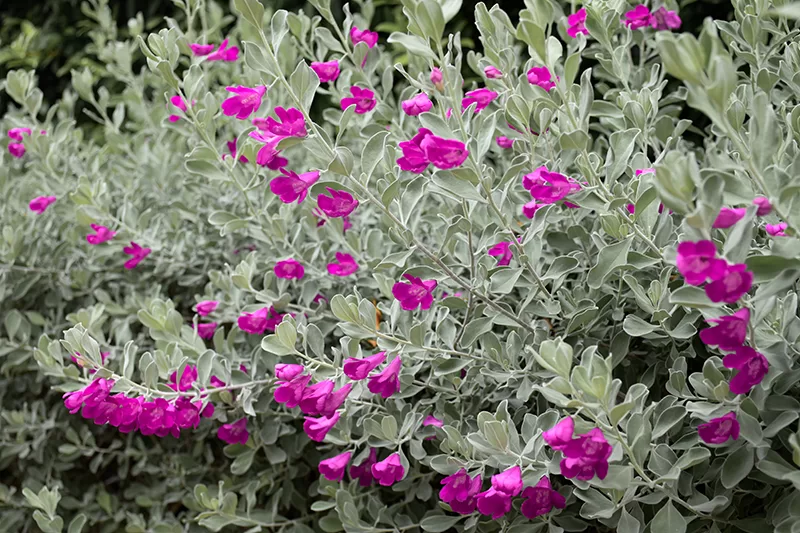
A standout for dry, challenging conditions. This shrub varies in form from low and spreading to upright, depending on the cultivar. Its tubular flowers appear in shades of red, orange or yellow and are highly attractive to birds.
It thrives in full sun and well-drained soil and once established it requires very little water, making it perfect for low-maintenance gardens.
Grevillea ‘Robyn Gordon’ – Grevillea banksii × bipinnatifida
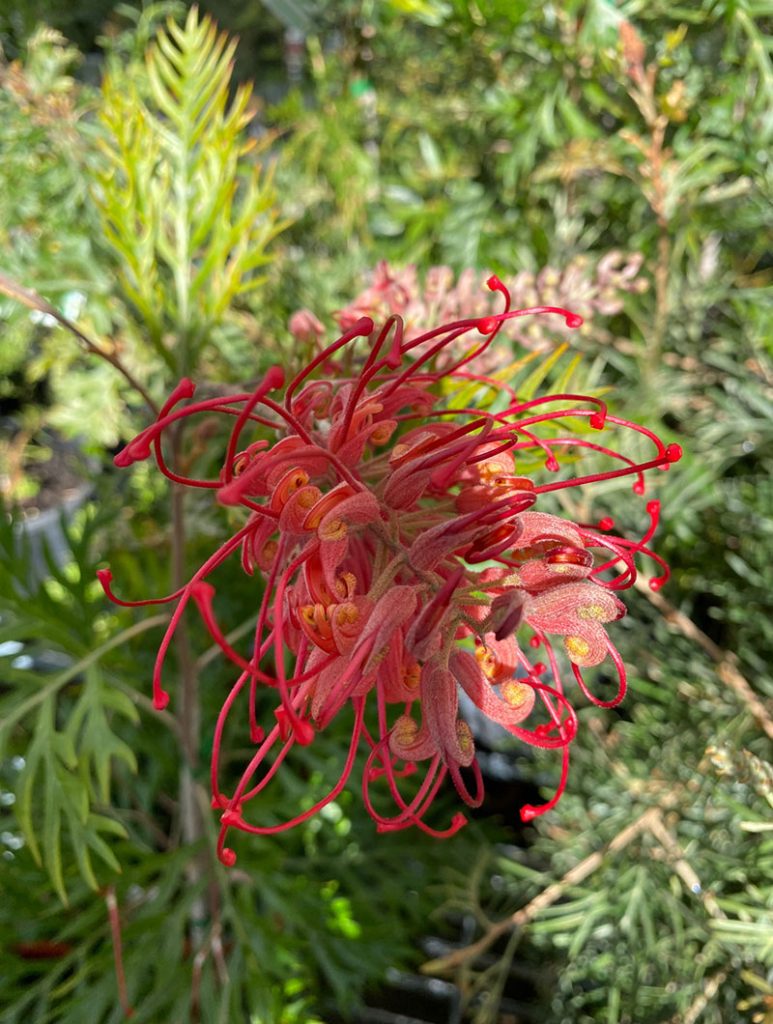
Grevillea ‘Robyn Gordon’ is a true workhorse in any Australian native cottage garden. This hybrid flowers for most of the year, with peak flowering in late Winter and Spring, though in mild climates it rarely takes a break. It typically reaches around 1.5 metres high and wide, forming a dense, rounded shrub that anchors a garden bed beautifully.
The nectar-rich flowers are a magnet for honeyeaters and other birds, making it as functional as it is attractive. The foliage can irritate sensitive skin, so it is best positioned slightly back from paths.
Tea Tree – Leptospermum sp.
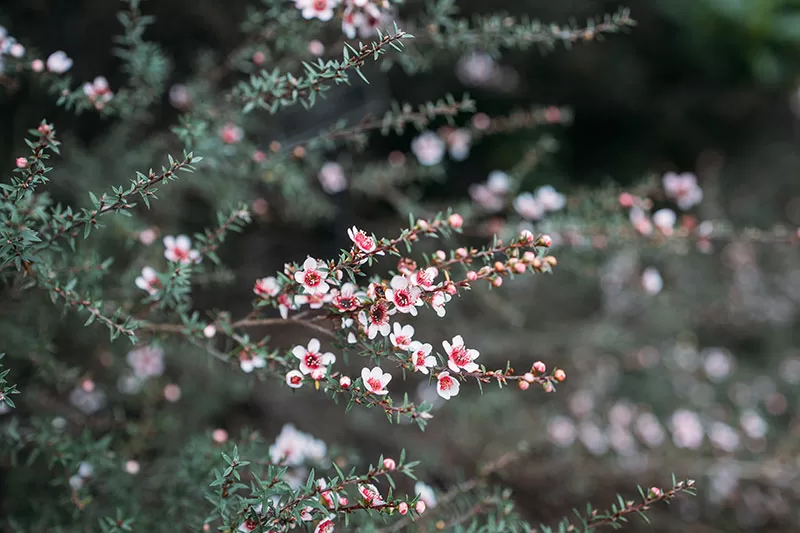
Tea Trees bring softness and a slightly wild character that suits cottage planting perfectly. Their fine foliage creates a light texture, while masses of small white or pink flowers cover the plant in Spring.
Depending on the variety, they can be compact shrubs or small trees, giving you flexibility in design. They are generally hardy, though they perform best in well-drained soil and full sun.
Native Rosemary – Westringia fruticosa
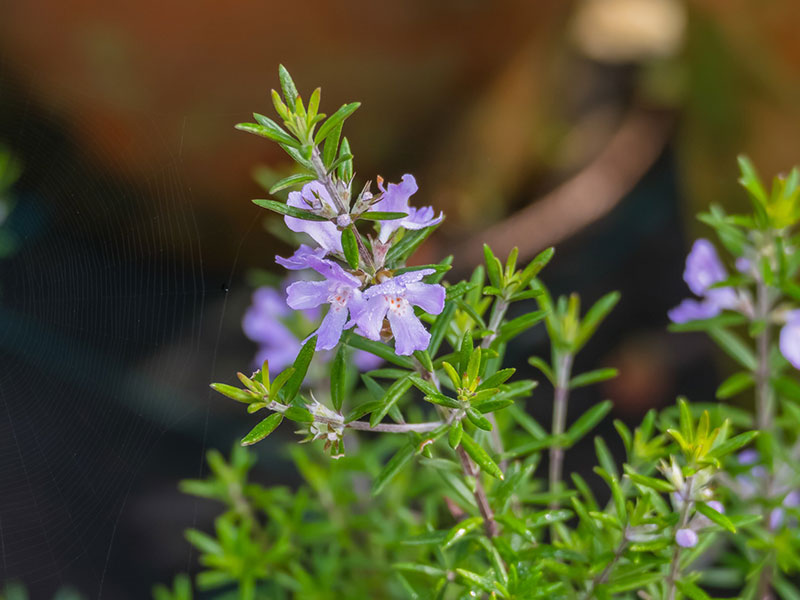
Westringia is a reliable, low-maintenance shrub that earns its place in almost any garden. Growing to around 1 to 2 metres high and wide, it can be clipped into a neat form or left to grow more naturally.
The soft grey-green foliage provides a calming contrast to brighter flowers, and small white to pale mauve blooms appear intermittently throughout the year. It is highly tolerant of wind, salt and poor soils.
Native Hibiscus – Alyogyne huegelii
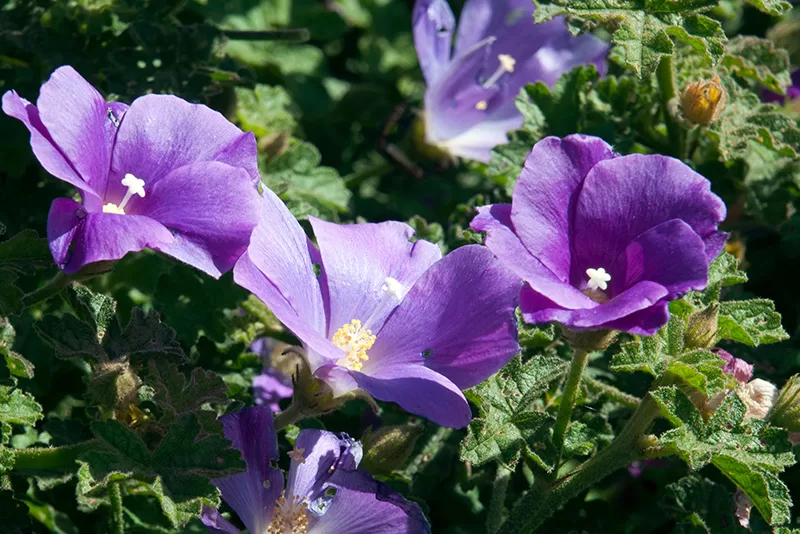
Fast-growing and eye-catching, this shrub produces large, silky flowers in shades of purple, lilac or occasionally white. It typically grows to around 1.5 to 2 metres tall, creating a strong visual presence.
While individual flowers are short-lived, the plant produces them continuously through Spring, Summer and Autumn. Good drainage is essential, as it does not tolerate wet feet.
Native Fuchsia – Correa reflexa
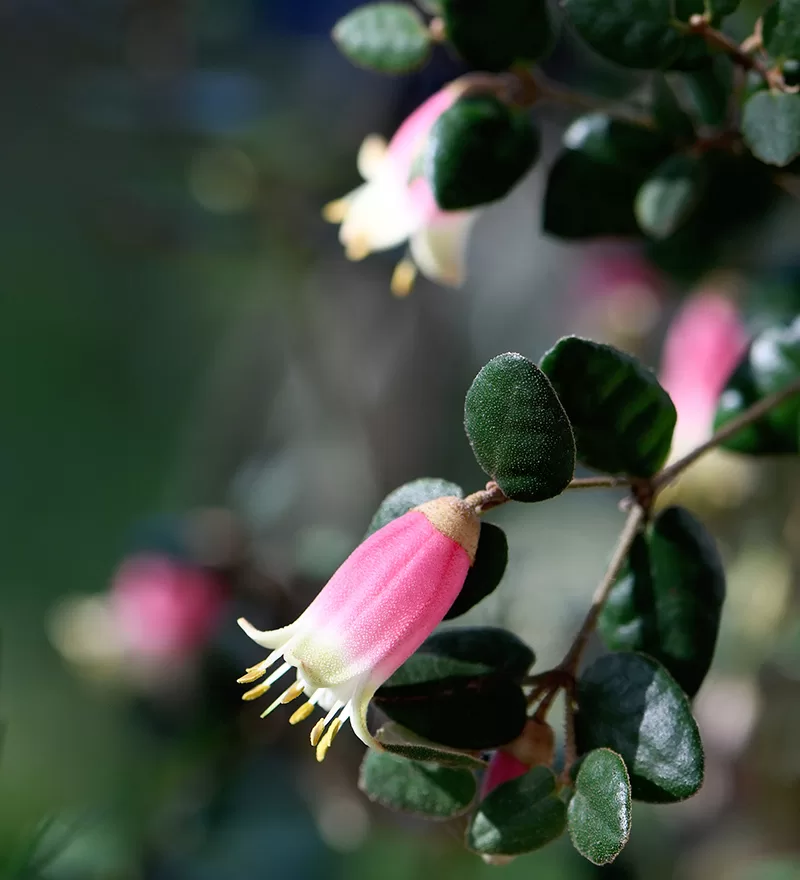
A valuable plant for cooler months, producing bell-shaped flowers from Autumn through Winter and into Spring.
It usually grows to around 1 to 1.5 metres high, forming a soft, slightly open shrub. It tolerates part shade well and is excellent for attracting birds during the quieter seasons.
Geraldton Wax – Chamelaucium uncinatum
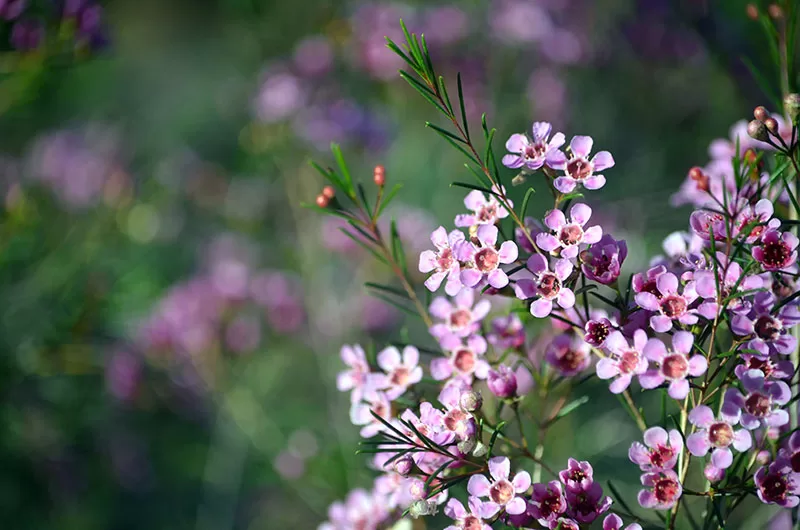
A Western Australian native known for its masses of small, waxy flowers. It can grow up to 2 metres tall and produces a stunning floral display in Spring.
The flowers are long-lasting, both on the plant and in a vase. It requires full sun and excellent drainage to thrive.
Mid-Sized Flowering Plants
This is where the colour, movement and personality come in, filling the space between your larger shrubs and bringing the garden to life.
Crowea – Crowea exalata
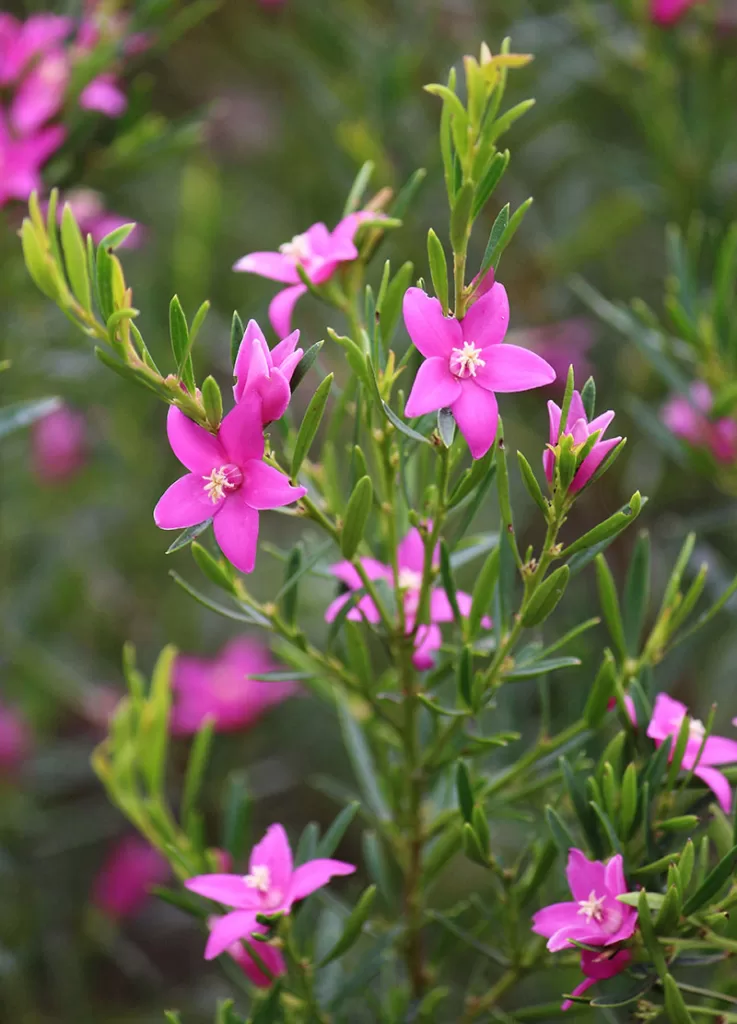
A compact, neat shrub that brings long-lasting colour to the garden. Its star-shaped pink flowers can appear for months, often from Autumn through Spring.
Growing to around 1 metre high and wide, it fits neatly into smaller spaces or layered plantings. It performs best in well-drained soil with some protection from harsh afternoon sun.
Kangaroo Paw – Anigozanthos flavidus hybrids
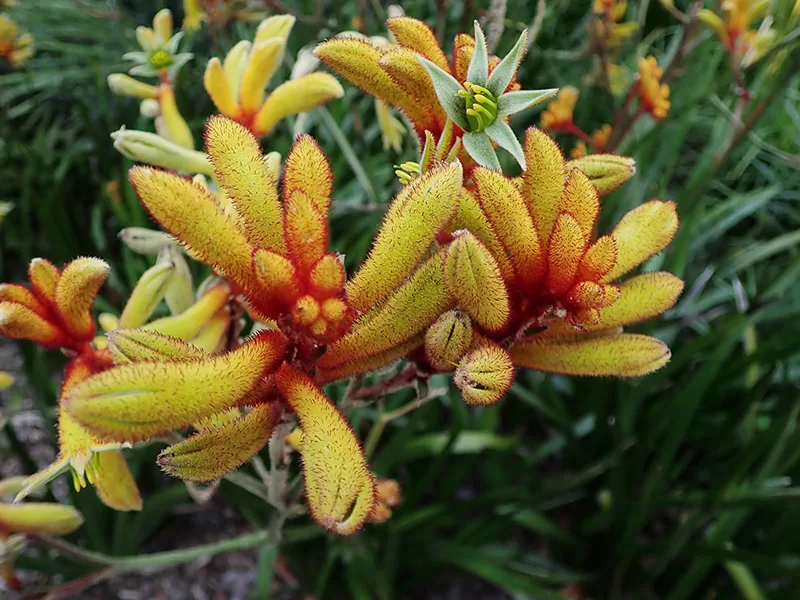
A signature Australian plant that delivers bold colour and strong vertical form. Flower spikes can reach up to 1.5 metres, rising above strappy foliage and creating striking contrast.
Colours range from reds and oranges to yellows and greens. These plants thrive in full sun with excellent drainage and benefit from occasional pruning to remove spent flower stems.
Native Mint Bush – Prostanthera rotundifolia
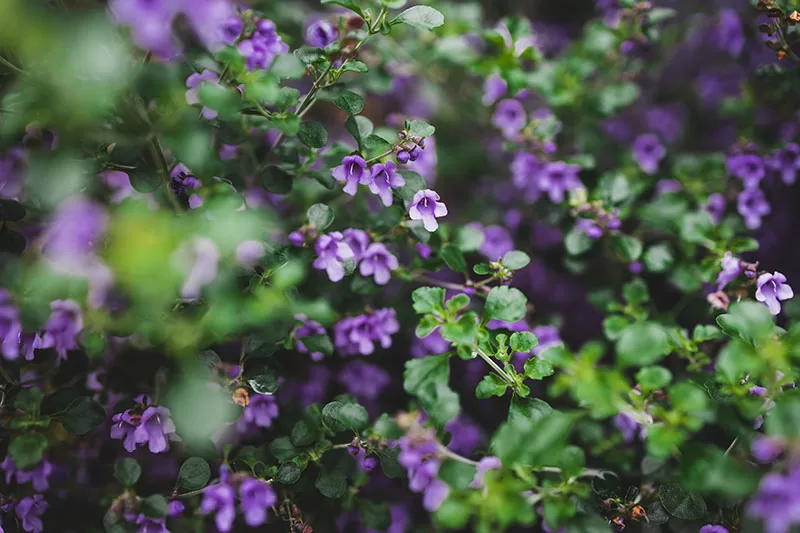
Happy Wanderer is a beautifully fragrant shrub that bursts into flower in Spring. It typically grows to around 1.5 metres high, forming a soft, rounded shape.
The aromatic foliage releases a minty scent when brushed against, making it ideal for planting near pathways. It prefers well-drained soil and benefits from pruning after flowering to maintain density.
Boronia – Boronia megastigma (and other Boronia species)
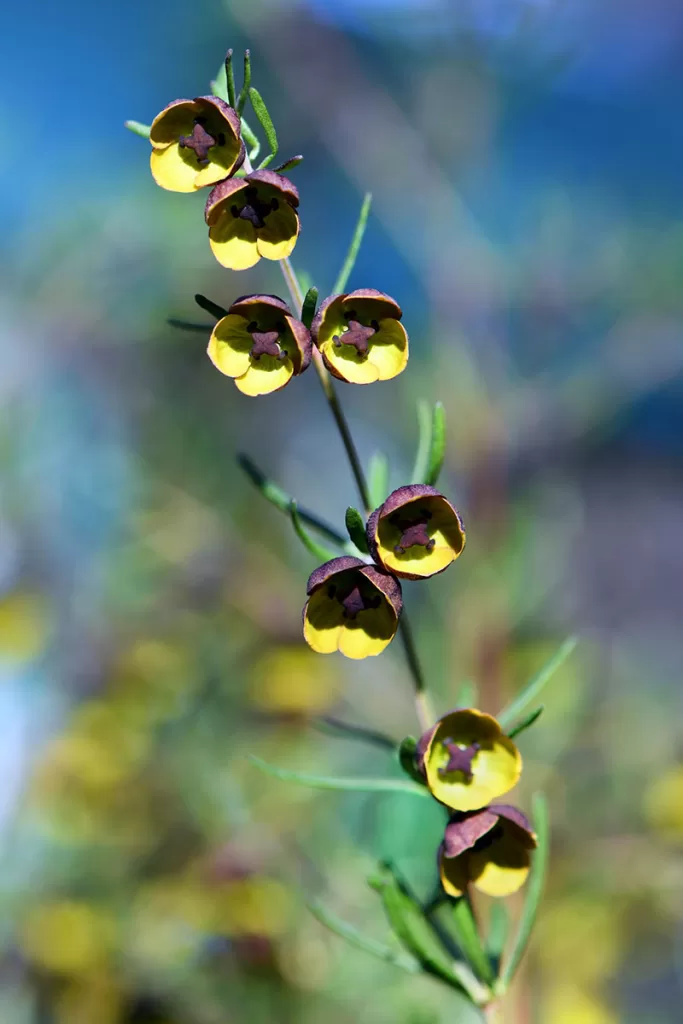
Highly valued for its intense fragrance, Boronia is a favourite for sensory gardens. It typically grows to around 1 metre high and prefers a cool, well-drained position with some protection from harsh conditions.
It can be short-lived if conditions are not right, though when happy it is spectacular.
Philotheca – Philotheca myoporoides
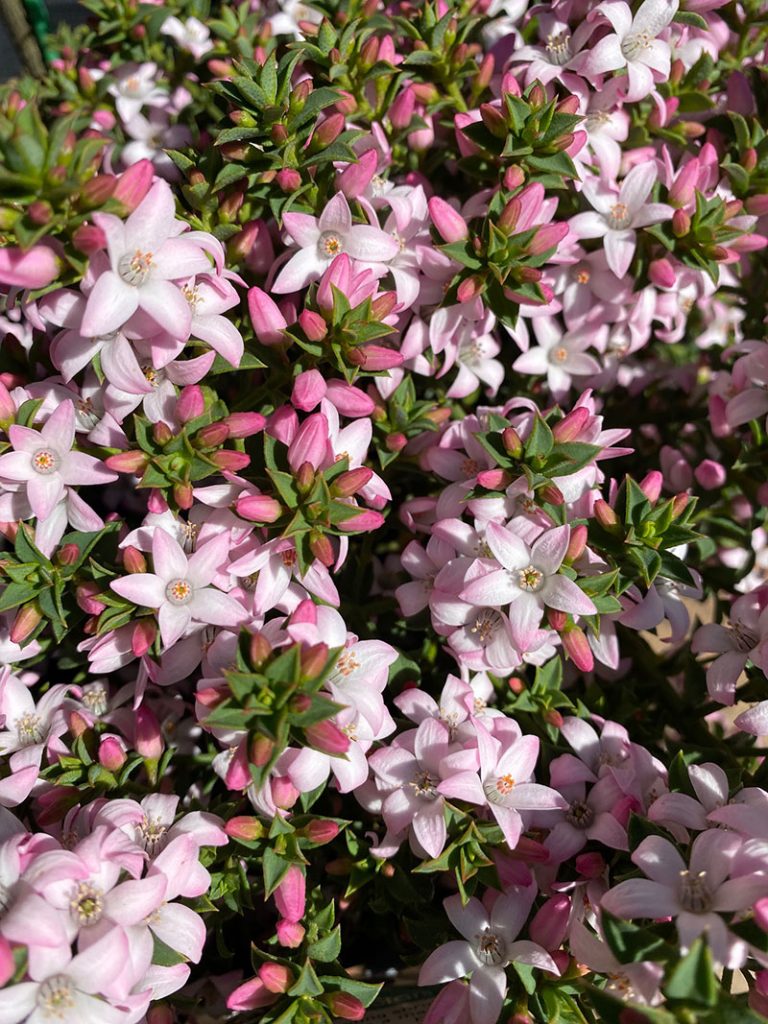
A refined shrub with small star-shaped flowers that appear in clusters. It grows to around 1 to 1.5 metres high and has a naturally tidy habit.
It is well suited to planting near paths or seating areas where its delicate detail can be appreciated.
Pimelea – Pimelea ferruginea
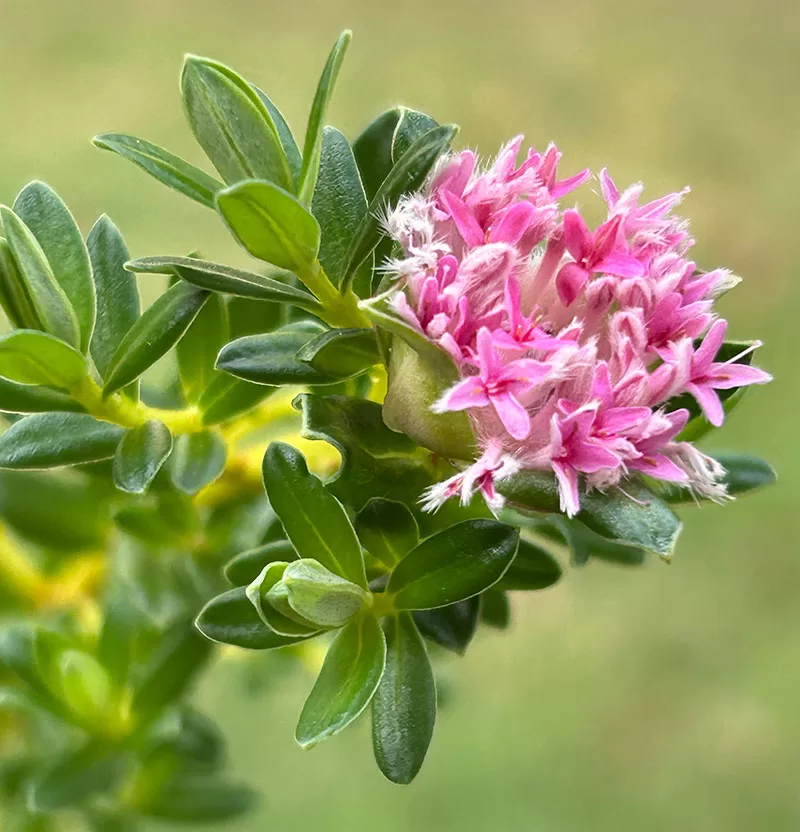
Pimelea is a compact shrub producing rounded clusters of pink or white flowers. It usually stays under 1 metre tall, making it ideal for the mid-layer of planting.
It prefers well-drained soil and a sunny to partly shaded position.
Billy Buttons – Pycnosorus globosus
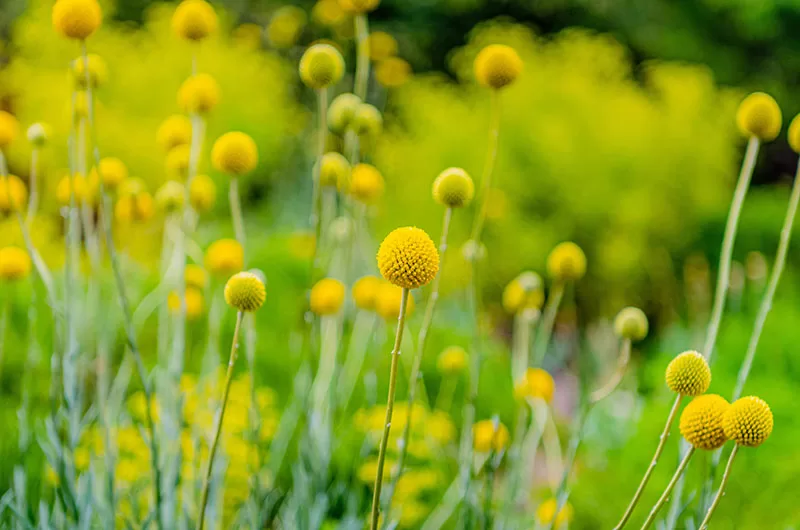
An eye-catching perennial with bright yellow spherical flowers held on tall stems. It grows to around 60 centimetres high and works beautifully in drifts.
It is drought-tolerant and thrives in full sun.
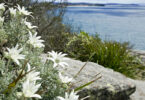
Flannel Flower – Actinotus helianthi
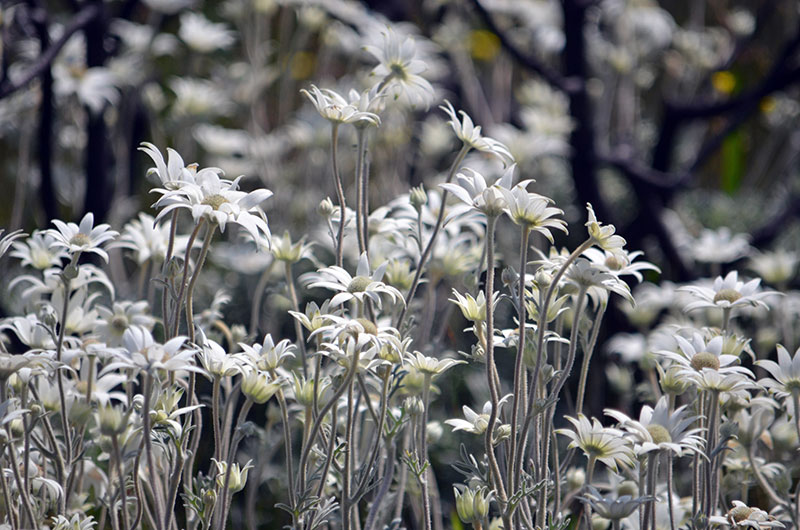
Flannel Flower is a striking plant with soft, silvery flowers and foliage. It typically grows to around 1 metre high and prefers sandy, well-drained soils.
It can be sensitive to overwatering, so careful placement is key.
Blue Bells – Wahlenbergia stricta
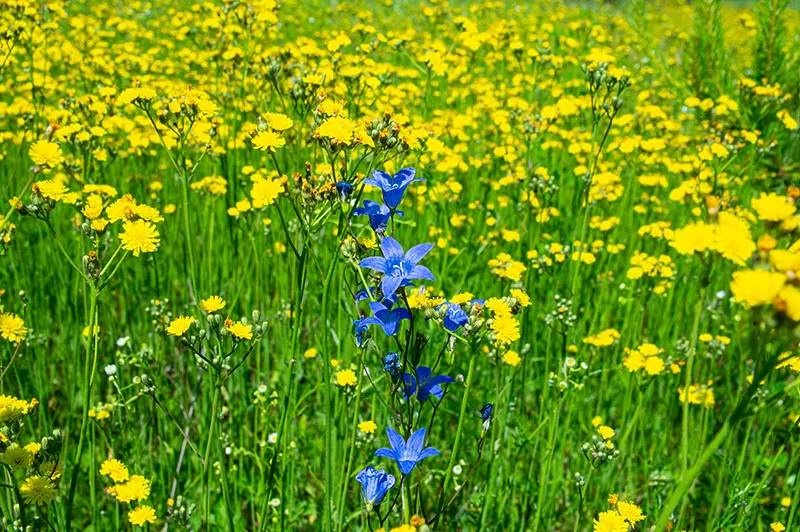
A delicate perennial producing masses of small star-shaped blue flowers. It grows to around 30 to 60 centimetres high and adds a light, airy feel.
It is well suited to borders, pots and hanging baskets.
Paper Daisy – Xerochrysum bracteatum
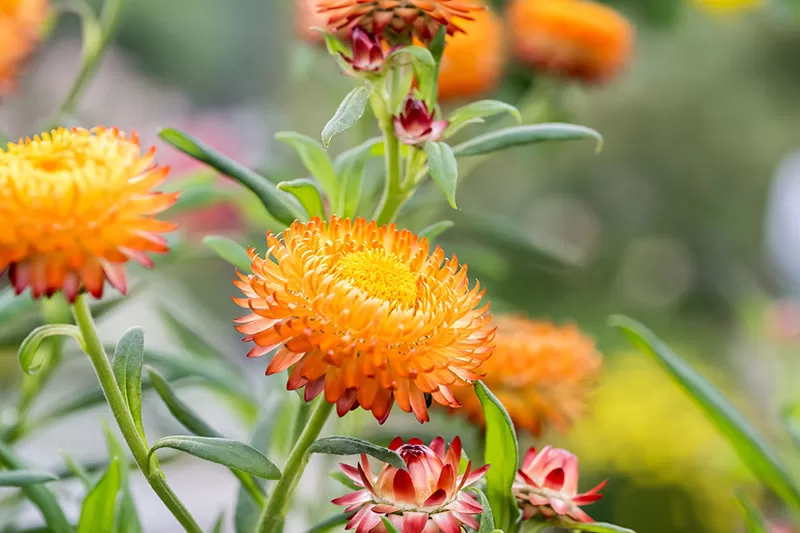
A hardy annual or short-lived perennial with vibrant papery flowers. It can grow up to 1 metre tall and is excellent for cutting and drying.
It readily self-seeds, contributing to a naturalised look.
Everlasting Daisy – Rhodanthe chlorocephala subsp. rosea
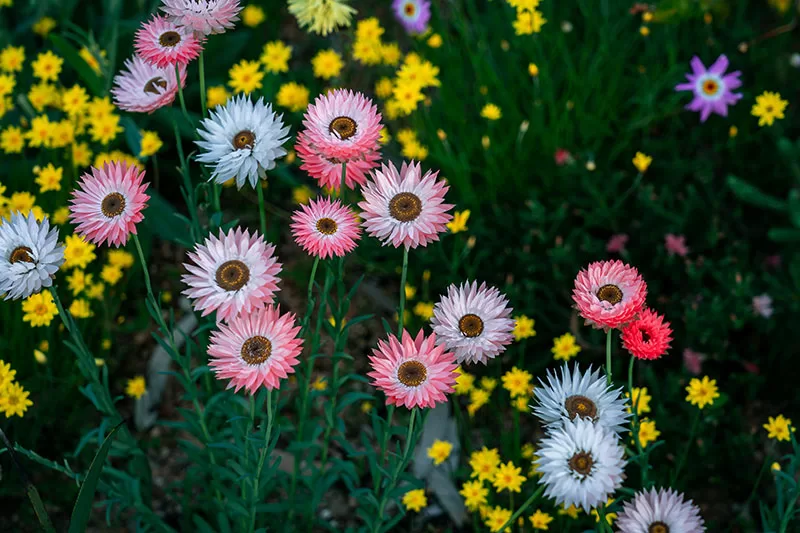
A delicate annual that produces masses of soft pink or white flowers. It grows to around 50 centimetres high and is best sown in Autumn for a Spring display.
It often self-seeds, returning year after year.
Happy Wanderer – Hardenbergia violacea
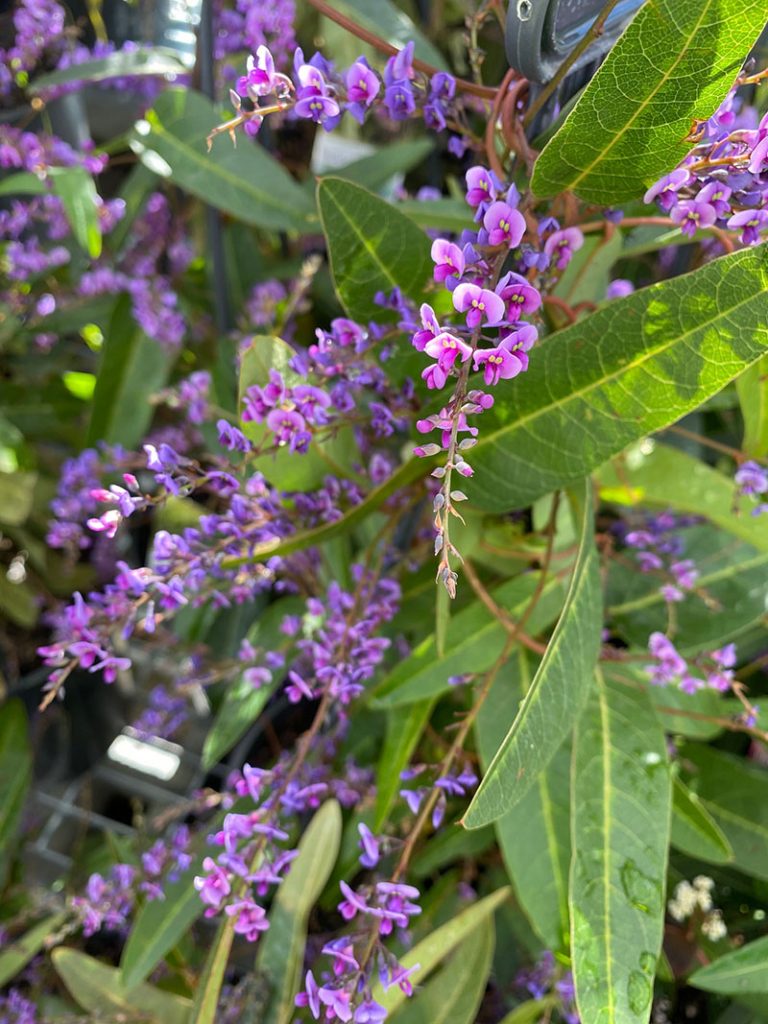
Happy Wanderer is a versatile climber or groundcover with glossy foliage and vibrant purple flowers. It can be trained over structures or allowed to trail through other plants.
It flowers in Winter and early Spring and is relatively low-maintenance once established.
Heart-Leaf Flame Pea – Chorizema cordatum
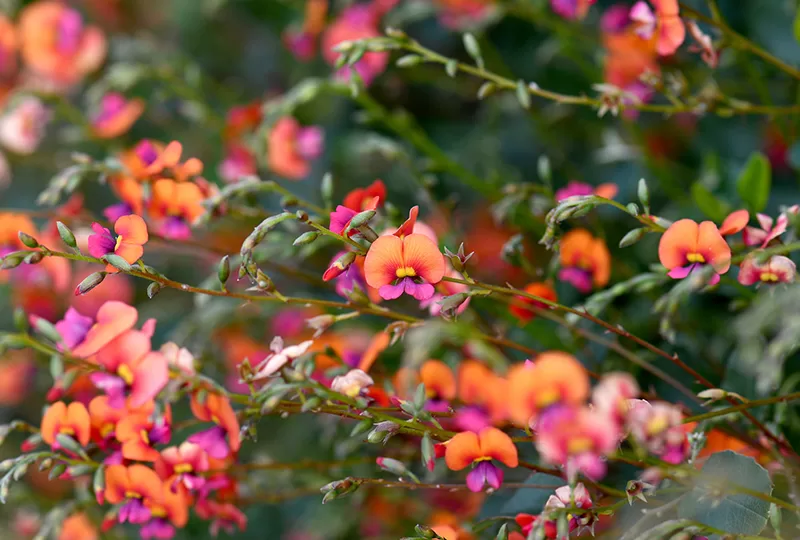
Bright orange and pink flowers and distinctive heart-shaped leaves make this a standout. A small, hardy, scrambling Australian native shrub blooming from Winter to Summer.
It grows to 1 m–1.2 m high and around 1 m wide making it perfect for understory plantings, containers or part-shaded garden beds.
Right about here is where your garden starts to feel full and a scatter of native wildflower seeds or seed bombs from the shop can help fill those last little gaps and create that effortless natural look.
Groundcovers And Spillers
These low-growing plants are the finishing touch, softening edges, filling gaps and creating that lush, overflowing cottage garden look.
Native Violet – Viola hederacea
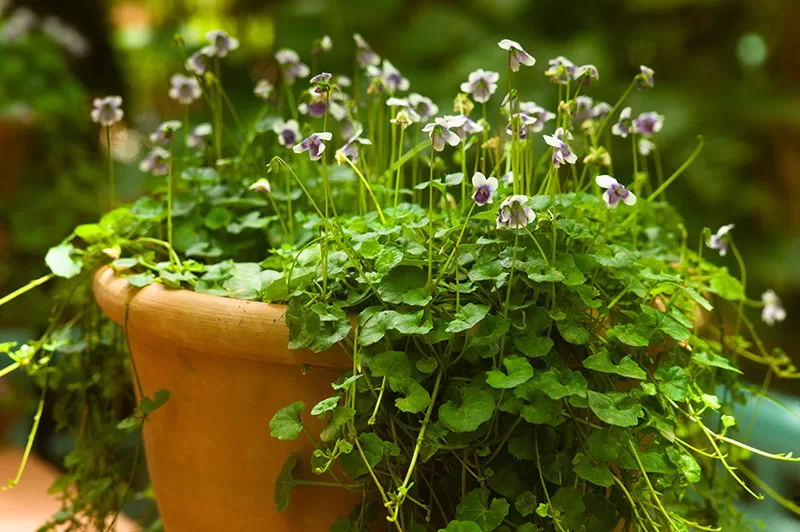
A gentle creeper that fills spaces with lush green foliage and small purple flowers. Perfect for softening edges and filling shaded areas where other groundcovers might struggle.
Fan Flower – Scaevola aemula
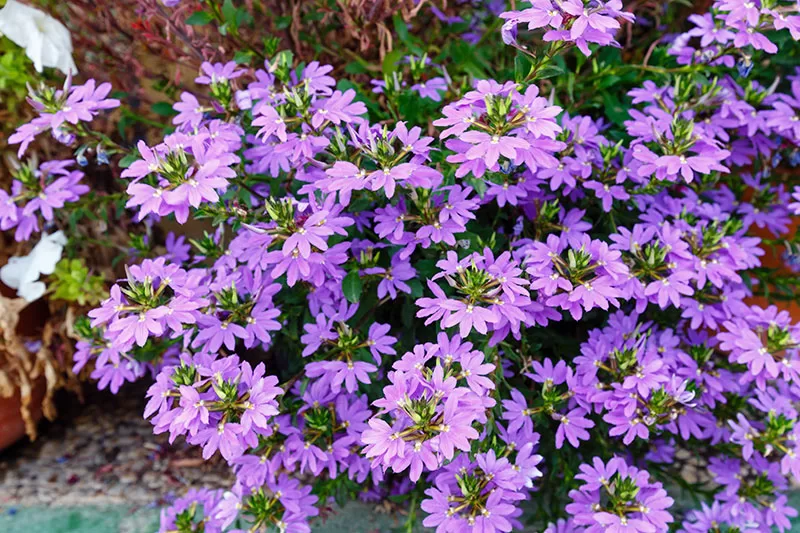
A fantastic spiller that produces waves of colour for months on end. Ideal for cascading over edges or weaving through other plants at the front of the border.
Native Pigface – Carpobrotus glaucescens
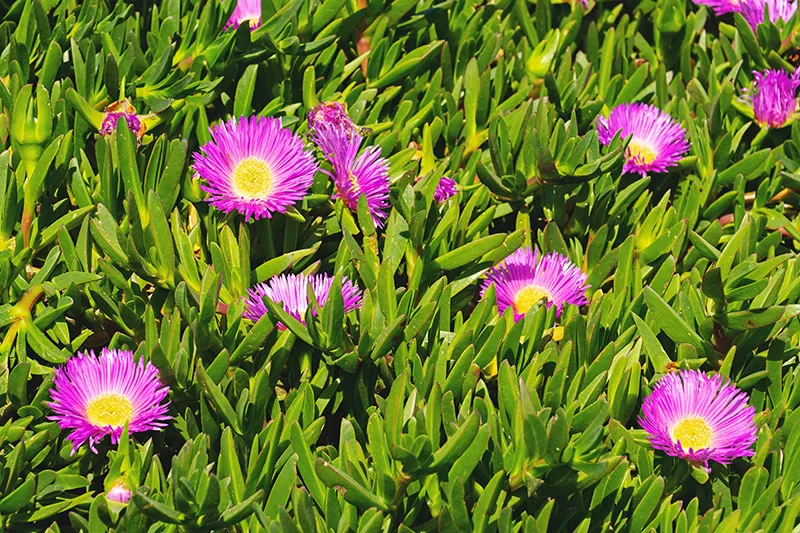
Tough and sun-loving with bold pink-purple flowers that bring bursts of colour. It is a succulent, so it stores water in its fleshy leaves and handles coastal and dry conditions with ease.
The fruit is edible and was traditionally used as a food source by Aboriginal peoples.
Running Postman – Kennedia prostrata
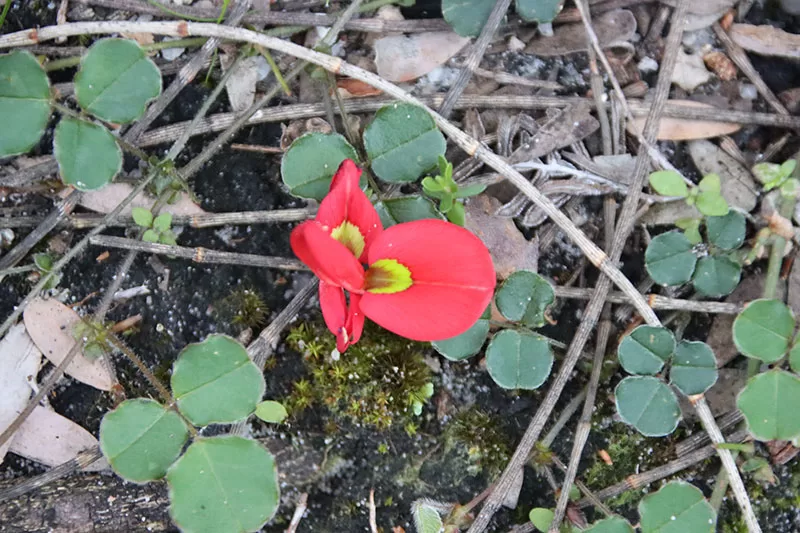
A cheerful groundcover with vivid red flowers. It spreads well and adds striking contrast at ground level. It is also a nitrogen fixer, which means it helps improve soil quality as it grows.
Brachyscome multifida – Native Daisy
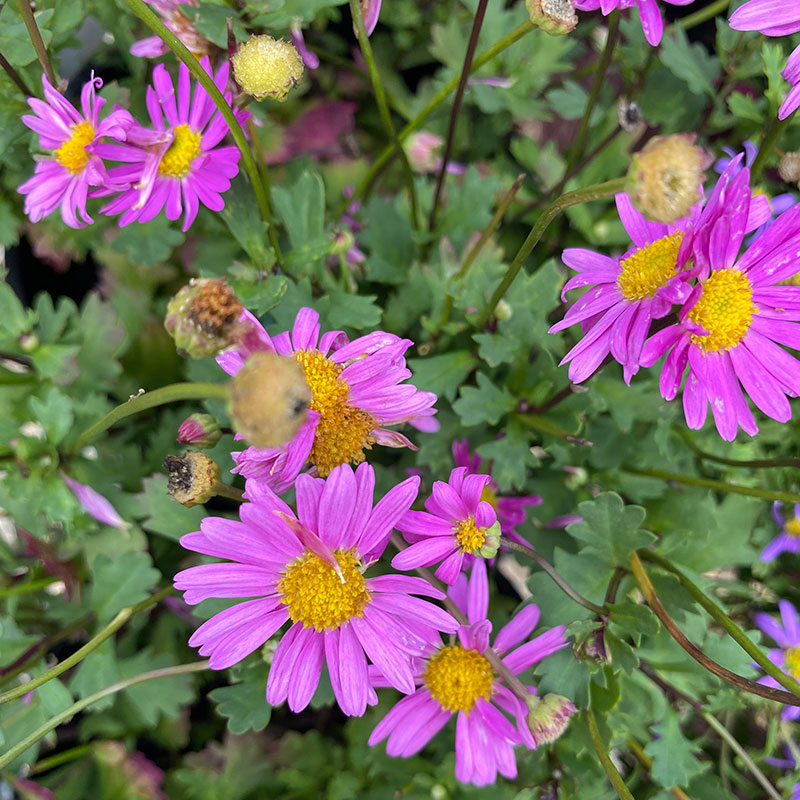
Brachyscome is one of the best plants for achieving that soft cottage look. Masses of daisy-like flowers create a carpet of colour and help tie the whole garden together.
Dampiera – Dampiera diversifolia
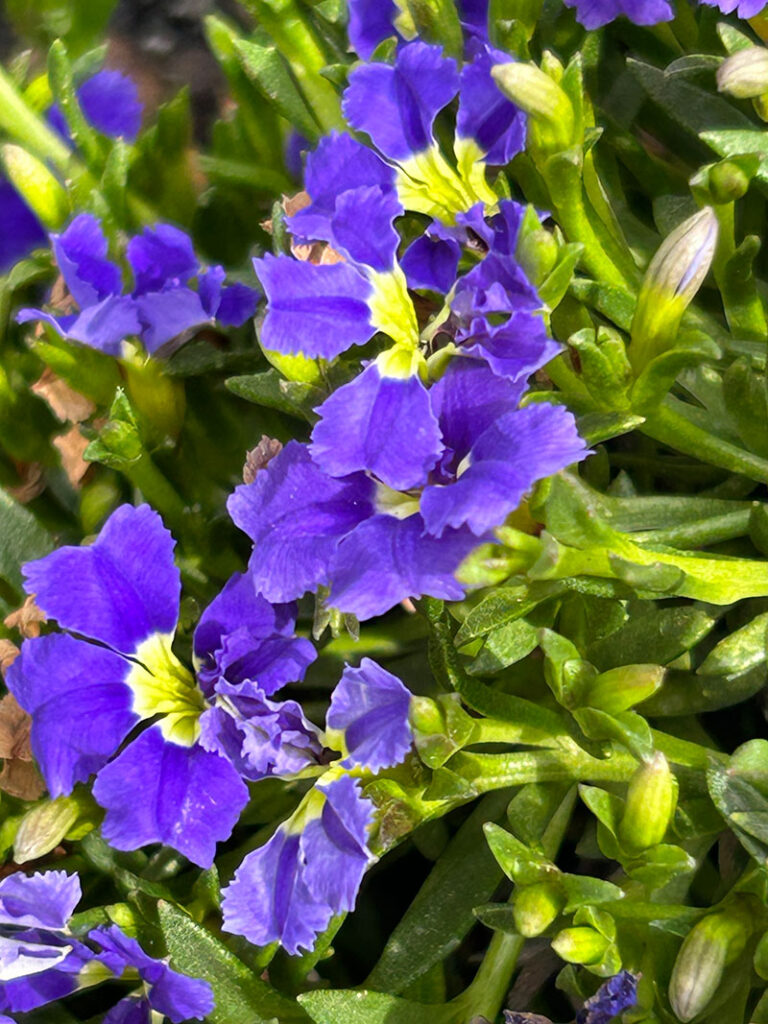
Dampiera is a low-growing plant with striking blue flowers. It spreads gently and fills gaps without becoming invasive, making it perfect for layering among other groundcovers.
Seasonal Flowering Guide
| Season | Structural Plants | Mid-Sized Flowering Plants | Groundcovers And Spillers |
|---|---|---|---|
| Spring | Leptospermum, Westringia | Kangaroo Paw, Native Mint Bush, Boronia, Flannel Flower, Paper Daisy, Everlasting Daisy | Fan Flower, Brachyscome, Heart-Leaf Flame Pea |
| Summer | Grevillea ‘Robyn Gordon’, Native Hibiscus | Kangaroo Paw, Wax Flower, Billy Buttons, Blue Bells | Fan Flower, Pigface, Brachyscome |
| Autumn | Grevillea ‘Robyn Gordon’, Emu Bush | Native Fuchsia, Philotheca | Native Violet, Dampiera |
| Winter | Grevillea ‘Robyn Gordon’, Crowea | Native Fuchsia, Happy Wanderer | Running Postman, Native Violet |
Designing Your Space
Start with your structural plants to anchor the garden. Layer in your mid-sized plants to build colour and texture. Finish with groundcovers to soften edges and fill gaps.
Keep things cohesive by repeating plant groupings through the space, sticking to a loose colour palette and allowing plants to grow into each other. The aim is a garden that feels slightly relaxed rather than perfectly manicured. If you find yourself reaching for the tape measure, you are probably overthinking it.
Soil And Position
Most Australian natives prefer well-draining soil in full sun to part shade. They generally need low fertiliser and many actively dislike phosphorus, so always choose a native-specific fertiliser.
If you are working with heavy clay soil, improve it by digging in coarse organic matter and applying gypsum to help break up the structure. Raised garden beds are another effective option as they give you full control over drainage and soil composition.
Watering And Maintenance
Once established, this style of garden is surprisingly low effort, though a few simple habits will keep it looking its best.
Watering
Water regularly while establishing your plants. This usually takes around 8 to 13 weeks depending on the species and conditions. Once settled, reduce watering significantly. Most established Australian natives prefer to stay on the drier side and overwatering is one of the most common mistakes gardeners make.
Pruning
Light pruning after flowering encourages bushier growth and more flowers in the following season. Deadheading spent blooms extends flowering on species like Grevillea and Crowea. Trim back any leggy growth to keep the planting dense and full.
Feeding
Use a low-phosphorus native fertiliser if needed. Apply in Spring and Autumn for best results. Always water in well after feeding to avoid root burn.
Wildlife Benefits
An Australian native cottage garden is full of life. Australia is home to more than 2,000 native bee species and over 800 bird species, many of which depend on native flowering plants for food and habitat.
By planting a layered native garden, you will attract bees and other pollinators, butterflies, small birds such as Honeyeaters, Spinebills and Silvereyes and beneficial insects that help keep pest populations in check.
Nectar-rich plants like Grevillea, Correa, Emu Bush and Kangaroo Paw are particularly valuable because they provide food during Autumn and Winter when floral resources are scarce elsewhere.
Bringing The Look To Life
This style of garden is about abundance, softness and a little bit of wildness. It is not perfect and that is exactly the point.
Layer your plants, mix textures and let things spill and spread. Before long, you will have a garden that feels relaxed, looks beautiful and works perfectly in Australian conditions. The key is to trust the process and resist the urge to tidy everything up.
A cottage garden earns its charm over time as plants grow into each other, self-seed into unexpected spots and attract the birds and insects that bring the space to life.
If you love that relaxed, meadow-style look, these are the kind of products that do the heavy lifting for you. The Everlasting Daisy Fields Seed Bombs are perfect for creating those soft drifts of colour that make a garden feel full and effortless, while the Australian Wildflower Seed Bombs – Native Bird Collection take things a step further by attracting birds and adding movement and life.
Simply scatter them into gaps, let nature do its thing, and suddenly your garden looks like you planned it that way all along.
FAQs – Australian Native Cottage Garden
No. Most established Australian natives prefer drier conditions and only need supplementary watering during prolonged dry spells.
Yes. Many native cottage garden plants such as Billy Buttons, Kangaroo Paw, Crowea and Native Violet perform well in containers.
The most common causes are overwatering and using fertiliser that is too high in phosphorus. Always use a low-phosphorus native-specific fertiliser and ensure your soil drains freely.
Autumn is generally the best time to plant as the cooler temperatures and upcoming Winter rain give roots time to establish before the heat of Summer.