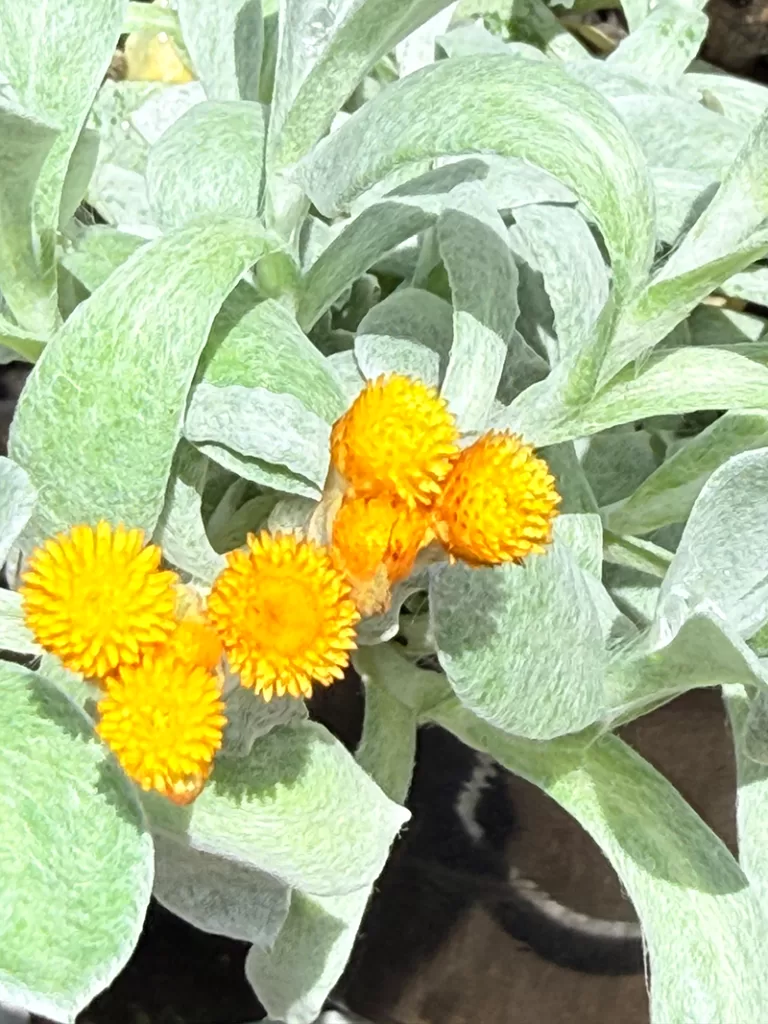
If you’ve been hunting for a native plant that quietly gets on with the job (and still looks great doing it), Chrysocephalum apiculatum is your new garden fave. It’s one of those “how is this not in every garden?” plants. Soft silvery foliage, cheerful golden button flowers and the kind of low-maintenance attitude we all aspire to.
This beauty flowers for months on end from Spring through to Autumn and the papery blooms can even be dried for everlasting arrangements. It’s hardy, waterwise and perfectly happy doing its thing in garden beds, rockeries and pots.
Why you’ll love it
- A long flowering season from Spring to Autumn with bright yellow button blooms
- Gorgeous silvery-grey foliage that looks good all year
- Tough, drought-tolerant, waterwise and low maintenance
- Great as a groundcover, edging plant or mass planting for big impact
- The flowers can be picked and dried for arrangements
- A food source for butterflies
Botanical name
Chrysocephalum apiculatum
Common name
Everlasting Daisy, Yellow Buttons
Chrysocephalum apiculatum description
This is an evergreen, groundcovering perennial with a neat spreading habit and dense foliage. The leaves are a soft, silvery-grey (the kind of foliage that makes everything around it look more “styled”) and the plant pumps out masses of golden yellow button flowers from Spring through Autumn.
It typically sits around 30–40 cm high, making it brilliant for borders and underplanting where you want colour without blocking the view of everything else.
It has a naturally wide growth habit and can vary in form depending on where it’s growing, which is why you’ll sometimes see it more upright and sometimes more spreading.
Climate
Everlasting Daisy is impressively adaptable. It’s suitable across a broad range of climate zones including sub-tropical, warm temperate, cool temperate, mediterranean and semi-arid.
It’s also frost tolerant (including heavy frost), so it’s not going to collapse into a dramatic heap the second Winter shows up.
Plant cultivation & care
Light
This plant is happiest in full sun but it will also tolerate light shade. More sun generally means more flowers (which is the whole point, really).
Soil
Everlasting Daisy isn’t fussy, which is deeply refreshing. It can handle loamy, sandy loam and clay loam soils and it even tolerates poor soil and saline conditions. It also performs beautifully in pots using a quality potting mix.
Watering
Once established, it’s a genuinely waterwise plant and copes well in dry conditions. If you’re planting in a pot, just aim for “evenly moist but not soggy” while it settles in, then ease off.
Feeding
It’s not a heavy feeder. A light feed in Spring can help keep growth and flowering strong, especially if it’s in a pot. If you’re using fertiliser, go gentle.
Propagation
If you fall in love (you will), it can be propagated by seed, softwood cuttings or division.
Plant use
Chrysocephalum apiculatum is one of those plants that does a lot of jobs in the garden without demanding applause.
Use it as:
- a groundcover to soften edges and fill gaps
- a border plant along paths or garden beds
- a feature foliage plant in dry or coastal gardens
- a rockery favourite (it looks right at home in gravel and stone)
- a container plant for sunny balconies and courtyards
It also suits low maintenance gardens, cottage-style gardens, wildflower meadows and poolside planting where you want a tidy plant that can handle heat and bright light.
And if you love the idea of “cut flowers that don’t die on you,” the blooms are perfect for dried arrangements
Pruning
This is a light-trim plant, not a full haircut situation.
After a big flowering flush (usually late Summer into Autumn), give it a gentle prune to keep it compact and encourage fresh growth. If it starts looking a bit tired or woody, a firmer cut back can help it bounce back and stay dense.
Regular deadheading can keep it flowering longer too. It’s not essential but nice if you want it looking sharp.
Pests & diseases
This one is pretty resilient and not known for constant drama.
The main risk is the usual: staying too wet for too long, especially in heavy soils or pots that don’t drain well. If the crown stays soggy, it can decline. Good drainage and not overwatering will prevent most issues.
Wildlife-wise, it’s a winner. It attracts bees and beneficial insects and it’s listed as a food source for butterflies.
In summary…
Chrysocephalum apiculatum (Everlasting Daisy) is a hardy, evergreen native groundcover with silvery foliage and bright yellow button flowers from Spring to Autumn. It’s waterwise, low maintenance, adaptable across many Australian climates and perfect for borders, rockeries, mass plantings and containers.
If you want a plant that keeps showing up for months on end without needing constant attention, this one’s a keeper.
If you’re adding Everlasting Daisy to your garden (or potting up a whole army of them, which I fully support), a few handy add-ons make the job easier and the plant happier:
- Repotting mats for clean, no-mess potting up
- A gentle fertiliser for a Spring boost, especially in pots
- A sturdy hand trowel or tool set for quick planting and dividing
- Gardener’s soap for the post-planting hand scrub (because soil gets into places it shouldn’t)
Easy plant. Easy care. Easy excuse to “just add one more pot”.