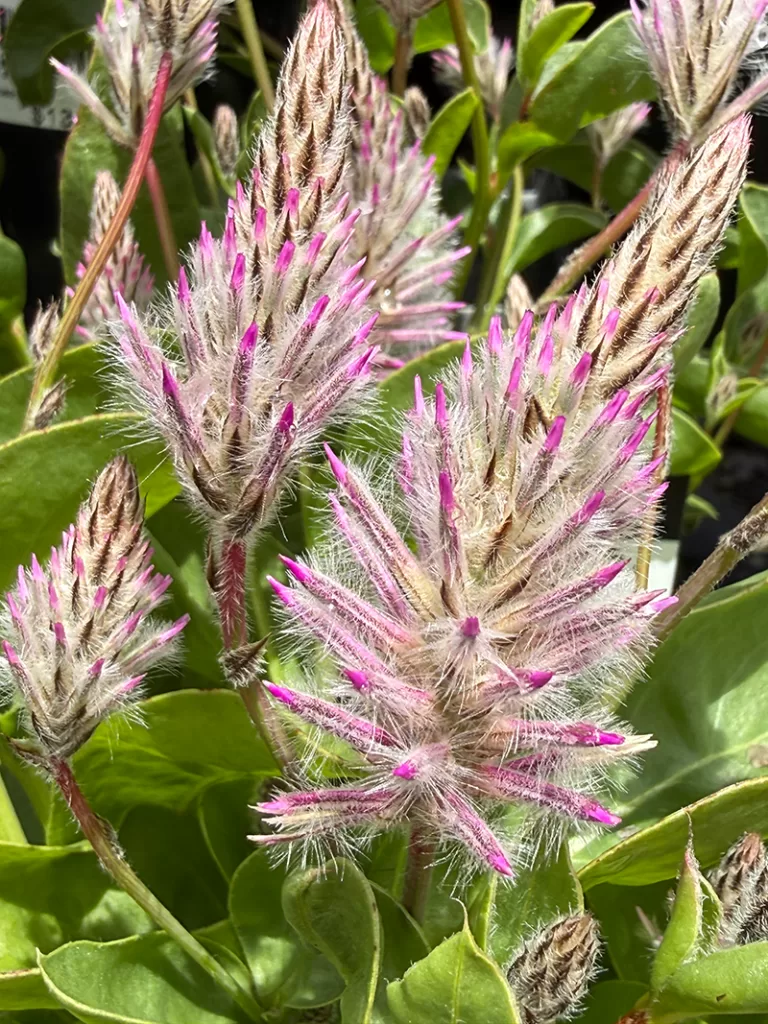
If you’ve ever looked at a plant and thought, “That is 100% wearing a fluffy pink party hat”, congratulations, you’ve found Ptilotus exaltatus ‘Joey’, better known as Mulla Mulla.
This Aussie native is all drama (in the best way). Soft, feathery flower spikes in dusty pinks and mauves that look like velvet bottlebrushes… but make it fashion. It’s a total show-off in Spring and Summer and it does it all without demanding constant babysitting.
Why you’ll love it
- Fluffy pink flower spikes that look unreal (and photograph beautifully)
- Drought and heat tolerant once established (no fainting spells in Summer)
- Great in pots — perfect if you’re short on space or want a portable pop of colour
- Cut-flower legend (fresh or dried)
- Frost tolerant once established because Joey’s tougher than it looks
Botanical name
Ptilotus exaltatus ‘Joey’
Common name
Mulla Mulla
Ptilotus exaltatus ‘Joey’ description
Ptilotus exaltatus ‘Joey’ is a short-lived, clumping herbaceous perennial (sometimes grown like a seasonal feature plant), usually reaching around 50–60cm tall.
It forms a neat mound of dark green leaves, then sends up those iconic feathery pink/mauve flower spikes through the warmer months.
It’s a brilliant choice when you want colour and texture that feels a bit “designer garden” without the designer maintenance schedule.
Climate
Mulla Mulla is happiest in sunny, drier climates and can struggle in high humidity (it’s not built for the “hot-wet-tropical hair day” lifestyle).
Once established it’s heat and drought tolerant and it can also handle frost (as long as it’s had time to settle in).
Best suited to:
- Full sun gardens
- Dry-ish conditions
- Spots with excellent drainage
If you’re in a humid area, don’t panic, you can absolutely still grow it… you’ll just want to treat it like a glorious pot plant where you control the soil and drainage (and Joey doesn’t sit around sulking in wet ground).
Plant cultivation & care
Light
Full sun is non-negotiable if you want strong growth and the best flowering.
In too much shade it gets leggy and the flowers won’t hit the same.
Soil
This plant is a drainage snob. It wants sandy or sandy-loam soil and it’s also happy in a quality potting mix for containers. The one thing it doesn’t tolerate is wet feet. Heavy clay + poor drainage = heartbreak.
Tip: If you’ve got clay soil, grow it in a raised bed or pot and save yourself the emotional rollercoaster.
Watering
- New plants: water regularly until established
- Once established: it’s pretty independent and copes well with dry spells
Just don’t drown it “because it’s hot” — that’s how rot happens.
Feeding
You don’t need to go overboard. A light feed during the growing season is plenty. Some growers recommend feeding with a native-friendly fertiliser, especially in Spring when it’s gearing up to flower (but don’t overdo it — too much lush growth can make it floppy.)
In pots
Mulla Mulla is famous for being perfect for pots because you can give it exactly what it wants: sun + sharp drainage + low humidity around the crown.
Choose a pot with excellent drainage holes and don’t use a saucer that holds water underneath unless you enjoy watching plants slowly regret their life choices.
Plant use
This is one of those plants that makes everything around it look more intentional.
Use Ptilotus exaltatus ‘Joey’ in:
- Sunny borders for soft colour and texture
- Rockeries and gravel gardens (it suits that dry, natural vibe perfectly)
- Courtyards and poolside pots where you want heat-tough beauty
- Native gardens as a showy seasonal highlight
- Cut-flower arrangements — the flower spikes are brilliant fresh and they also dry beautifully
It’s especially gorgeous paired with silver-leaved plants, ornamental grasses or other drought-tolerant natives.
Pruning
Think of pruning this one as “tidying and encouraging”.
- Deadhead spent flowers to keep it looking neat and help prolong blooming
- After the main flowering flush, give it a light trim to encourage fresh growth
- Don’t cut it back to bare sticks — keep some foliage on the plant so it can bounce back properly
If you grow it in a pot, regular deadheading also stops it from looking tired and scruffy halfway through the season.
Pests & diseases
Good news: Mulla Mulla isn’t typically a pest magnet.
Bad news: it will complain loudly if conditions are wrong.
The main problem is root rot. The biggest killer is poor drainage — heavy soil, overwatering or pots that stay soggy. If you see wilting in wet soil, that’s usually the warning sign.
In humid conditions, airflow matters. Crowded plants and damp soil can increase disease risk, so space it out and keep it dry at the base.
You might see aphids on fresh growth and snails/slugs nibbling new shoots (especially after rain).
In summary…
Ptilotus exaltatus ‘Joey’ (Mulla Mulla) is a standout Aussie native with soft, feathery pink flower spikes that shine through spring and summer.
It’s drought and heat tolerant, loves full sun and absolutely demands excellent drainage which is why it’s brilliant in pots, rockeries and sunny borders.
If you want a plant that looks fancy, photographs like a dream and doesn’t need constant attention… Joey’s ready for the spotlight.
If you’re planting Ptilotus exaltatus ‘Joey’ into a pot (which honestly is one of the best ways to grow it), check out these perfect products in the Curious shop:
- Repotting Mats (Pack of 2) – because potting mix gets everywhere, and your table doesn’t deserve that.
- Gardening tools – a decent trowel makes potting up faster, neater, and way less rage-inducing.
- Gardener’s soap – because Mulla Mulla may be fluffy, but potting mix absolutely isn’t.