If your Kangaroo Paw (Anigozanthos spp.) is suddenly looking like it’s been doodled on with a leaky black pen, you’re not alone. Ink Disease is a common fungal problem, especially in humid or rainy conditions and while it can make a mess of your plant’s good looks, the good news is: it’s not a death sentence.
Here’s what’s going on, why it happens, and what you can do about it.
What is Ink Disease?
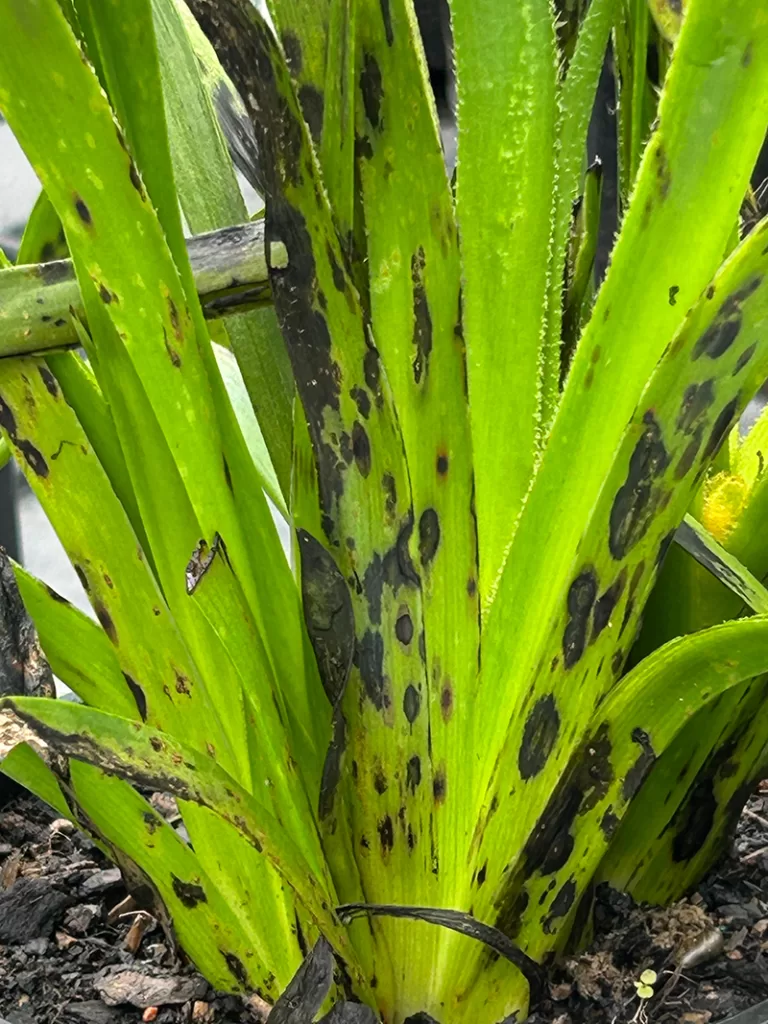
Ink Disease is a fungal infection that affects the leaves and flower stems of Kangaroo Paw. It’s usually caused by a fungus called Alternaria alternata, though other fungi can get involved too. It shows up as dark purple or black blotches that look like splashes of ink – hence the name.
It can spread quickly if the conditions are right, particularly after rain or if the plant stays damp for too long. It’s especially common in warm, humid areas and tends to appear during the growing season.
What to Look For
- Dark, irregular spots or blotches on leaves or flower stems
- Marks that start small but spread and merge
- Yellowing or collapsing leaves as the disease progresses
- Damaged, discoloured or unsightly flowers
It usually starts on the lower leaves and works its way up. In severe cases, the whole plant can look pretty miserable.
Why It Happens
Ink Disease tends to strike when the plant’s environment is a little too fungus-friendly. That includes:
- High humidity or prolonged leaf wetness
- Overhead watering or watering late in the day
- Crowded plants or poor air circulation
- Old, damaged or weak foliage
Some varieties of Kangaroo Paw are more susceptible than others, particularly tall hybrids with finer foliage.
What You Can Do
The key is to act early and make a few tweaks to how you grow and care for your Kangaroo Paw.
1. Prune affected leaves
As soon as you spot the first blotches, cut them off with clean, sharp secateurs. Bin the cuttings. Do not compost them to avoid spreading spores.
2. Improve airflow
If your plant is crowded by others, give it some breathing space. Trim back surrounding plants and avoid dense planting.
3. Water at the base
Water in the morning and aim for the soil, not the leaves. Avoid overhead watering, which keeps foliage wet for too long.
4. Disinfect your tools
Wipe down secateurs between cuts to avoid spreading spores from plant to plant.
5. Consider a fungicide
If things are getting out of hand, a registered fungicide for leaf spot or Alternaria can help. Always follow the label and apply in dry weather.
Preventing Ink Disease Long-Term
- Grow disease-resistant varieties such as the ‘Bush Gems’ or ‘Landscape’ series
- Plant in full sun with well-drained soil
- Don’t over-fertilise – lush, soft growth is more prone to infection
- Cut plants back hard after flowering to encourage fresh growth
- Remove old, damaged leaves regularly
Kangaroo Paws are hardy Aussie plants, but they’re not immune to fungal dramas. Ink Disease is mostly a cosmetic issue – annoying, but manageable. A bit of pruning, smarter watering and improved airflow usually keeps it in check.
And if you’re choosing new plants, consider one of the newer dwarf varieties – they’re bred to be tougher and less prone to disease.
Have you had a run-in with Ink Disease? Share your experience or recovery tips in the comments or tag us @thecuriousgardener with #KangarooPawCare.
Love Your Native Wildflowers?
Discover our curated collection of eco-friendly, Australian-made gardening gifts, perfect for plant lovers and nature nerds.
Check out the Wildflowers for Native Pollinators Seed Bombs! Just toss them onto the soil, water them in and let nature do the rest. These little bombs are packed with nectar-rich wildflower seeds specially chosen to support Australia’s native pollinators.