It’s bare-rooted season and if you’ve never dabbled before, now’s the time to roll up your sleeves and give it a go. Bare-rooted plants are exactly what they sound like: plants sold without pots, soil or frills, just good honest roots wrapped in sawdust, peat or paper.
They might look like dead sticks but don’t let that fool you. These Winter sleepers are just resting, ready to burst into growth come Spring. And because you’re not paying for pots, soil or peak-season packaging, they’re usually cheaper, easier to transport and healthier in the long run. What’s not to love?
Here’s how to prep, plant and pamper your bare-rooted beauties.
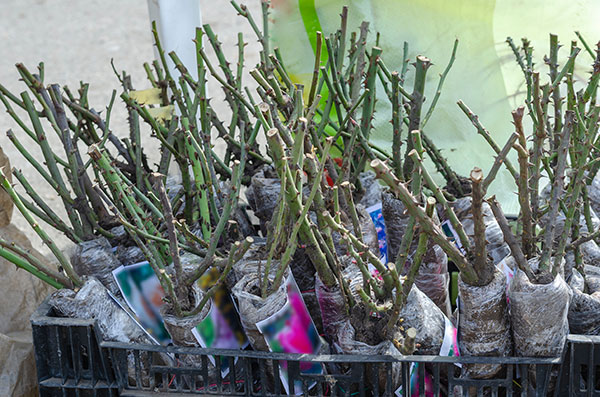
What Can You Buy Bare-Rooted?
Not everything comes bare-rooted but here are some Winter winners:
Deciduous fruit trees – apples, pears, plums, nectarines, cherries
Roses – Bush roses, hybrid teas, floribundas, climbers, groundcovers, standards
Berries – raspberries, blackberries, currants, boysenberries
Ornamentals – maples, crab apples, flowering cherries, ornamental pears
Deciduous shrubs & perennials – Lilac, Peonies, asparagus
Step 1: Unpack and Inspect
The moment your plant baby arrives (or you bring it home), unpack it carefully, remove all peat or other packaging and check the roots. Planting as soon as possible means better results.
Look for:
- Healthy, flexible roots (not dry, brittle or black and mushy roots)
- A visible graft union if it’s a grafted tree (that lumpy bit near the base)
- No signs of mould or rot
Soak the roots in a bucket of water for a few hours (no more than 6 hours) to rehydrate them and prevent transplant shock. You can add a splash of seaweed liquid fertiliser (such as Seasol) for a root-stimulating boost. Use this mixture later to water in.
Step 2: Prepare the Planting Hole (Or Pot)
This isn’t the time to dig a lazy little hole. Bare-rooted plants need room to spread out.
Dig a hole twice as wide as the roots and deep enough that the plant will sit at the same depth it was grown in (this is important… look for the soil line on the stem).
Create a mound of soil in the centre of the hole for the roots to rest on like a little throne.
Mix in some compost or well-aged manure but no fertiliser just yet (too strong for sleepy roots).
Step 3: Plant with Care
This bit is important… get it wrong and your plant will sulk (or worse).
Carefully spread the roots evenly over the soil mound
For grafted plants, make sure the graft union is above the finished soil level
Backfill gently, firming the soil as you go so there are no air pockets
Water in well with (also using your set-aside mixture) to settle everything in (yes, even in Winter)
Step 4: Stake (If needed)
Fruit trees, standard roses or anything tall and top-heavy might need support for the first year or two.
Use:
Two stakes placed outside the root zone
Soft ties (not wire) so you don’t strangle the trunk
Your plant should be able to move slightly in the wind allowing it to develop strong roots.
Step 5: Prune Back
Sounds counterintuitive but pruning after planting is a must, especially for bare-rooted trees and roses. Be sure to refer to the plant label. As a guide:
For deciduous fruit trees: cut back to 3–4 main branches
For roses: trim stems back to 3–5 outward-facing buds
For berries: cut canes down to 20–30cm above ground
This reduces stress and encourages balanced new growth.
Step 6: Mulch and Wait
Top your planting area with mulch but keep it away from the base or graft. You want the roots snug, not smothered and you don’t want to cause rotting.
Use sugarcane mulch, lucerne, composted bark or whatever your soil loves.
Label your plant. Bare-rooted things tend to look suspiciously alike until Spring.
Now step back, make a cuppa and let nature do her thing.
Step 7: Ongoing Care
Water regularly (without making the roots soggy), especially when new growth appears. If the plant is staked, check and adjust the ties to avoid damage. Fertilise according to the plant label for your particular plant.
Common Mistakes to Avoid
- Planting too deep (especially over the graft) or planting too shallow (so the plant becomes stressed)
- Forgetting to soak dry roots
- Leaving roots exposed to air for long periods
- Adding fertiliser too soon
- Letting the plant dry out (even in Winter, roots need moisture)
Patience Pays Off
Bare-rooted plants take a little faith but give them time and they’ll reward you with bigger root systems, better growth and often a stronger first-year performance than potted alternatives. Plus, you’ll likely have more choices, better-quality stock and the satisfaction of giving a “dead stick” a new life. So don’t be afraid of the bareness, it’s only the beginning.
After you’ve finished wrangling roots and wrestling with winter soil, treat yourself to a proper clean-up with our Activated Charcoal & Pumice Gardener’s Soap. It’s gritty in the best way… scrubs off the dirt, not your skin and smells like fresh Eucalyptus and victory. Also, if you’re heading out into the cold again tomorrow, do it in a pair of Regent Honeyeater socks. They’re Australian-made, artist-designed and warm enough to soften the blow of 7am frost.