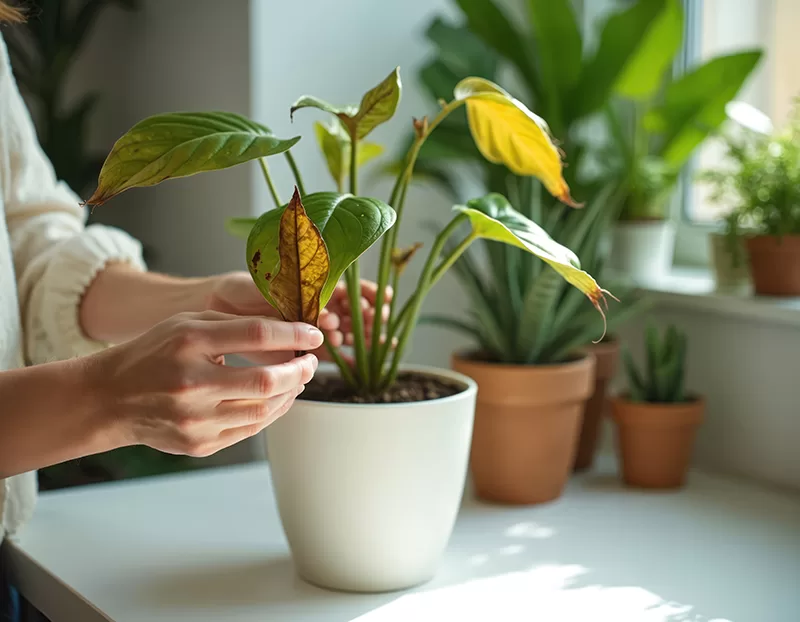
There’s nothing more unsettling than seeing your lush green foliage fade into a sad, sickly yellow. Before you panic and start randomly throwing fertiliser around like confetti, let’s dig into what’s really going on.
Yellowing leaves – aka Chlorosis – is your plant’s way of waving a little flag that something’s off. The good news? Most of the causes are fixable once you know what to look for.
1. Water Woes – Too Much or Too Little
Water is life… until it’s drowning your roots or leaving your plant gasping. Overwatering suffocates roots, causing yellow, droopy leaves. The soil often feels soggy. Underwatering leads to dry, crispy yellowing, especially around the edges or tips.
How to fix it:
Check soil moisture before watering. Stick your finger in up to the second knuckle – if it feels wet, hold off. If it’s dry and crumbly, give it a good drink.
2. Poor Drainage = Soggy Sadness
Even if you’re watering correctly, clay soil or pots with no drainage can trap excess moisture and cause root rot – a common yellow-leaf culprit.
How to fix it:
Improve drainage by adding compost or mulch to heavy soils. Use pots with drainage holes and raise them slightly off the ground.
3. Nutrient Deficiencies – Your Plant’s on a Diet
Yellowing can signal a lack of key nutrients:
- Nitrogen – Leaves turn pale yellow starting from the bottom. Common in hungry veggies and fast-growers.
- Iron – New leaves turn yellow but veins stay green (common in natives in alkaline soils).
- Magnesium – Yellowing between the veins of older leaves.
How to fix it:
Feed your plants! Use a balanced, organic fertiliser or one tailored to the plant (e.g. native blends for natives, citrus food for citrus). For iron or magnesium, liquid foliar sprays can give a quick boost. For indoor plants, we recommend these plant care products.
4. Light Levels – Too Much or Too Little
Plants stuck in a gloomy corner may yellow and stretch in search of light. On the flip side, too much direct sun can cause leaf scorch and yellowing.
How to fix it:
Match your plant’s light needs. If indoors, rotate regularly to ensure even light exposure.
5. Temperature Stress – Frostbite or Heatstroke
Sudden cold snaps or heatwaves can stress plants, especially tropicals or delicate seedlings, leading to yellowing and leaf drop.
How to fix it:
Protect plants during extremes – move pots, use shade cloth or apply mulch to regulate root temps.
6. Pests – The Sneaky Suckers
Sap-suckers like aphids, spider mites and whiteflies can cause yellowing as they drain nutrients from the leaves.
How to fix it:
Check undersides of leaves. Use a natural insecticide (like Neem Oil), attract beneficial insects or hose them off with a strong spray.
7. Natural Leaf Drop – Totally Normal (Especially for Deciduous Plants!)
Not all yellow leaves are a cry for help – sometimes, it’s just your plant following its natural cycle. For deciduous plants, yellowing and leaf drop in Autumn is completely expected. And even evergreen plants occasionally shed older leaves to make room for fresh growth.
How to fix it:
Do nothing at all! This is nature doing its seasonal housecleaning. Just prune off any dead or tatty leaves and let your plant do its thing.
Bonus Tip: Look at the Pattern
Yellowing starting from the bottom up? Think nutrients or overwatering.
New growth yellowing? Iron or pest issues.
Edges yellowing first? Water stress or salt buildup.
Yellow leaves are a symptom, not a death sentence. Tune in to what your plant is telling you, do a little sleuthing and you’ll often have it back to full green glory in no time.
🌿 Got a mystery plant behaving badly? Pop a photo in the comments or DM me on Instagram — plant detective mode is always on.